
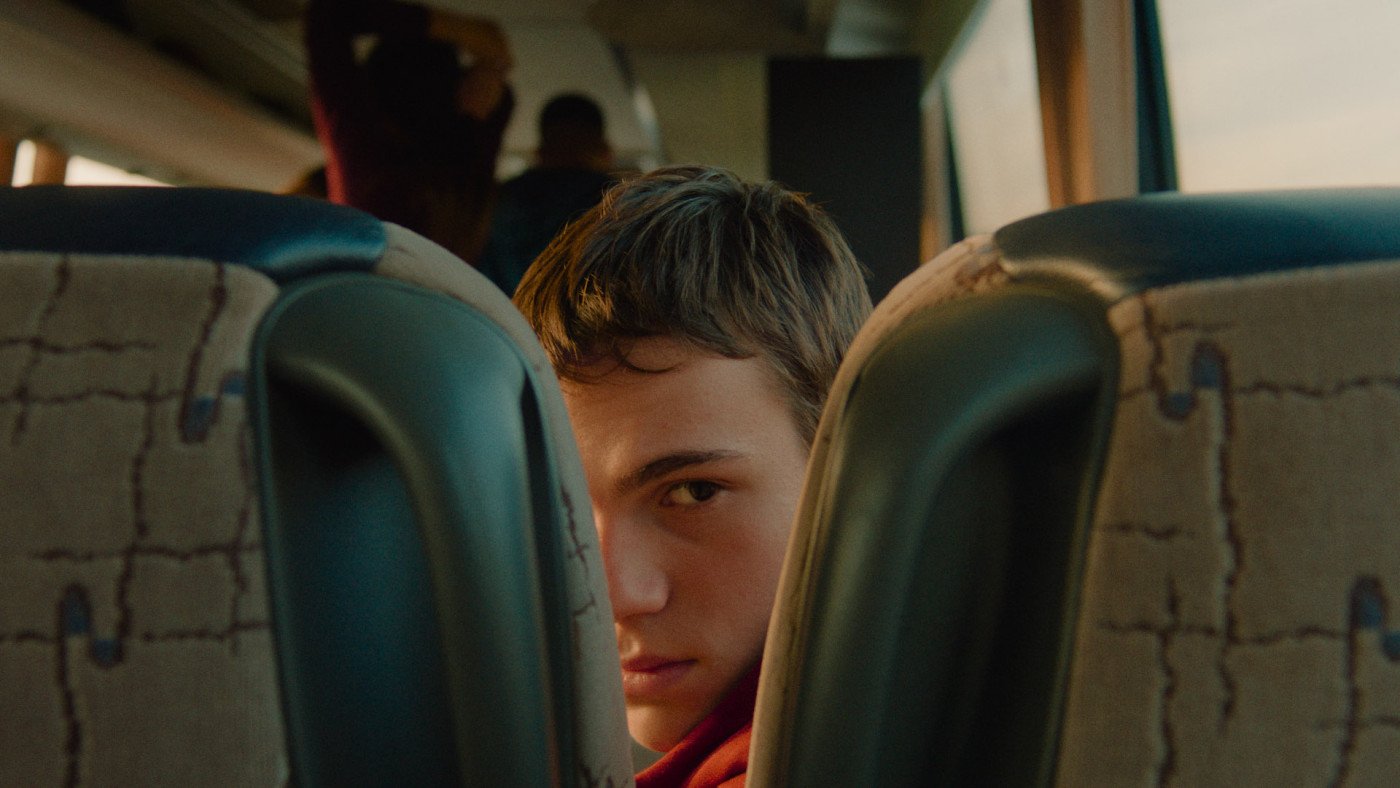
– Serbian director Miroslav Terzić delivers a highly artistic, technically impressive and morally ambiguous drama about school bullying
Jovan Ginić in 3 Weeks After
The surreal opening shot encapsulates the overarching theme and emphatic style of Serbian director Miroslav Terzić‘s third feature, 3 Weeks After, which has just world-premiered in Karlovy Vary International Film Festival‘s competition. The hapless hero, teenager Tzotza (Jovan Ginić), watches an apartment burn in one of the buildings in his New Belgrade, socialist-era tenement block. Then he briefly turns around and looks at the camera, as the sound of the fire cuts out, before heading on an excursion with his class, accompanied by his only friend, Darija (Andjela Alavirević).
They join their classmates and teachers, head of class Viktorija (Tihana Lazović) and Maths teacher Markuš (Branislav Trifunović), when an uneasy conversation between Tzotza and Markuš starts slowly revealing that the boy’s best friend Andrija committed suicide only three weeks earlier, after being brutally bullied.
On the bus, amid a loud, raucous atmosphere, the girls talk about losing weight and cosmetic surgery, the boys about sports betting and crime. At a pit stop, Milica (Klara Karaulić), the most dominant of the girls, is secretly joined by her violent boyfriend, Miloš (Andrija Marković). When the bus breaks down, forcing them to walk to a remote hotel, Miloš mockingly brings up Andrija – and Tzotza punches him, a move that will only worsen his situation.
The hotel is about to close for the season, and they are the only guests. We witness more bullying – not only of Tzotza – but when the boy accuses the class and the teachers of all being complicit in Andrija’s suicide, the film shifts into a phantasmagorical, horror-like nightmare for its third act. This act, in its own right, unfolds across three distinct segments, emphatically devised to rattle the viewer, building to an unforgettable, devastating ending; one made all the more impactful by its beauty, with a final shot reminiscent of a Renaissance painting.
There are horror elements throughout: Damjan Radovanović‘s camera menacingly creeps in or pulls back through corridors and the bus aisle, or watches from a corner of the ceiling in the hotel’s dining room. The unsettling sound design makes us “hear” the oppressive silence, while LP Duo‘s evocative electronic score is heavy with tension and pressure. Even if the screenplay by one of Serbia’s most prominent authors, Vladimir Arsenijević, is technically straightforward and topic-driven, Terzić treats it with a very artistic, clearly defined sensibility. This strong visual identity is further reinforced by the physicality of the young actors’ performances. Ginić, known from another Serbian social critique, Lost Country, is a jumble of tense nerves, while Marković is a chest-puffing, aggressively dominant presence. A similar contrast plays out between Karaulić’s arrogant Milica and Alavirević’s insecure Darija.
The soundtrack features several songs, each holding a significant place in Serbian popular culture since the 1990s. The violence in contemporary society stems from that brutal era of war, crime and poverty, one that still grips the collective subconscious, painfully evident in everyday life. The teenagers are disinterested, cruel and entitled; the teachers, defeated and helpless. When Tzotza looks into the camera, he accuses the viewer directly: from a certain perspective, it is indeed all of us who killed Andrija – and this applies well beyond Serbian audiences. From another, less cinematically potent but equally valid point of view, one held by the teachers, none of this is anyone’s fault specifically. The moral ambiguities that emerge along the way further muddy any judgement and the film is sure to provoke divided reactions.
3 Weeks After is a co-production between Serbia’s This and That Productions, Bulgaria’s Invictus, Italy’s Nightswim, Croatia’s Kinorama and Luxembourg’s Paul Thiltges Distributions. Bendita Film Sales holds international rights.
