
– Nader Saeivar’s new film explores questions of sexual identity and the overbearing influence of religion within Berlin’s Turkish community
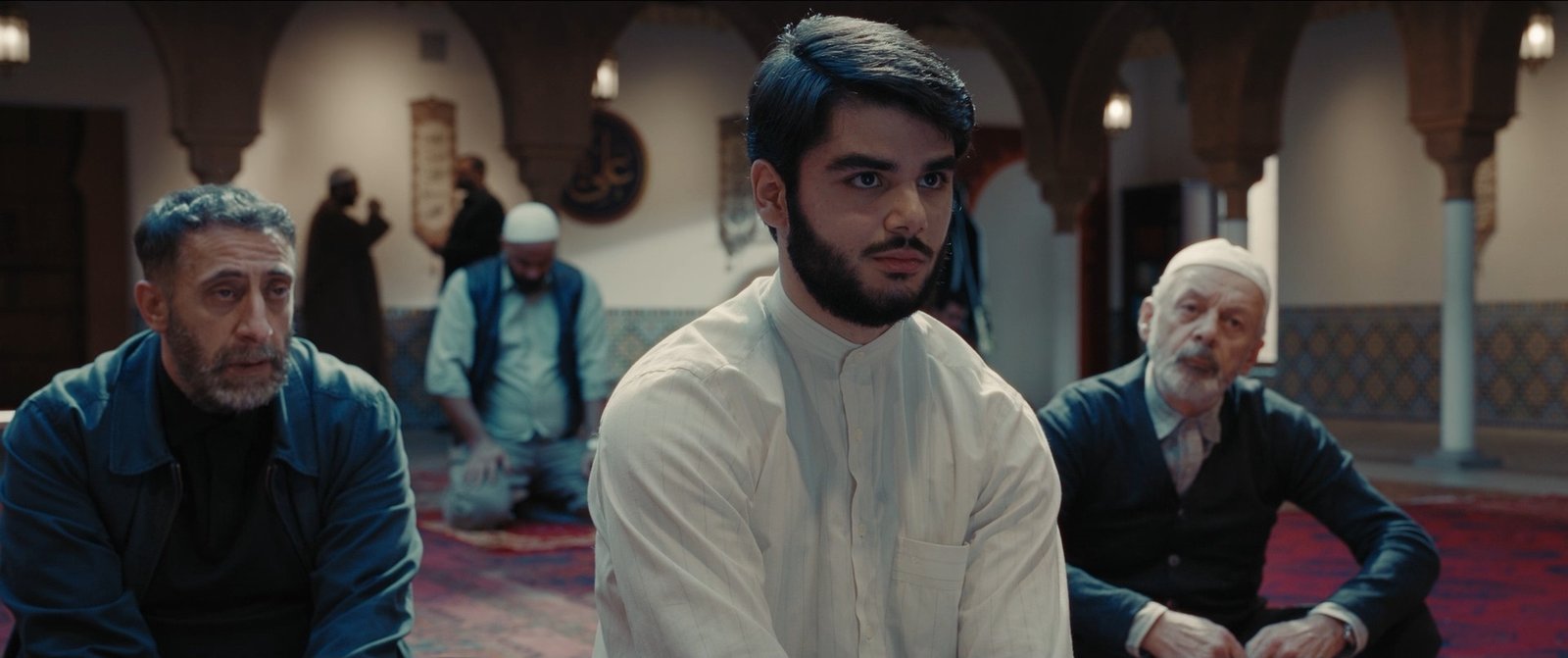
Kida Khodr Ramadan, Jael Cem Ilhan and Vedat Erincin in Hijamat
Hijamat, the latest film from Iranian-born, Berlin-based filmmaker Nader Saeivar – known as director of the 2024 Venice Orizzonti Audience Award-winning The Witness, and co-writer of It Was Just an Accident and 3 Faces by Jafar Panahi, who in turn serves as editor and producer on this film – has just world-premiered in Karlovy Vary‘s Crystal Globe competition.
Set amid Berlin’s Turkish diaspora, the story begins when photos of a young gay man, Kerem (Jael Cem Ilhan), and his lover leak on social media, causing a rift within his family and community. When he is beaten up, his 50-year-old brother, Murad (Lebanese-born actor Kida Khodr Ramadan, in a nuanced, committed lead performance), stands up for him, against the wishes of their strict, traditional father, Ibrahim (Vedat Erincin). The old man’s views are echoed by the imam of their local mosque, Ahmet (Aziz Capkurt), who insists Kerem’s sexuality is a whim, a temptation from Satan, and a sin that will condemn the whole family to eternal torment. They regard the young man’s epilepsy as further proof of divine punishment.
The narrative is rich with moral dilemmas and side stories that together sketch the challenges posed by the immigrant mindset, religious custom, and the relationship between spirituality and identity, as well as Germany’s wider social and political landscape. However, many of these elements don’t quite land. The family lives comfortably thanks to Ibrahim’s restaurant business, which is suddenly threatened in an underdeveloped ownership subplot, underlining the imam’s influence over the patriarch. Murad’s wife, Leyla (Nicolette Krebitz) – a housewife who fills her free time making cooking videos that Murad actively sabotages – hails from Kosovo, and relates to Kerem’s plight through her own struggles with religious identity in the context of Serbian oppression; this strand does land with some gravity. By contrast, Nastassja Kinski plays Margot, a woman traumatised and stuck in her East German past, paranoid that the Stasi are after her – a thread that feels entirely out of place, serving only to once again underline Murad’s sense of duty. In an unfortunately misjudged episode – one that seems, in particular, to hint at Murad’s own sexuality (earlier suggested by Leyla’s weary complaint about their lack of marital sex) – Moritz Bleibtreu appears as a ridiculous New Age shaman, offering to heal the hero’s varicose veins through the titular cupping technique. His role might have read as ironic, were the film’s tone not so unrelentingly serious.
Technically, little can be said against any craft element, with Emre Erkmen‘s classical cinematography, Panahi’s by-the-book editing and Hossein Mirzagholi‘s mood-setting score smoothly driving the proceedings. In the dialogue-heavy film, the opening sequence with an ostentatious celebration of Murad’s young son’s circumcision stands out as a cinematic highlight, with camerawork and editing united in creating a kinetic vibe that the rest of the film lacks.
The opening sequence is also a clear pointer to the world the family inhabits, and to the director’s view of it – also exemplified in one of the film’s standout scenes through Leyla’s words during an argument with Murad: “False humility. Empty heroism. Meaningless pride.” A succinct, accurate description of patriarchal cultures far beyond Islam alone, but also something we’ve seen many times before, in cinematically more interesting works.
Hijamat is a co-production between German companies ArtHood Films, Lightburst Pictures and JPJ Film Productions.
