
– KVIFF Promises’ showcase of established Central European filmmakers foregrounded bruised coming-of-age stories, refugee fables, post-war reckoning, class rage and historical memory
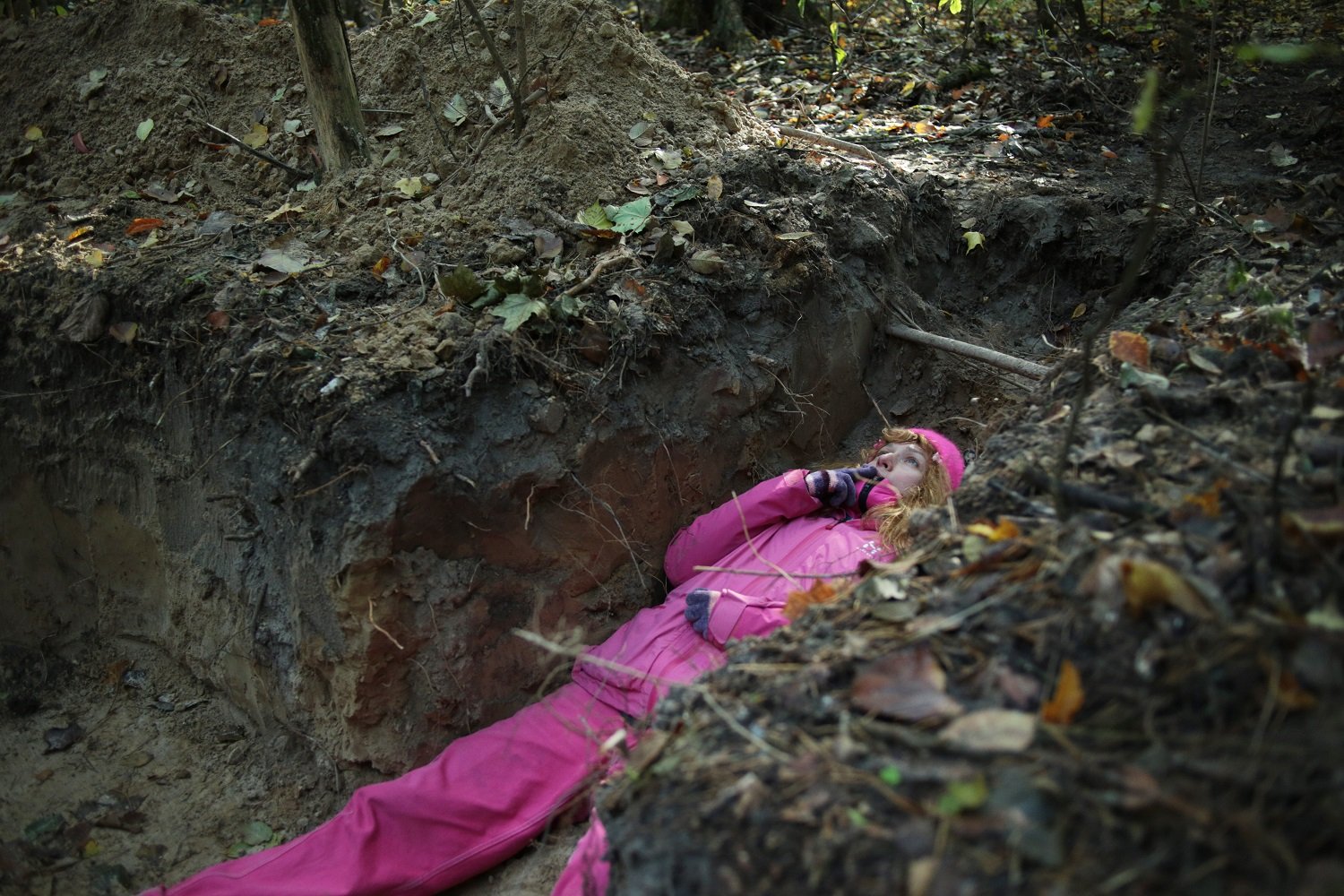
Noah by Marysia Nikitiuk
The 2026 edition of KVIFF Promises’ KVIFF Central Stage once again positioned itself as a curated industry platform for established filmmakers from Central and Eastern Europe, Switzerland and partner territories, presenting projects in development, production and post-production to potential co-producers, sales agents, distributors, broadcasters, festival programmers and finishing partners. The selection (see the news) mapped a region still working through war, transition, inequality and inherited trauma, but rarely in straightforward realist terms. Instead, the projects leaned into volatile genre hybridity: loser comedy, metaphysical adventure, coming-of-age drama, road movie, punk historical comedy, tragicomic biopic, absurdist refugee story and post-Yugoslav family thriller.
Below is more detailed information on a selection of the presented projects:
Noah – Marysia Nikitiuk (Ukraine/Croatia/Belgium)
Ukrainian filmmaker Marysia Nikitiuk, whose debut When the Trees Fall premiered in Berlinale Panorama, returns with Noah, an action-war drama conceived as the first part of a trilogy about Ukraine’s war for independence. The film follows Andrii, a shy IT specialist who enlists to pay for his mother’s treatment but is sent to the frontlines, where he is absorbed into a combat-engineering unit during the Kharkiv counteroffensive and mentored by the cynical commander Noah and by a Croat veteran of the Balkan wars. Nikitiuk described the project as rooted in interviews and real wartime experience, including the story of a friend whose darkly comic messages from the front helped her understand how humour can coexist with terror. What begins as a war adventure gradually becomes a hyper-naturalistic tragedy about moral injury, survival and the impossibility of saving everyone. Produced by Igor Savychenko and Solomiya Ilnytska for Ukraine’s Directory Films, Hrvoje Osvadić for Croatia’s Petnaesta Umjetnost, and Labina Mitevska and Sébastien Delloye for Belgium’s Entre Chien et Loup, the project is currently in development. The producers are seeking additional financing, co-production partners and a sales agent, with a planned release in January 2029.

Lesdenzero by Cristina Groșan
Lesdenzero – Cristina Groșan (Czech Republic/Switzerland/Hungary/Romania)
Cristina Groșan (selected in Venice’s Giornate degli Autori with Ordinary Failures) presented Lesdenzero, a Czech- and German-language drama and road movie about class, fantasy and the price of crossing social borders. Tonda, a 21-year-old food-delivery rider, is sent to Switzerland to bring home Anička, the teenage daughter of a wealthy oligarch. When she offers him money and a future in exchange for helping her run away, their journey turns from a darkly comic class collision into something far more dangerous. Groșan described the project as a story about origin and social mobility in contemporary Europe, where birthplace and class still determine how far a person can go: for Anička, rebellion is temporary; for Tonda, it could destroy his life. Produced by Marek Novák of Xova Film, the project is in late development, with co-producers already attached from Romania, Hungary and Switzerland. The team is seeking additional partners, co-producers and financing, with an October 2028 release targeted.

The Stones Are Rolling to Prague by Tomáš Hodan
The Stones Are Rolling to Prague – Tomáš Hodan (Czech Republic/Slovak Republic)
The Stones Are Rolling to Prague by Tomáš Hodan (The Last Race) is a punk-spirited “loser comedy” set in spring 1990, shortly after the Velvet Revolution, when four former underground concert organisers are asked to help bring the Rolling Stones to Prague. With little English, no real infrastructure and a million dollars to raise, their chaotic mission becomes a portrait of a moment when freedom had arrived, but the old rules hadn’t yet disappeared. Hodan and producer Jakub Kraus say the project is in development, with the script ready and a ten-minute proof-of-concept already shot to convey the tone, atmosphere and comic potential of the period story. The production faces the challenges of recreating early-1990s Prague, including major locations such as Prague Castle, as well as securing music rights and casting internationally. Produced by Bontonfilm with Slovak partners, the team is seeking international sales and distribution, help with casting for the role of the Rolling Stones’ manager, private investors and other partners. The planned release is August 2028.

Tribe by Olga Chajdas
Tribe – Olga Chajdas (Poland/Albania)
Polish director Olga Chajdas (whose Imago premiered in Karlovy Vary’s Proxima competition and won the FIPRESCI Prize) presented Tribe, a female road movie sparked by what she described as “the need to scream”. The film follows four women travelling from Poland through the Balkans: one fleeing a scandal, another unable to find her voice, and two sisters carrying their mother’s ashes to Albania. What begins as an escape becomes a chaotic pilgrimage towards freedom, grief and self-acceptance. Chajdas described the project as a “spiritual, crazy drama road movie”, mixing realism, magical elements and carnivalesque storytelling. Producer Karolina Galuba said the film is midway through development, with casting and some location scouting already completed. Given the journey across several countries, the team plans a looser, partly documentary-style shoot, using camper vans for transport, camera cars, resting places and occasional accommodation. Produced by Galuba and Małgorzata Małysa for Furia Film, with an Albanian co-producer already on board, the project is seeking financing, additional co-producers from countries along the route and a sales agent. Its planned release is January 2028.

Trainrider by Sebastian Fritzsch
Trainrider – Sebastian Fritzsch (Germany)
Sebastian Fritzsch’s Trainrider is a 1990s-set coming-of-age drama about Karl, a teenager who survives cardiac arrest and grows up under the suffocating protection of his father. Drawn to a rebellious clique of skateboarders and train surfers, Karl seeks freedom through danger, only to find himself repeating his deepest trauma: confronting death in order to feel alive. Fritzsch, who drew on his own teenage experience of cardiac arrest, described the film as intensely physical — a story of movement, rhythm, silence and the body’s inner tempo. Producer Corinna C Poetter (Eyrie Entertainment GmbH) revealed that the project is still in development and that casting has not yet begun, as the team wants to discover fresh, possibly non-professional young actors for the teenage roles, while casting professional actors for the adult parts. The train-riding sequences will be realised safely through specialised production methods, including post-production work, VFX and controlled environments. Produced by Poetter and Daniel Ehrenberg (Orange Roughy Filmproduktion), Trainrider is seeking European co-production partners, financing and distribution partners, commissioning editors and a sales agent. Its target release is February 2028.

Yugoslavia, My Fatherland by Goran Vojnović
Yugoslavia, My Fatherland – Goran Vojnović (Slovenia/Serbia/North Macedonia/Croatia)
Goran Vojnović’s Yugoslavia, My Fatherland adapts his own novel into a post-Yugoslav family drama about memory, guilt and the long afterlife of war. Vladan Borojević, who believed his father had been dead for nearly two decades, discovers that General Nedeljko Borojević is alive and accused of war crimes. As Vladan searches for him, his girlfriend’s pregnancy forces him to choose between a future family and a past that refuses to disappear. The producers said the film departs from the novel in several ways, including the pregnancy storyline, which gives Vladan a clearer dramatic choice between moving forward and returning to the past. They described the project as timely, given the unresolved scars of the Balkan wars, and noted that it is entering production with a remaining financing gap, caused partly by the standstill in Serbian film funding. Produced by Boštjan Iković, Miloš Ivanović and Robert Naskov, with Slovenia (Ars Media) as the main country and North Macedonia on board, the team is seeking a sales agent, distributor, co-production and post-production partners, and financing to close the gap.
