
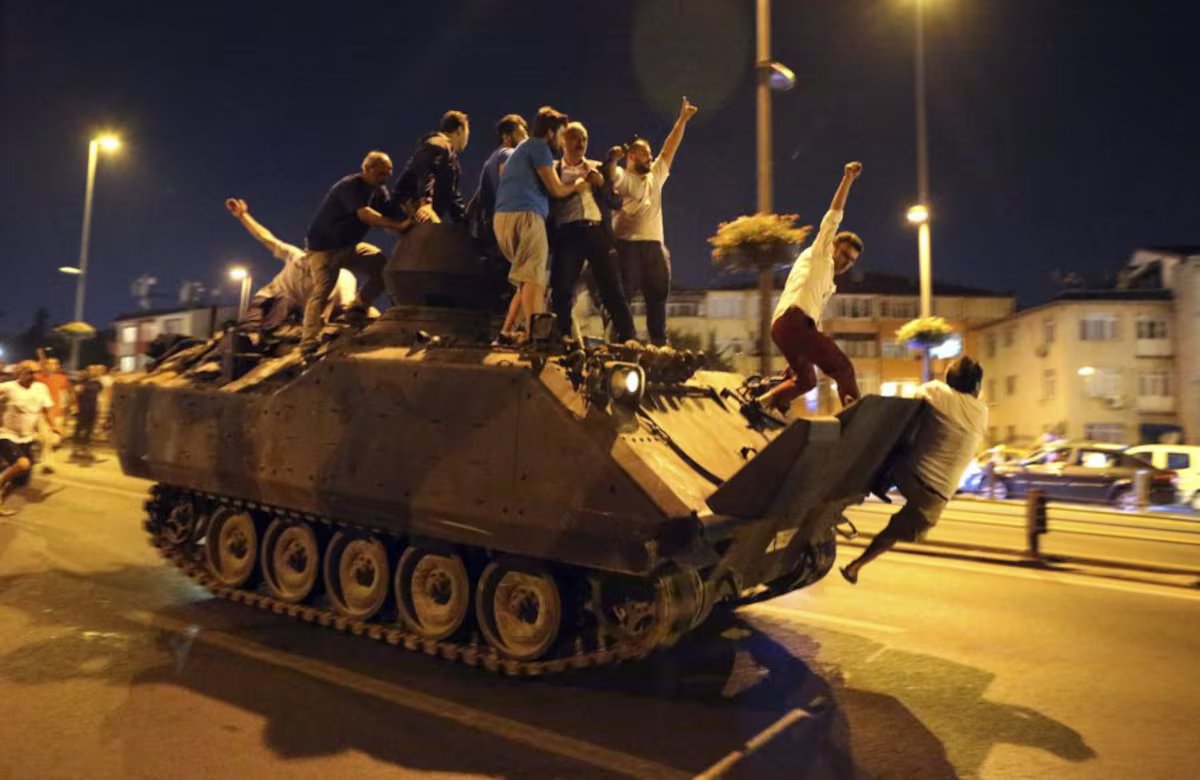
The night of July 15, 2016, looked like any other Friday night. Vehicles filled the bridges over the Bosphorus Strait — returning home after a long workday, heading to Istanbul’s downtown clubs and bars, or fleeing the hot metropolis for a summer weekend — when two trucks loaded with soldiers ordered traffic to stop. No one could explain why (a counter-terrorism raid? a military maneuver?). Yet the image summoned all the ghosts of modern Turkish history.
Because in a republic like Turkey’s, founded by a military officer, Mustafa Kemal Atatürk — who nonetheless hung up his uniform and urged his fellow officers to do the same if they went into politics — the military has played an outsized role: it has toppled governments on four occasions (1960, 1971, 1980, 1997), tried to do so on several other occasions, and sought to influence the country’s politics and economy through various institutions. And like all coups in Turkey — successful and failed alike — the attempt a decade ago would have deep consequences. “It gave [Recep Tayyip] Erdoğan and his movement a push at a critical moment, allowing them to shape the system the way they had always wanted,” says political scientist Selim Koru, author of the book New Turkey and the Far Right.
When soldiers seized the bridge that night, the plot had been under way for hours. By then, the chief of the general staff, Hulusi Akar, had been kidnapped for refusing to endorse the coup, and uncertainty — even panic — was spreading through government ranks. Among the last to learn of the coup attempt were Prime Minister Binali Yildirim and President Erdoğan himself, who, according to his own account, was told about strange military movements near the Bosphorus by his brother-in-law, Ziya Ilgen. “Ziya, are you joking? What does this have to do with me!” he replied. Erdoğan, who was on vacation on the Mediterranean coast, phoned intelligence services and the general staff, but there was no answer.
That communication blackout remains one of the great mysteries of that night, because, as it later emerged, both institutions had had information about the coup plan from 3.00 p.m., but apparently did not pass it on. And yet the people in charge at the time later held high office: Akar became defense minister and is now a member of parliament; Hakan Fidan stayed on as head of the intelligence services and is today foreign minister.
Hours later, when the government regrouped and regained control of the situation — after realizing that only a small portion of the armed forces supported the coup — the counterattack began. Loyal soldiers against traitors; police against soldiers; and above all civilians who, summoned by Erdoğan and from the mosques, took to the streets to confront tanks with sticks, pistols, or their bare hands to defend their government. Two hundred and fifty-three people died — now considered martyrs — in airstrikes, shootings, and executions in the streets, and crushed by tanks rolling down the avenues.
That is the foundation of what was officially christened the “Epic of July 15” (now a national holiday, Democracy and National Unity Day) and it is on the energy unleashed that day — Erdoğan’s empowered followers taking over streets that had been largely opposition-held — that the Turkish president has ridden for the past decade.
Purges and detentions
The Hizmet movement, a politico-religious organization operating like a sect and led by the cleric in exile Fethullah Gülen (who died in the U.S. in 2024), was accused of the uprising after decades of infiltrating the public administration and security forces, especially during the long years when they were allied with Erdoğan’s party before their split. Gülen’s followers denied involvement in the coup, but during trials several of the accused generals and colonels — later sentenced to multiple life terms — acknowledged their membership.
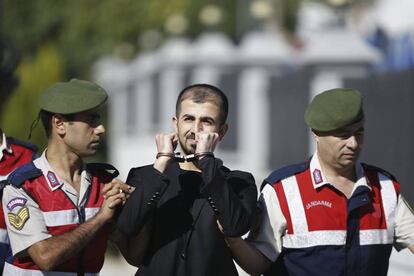
“There are examples in politics where, after an event like this, impartial trials follow. Independent institutions investigate what happened, publish their findings and the political system can digest them and improve its function. That did not happen [in Turkey]. Public opinion feels it does not know everything that occurred and many people suspect that Erdoğan’s people knew what was happening and allowed it to happen — that it was a ‘controlled coup.’ There was also no accountability for those responsible for the expansion of Gülenist power,” Koru explains.
Over 113,000 people were sent to prison and 152,000 public servants were dismissed from the administration for alleged ties to Gülenists, allowing Erdoğan to reshape the state with officials loyal both to his Islamist party, the Justice and Development Party (AKP), and to his new allies, the far-right Nationalist Movement Party (MHP).
The trauma of the coup attempt was used to impose a state of emergency under which deep institutional reform was carried out and, in a narrowly won referendum, the shift from a parliamentary system to a hyper-presidential model was approved — a change that years earlier lacked sufficient support. The coup occurred amid extreme violence: the rise of the Islamic State and its ruthless attacks in Turkey (which killed more than 200 people between 2015 and 2017) and a renewed Kurdish insurgency after the collapse of peace talks in 2015, which was crushed mercilessly by the military (over 5,000 people killed in just five years). The uprising therefore made use of what Canadian author Naomi Klein called the “shock doctrine” to convince at least part of the population that, to win security and stability — which has not materialized — one had to give up institutional balances and democratic freedoms.
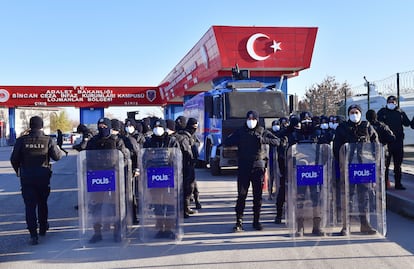
The state of emergency was lifted after two years, once Erdoğan had been elected president under the new model, but its practices never fully ended. For example, the habit of removing dozens of opposition mayors and replacing them with trustees appointed by the interior ministry; or arresting political rivals and holding them in prison for long periods before a court issues a verdict or a sentence becomes final. Cases include pro-Kurdish politician Selahattin Demirtas, detained since November 2016, and social-democratic presidential candidate Ekrem Imamoglu, imprisoned for nearly a year and a half, but also hundreds of lower-level political figures, trade unionists, journalists, and artists — something that, before the shock of the failed coup, would have been unthinkable.
Sign up for our weekly newsletter to get more English-language news coverage from EL PAÍS USA Edition
