
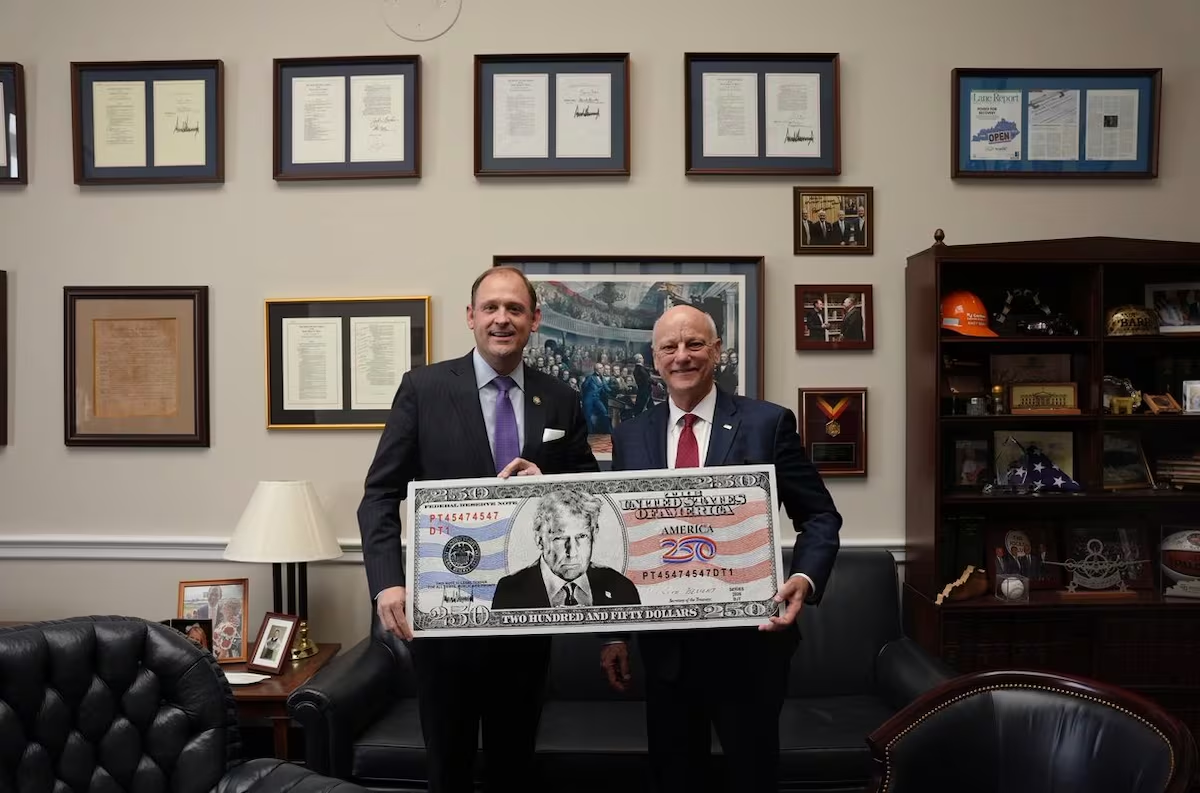
From the creators of renaming Washington’s historic Kennedy Center to add Donald Trump’s name, building a gigantic ballroom at the White House called the Donald Trump Ballroom, and of many other initiatives to glorify the current U.S. president, comes now the idea of issuing $250 bills bearing the face of — yes, indeed — Donald J. Trump.
Little matter that a federal law forbids placing the likeness of living people on banknotes. Senior Trump administration officials are pressuring the Bureau of Engraving and Printing to produce a bill with the Republican’s portrait, The Washington Post reports, citing four people familiar with the operation.
The agency’s director, Patricia Solimene, who expressed her reservations about the plan, has been reassigned against her will, she wrote in a letter to colleagues. If it goes ahead, it would be the first time in over 150 years that a living person’s face has appeared on a U.S. banknote.
Hillary Clinton leaned on humor to comment on the news. “By the end of Trump’s term, it’ll be just enough to buy one gallon of gas and a carton of eggs,” the former secretary of state and Trump’s 2016 presidential rival wrote on X, a remark that mixes the president’s megalomania with the higher prices Americans are paying because of the war with Iran.
The Washington Post reports that two senior Treasury officials asked the agency responsible for printing money to prepare prototypes of the bill despite legal doubts. Treasurer Brandon Beach submitted mock-up designs last August and September that glorified the chief. One showed Trump’s face in the center of a $250 bill, flanked by the signatures of the president and Treasury Secretary Scott Bessent, one employee and records reviewed by the Post confirmed.
Iain Alexander, the artist who designed the mock-up, told the Post he had discussed his design with Trump and that both agreed to incorporate the colors of the U.S. flag and a commemorative logo for the country’s 250th anniversary. “He likes to say I’m his favorite British artist,” Alexander said; he is a former competitive swimmer and DJ who has painted portraits of Queen Elizabeth II.
The last time a living person appeared on U.S. coinage was in 1866, when the practice was banned. The trigger was a Treasury official appearing on a five-cent coin. Last year a bill was introduced in Congress to allow Trump to appear on a $250 note for the 250th anniversary, but that initiative is currently stalled.
When the director of the Bureau of Engraving and Printing explained the legal obstacles that prevented the project of flattery from moving forward, senior Treasury officials responded disdainfully, two current employees said. “We are not authorized to do this,” Solimene said; she also explained that these processes are lengthy and that it normally takes six to eight years to produce a new banknote. The agency head said the Treasury Department forced her to leave her post on April 27. The next day she emailed colleagues saying she was leaving “with great regret.”
Sign up for our weekly newsletter to get more English-language news coverage from EL PAÍS USA Edition
