
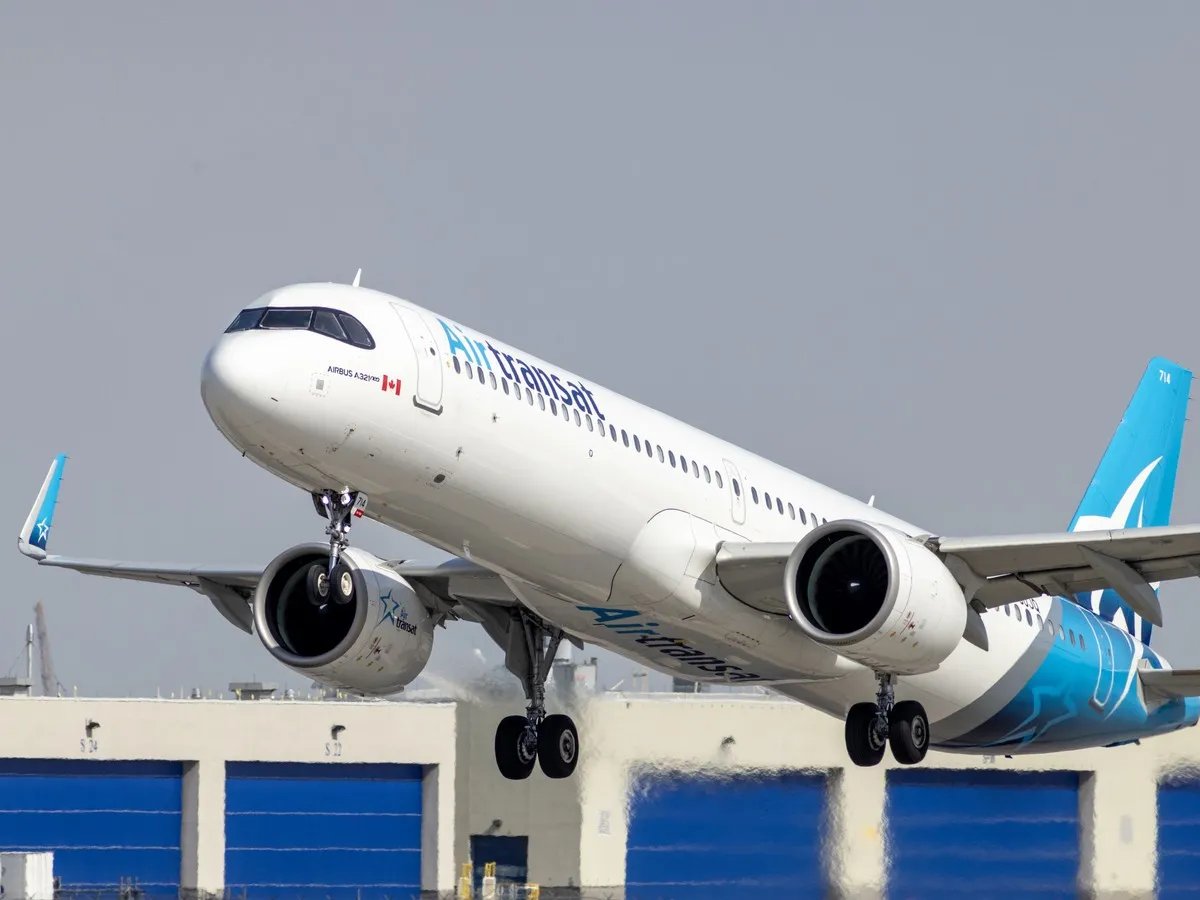
OTTAWA — Air Transat cabin crews may be at 30,000 feet when they’re working, but a recent labour decision confirmed they can’t ever get high on their personal time.
In a ruling issued earlier this month , arbitrator Nathalie Massicotte settled an ongoing question since Canada legalized cannabis in 2018: can airlines bar employees in “high-risk” positions from consuming drugs at any point on or off duty?
The answer is yes, Massicotte ruled, upholding Air Transat’s policy implemented shortly after cannabis was legalized that bans certain employees such as flight and cabin crew members from consuming drugs at any time, even on their days off.
The decision is likely the first of its kind and, though it settles a dispute between Air Transat and its unionized staff, will likely impact all other Canadian airlines that have implemented a similar policy for their aircrews, which includes pilots, first officers and other cabin staff.
“I am of the view that passenger safety on an aircraft must take precedence over the right to privacy in this case, and more specifically, the possibility for cabin crew to consume cannabis when they are not on duty,” Massicotte wrote.
The provisions of the policy challenged by the union represent a reasonable balance when weighing the flight attendants’ right to privacy against the employer’s obligation to ensure safety on its flights, she said.
The policy was grieved by the Canadian Union of Public Employees local representing flight attendants and service directors, otherwise known as the cabin crew.
In a statement, Air Transat spokesperson Stéphanie Dussault said the company was satisfied with the decision, which upheld a policy that was implemented in one shape or another across the industry in Canada.
“Our priority has always been, and will remain, the safety of our flight operations, as much for our employees as for our passengers and the public. Our policy aims to ensure that the impacted employees are able to perform their duties at all times,” Dussault said in an email.
But the president of CUPE’s Air Transat local, Marie-Hélène Nadeau, argued that the policy remains “abusive and excessively intrusive” in regard to her members’ privacy.
“It could lead to disciplinary action against flight attendants who have consumed cannabis several days, or even weeks, before a workday,” she said in an emailed statement.
Nadeau also suggested that the union would be requesting an increase in compensation for its members in light of Air Transat’s argument that flight attendants’ jobs are so sensitive that they require “extreme discipline” even outside of work.
“Since this is the employer’s position, they will have to compensate our members accordingly,” Nadeau wrote.
In her decision, Massicotte noted that cabin crew members play a “crucial role” in ensuring a flight’s safety and must be ready to intervene in any emergency. For example, Air Transat told Massicotte that flight attendants had to intervene in 46 medical incidents on flights in 2024, three of which involved a passenger’s death.
The same year, cabin crew intervened in 200 cases involving a disruptive passenger, as well as 161 flight-related incidents where passenger safety was potentially at risk such as a missed approach or rejected takeoff or landing.
“Cabin crew operate in a high-risk environment, just like pilots, particularly in emergencies,” Massicotte noted. “The bulk of the evidence establishes that cabin crew must make quick, precise decisions that often require physical strength and in stressful conditions.”
The issue with cannabis, according to expert evidence presented during grievance hearings, is that it can remain in the blood for hours or even days after it is consumed, Massicotte noted. Research on how long cannabis affects a consumer’s mental and physical capacities remains limited and hotly debated, she added.
But “serious studies” have shown that residual judgment- and concentrating-affecting effects of cannabis can persist for some even after long periods of abstinence, the arbitrator wrote. That in itself justifies Air Transat’s zero-use policy despite its undeniable effects on cabin crews’ private lives.
“In view of the expert evidence, there is certainly a safety issue related to cannabis use,” she added. “That justifies the employer regulating its use, even outside of working hours.”
Massicotte also pooh-poohed the union’s argument that Air Transat could have watered down its drug policy to ban consumption 28 days before a work shift, arguing that the effects of cannabis can linger longer than that.
“Perhaps a time-based standard could eventually be applied by the employer, when research is more conclusive on the residual effects of cannabis,” she suggested.
National Post
cnardi@postmedia.com
Our website is the place for the latest breaking news, exclusive scoops, longreads and provocative commentary. Please bookmark nationalpost.com and sign up for our politics newsletter, First Reading, here.
