
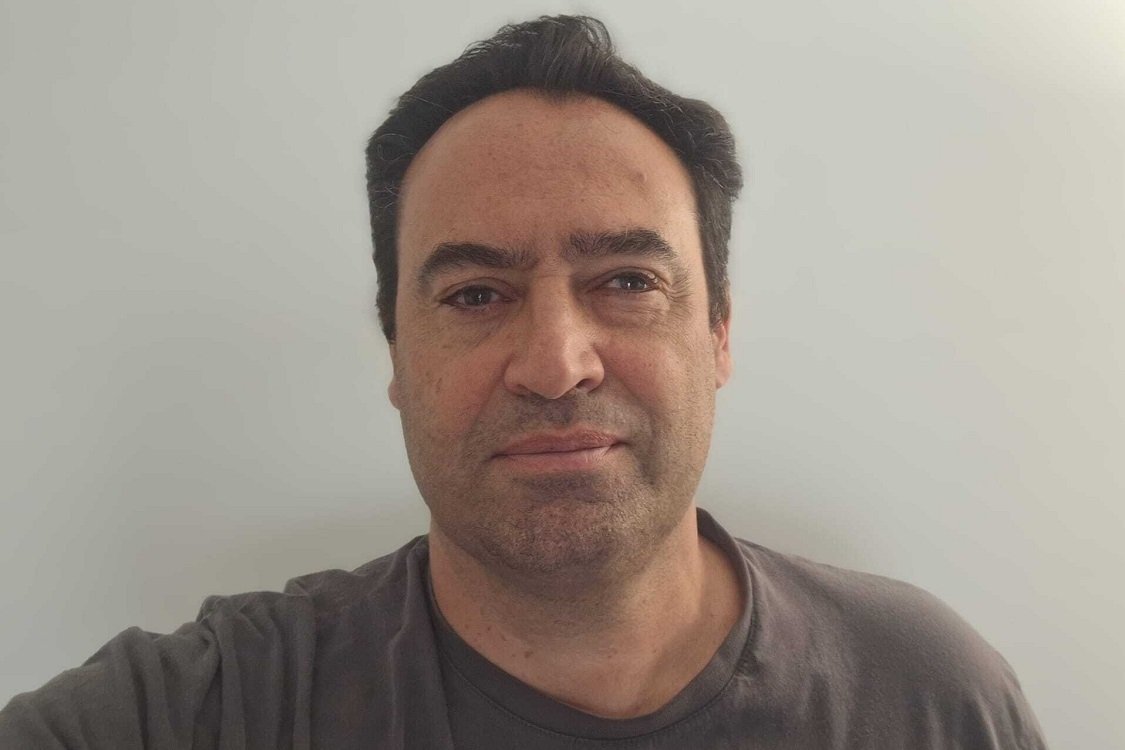
“Today’s world is, unfortunately, an inexhaustible source of stories that deserve to be told independently, without pressure”
– With two projects on show at the La Rochelle market, the French producer discusses international documentary series and defends the French model
An interview at the 37th Sunny Side of the Doc in La Rochelle with Antoine Boukobza, a producer at the Paris-based company Yami 2, which has two projects selected for the Meet & Match. The company’s recent credits include the documentary series Narcotrafic, le poison de l’Europe and Monaco, la grande histoire d’un micro-État, as well as the one-off Monde agricole : la fracture de l’eau.
Cineuropa: What are the key features of La Bataille de Harvard and Dubaï, Le Phare du XXIe Siècle, which you are presenting here in the Sunny Side’s Meet & Match selection?
Antoine Boukobza: We already have an international sales agent, Cinétévé Sales, for La Bataille de Harvard, which is currently in post-production, whilst , Dubaï, Le Phare du XXIe Siècle, which is in pre-production, will most likely be sold by Arte France Distribution. At Sunny Side, we’re aiming for pre-sales and possibly co-productions. La Bataille de Harvard (which will be a 3×30-minute series, with 90-minute and 52-minute versions) offers an insider’s account of the struggle between Harvard and the Trump administration, now back in power and determined to bring universities to heel. Not only were several French and American journalists at Harvard at the time, but we also have exclusive access to students, lecturers and Harvard’s president, Alan Garber, who rarely speaks to the media. But there are also interviews with several key figures on the MAGA side, as well as the vice-president of the conservative ‘think tank’, the Heritage Foundation, which plays a significant role in shaping the ideology behind the Trump administration’s policies. We are producing this documentary (directed by Sandrine Rigaud, Serge Turquier and Robert Libetti) for Arte France and we already have an agreement with the Swedish broadcaster SVT.
As for Dubaï, Le Phare du XXIe Siècle by Jérôme Fritel, we have submitted our development proposal to Arte France and filming is due to begin in September–October. This three-part series, each episode 30 minutes long, explores the rise and fall of Dubai – a place that was virtually non-existent in the 1970s – and tells a story of global capitalism. One might say that Paris was the city of the 19th century, New York that of the 20th, and that Dubai, in a way, embodies the 21st: an ultra-modern city, a global crossroads and now a geopolitical flashpoint fuelled by uncertainties about its future. This story, which will be told by Dubai dignitaries and by people who have lived the dream of a land seen as one of boundless possibilities, will unfold in three acts: a former British protectorate that became a trading hub for raw materials; a territory that has developed into an attractive brand; and a country caught up in the geopolitical powder keg after having managed for a very long time to keep its distance from it. We are now seeking other broadcasters, such as the BBC, with whom we have an appointment at Sunny Side.
What is Yami 2’s editorial approach?
The company was founded 20 years ago by Christophe Nick and Pierre Péan, with the aim of telling the story of the world through investigative reports in which, more often than not, the past sheds light on the present. We don’t produce only this sort of content, but we are quite well known for this type of investigation. Later this year, we will be broadcasting an investigation into LVMH and another on the history of the links between the American mafia and US presidents. Overall, we produce a great many international documentary series, such as The Story of Drug Trafficking, which was a huge success in 2020, Triads: The Chinese Mafia Conquering the World by Antoine Vitkine (2023) and Oligarques by Jérôme Fritel last year.
These ambitious documentaries need funding. What is your view on the rather challenging current situation in this regard?
We are fortunate in France to have extremely strong institutions that support documentary filmmaking: France Télévisions, Arte and the CNC. But the French ‘cultural exception’ is currently under severe strain; it is being undermined from within, which is astonishing because one need only look at international co-productions to see the strength of the French model, its economic and human fabric. This makes it all the more important to defend the French model. Times are difficult and even rather worrying, but paradoxically, today’s world is, unfortunately, an inexhaustible source of stories that deserve to be told independently, without pressure. And France has a real role to play in this regard. But I also think we need to move away a little from Western-centred narratives, tell stories from Africa and South America, for example, and explore issues that are less Western in nature.
(Translated from French)
