
– The head of the international documentary market which is unspooling in La Rochelle chatted with us about the event’s new configuration and current challenges faced by the sector
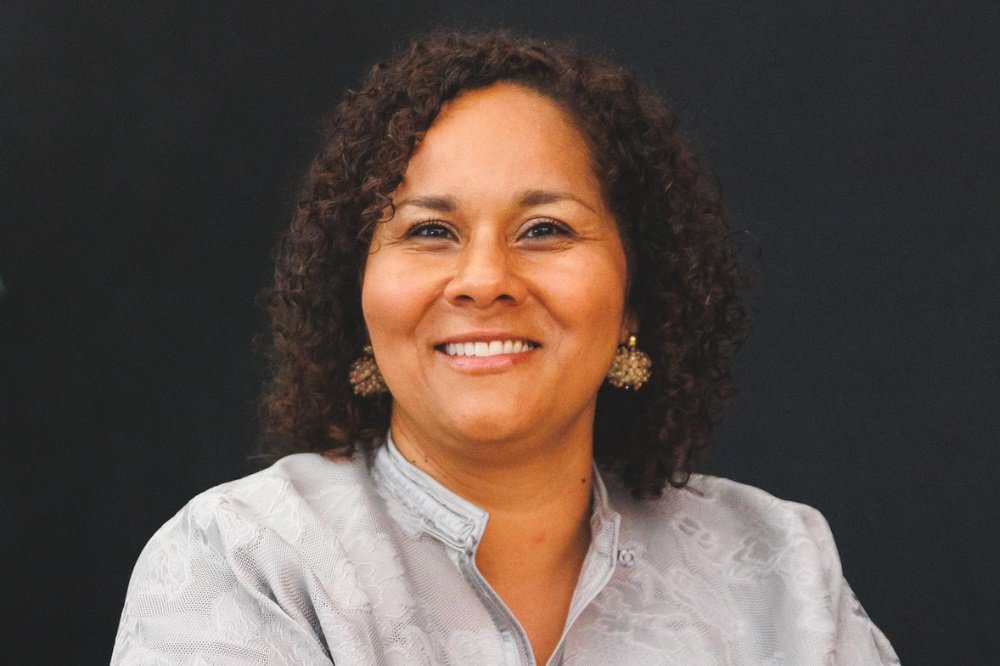
With less than a week to go until the 37th edition of Sunny Side of the Doc (running 22 to 24 June in La Rochelle), we met with Aurélie Reman, who’s been the event’s CEO since 2024.
Cineuropa: Sunny Side of the Doc avoided clinical death thanks to strong mobilisation on the part of the sector, and now it’s returning with a new configuration, in partnership with Documentary Campus. What are its main thrusts?
Aurélie Reman: In addition to a format which is reducing from four to three days, there was another key challenge driving the sector’s mobilisation: responding to its most pressing needs. So the format was rethought so that it could focus on efficacy, especially when it comes to meetings between producers, project-bearers, networks, funders and distributors. We’ve also shown that we’re more open in that respect, bringing us in line with the wide range of film budgets and funding plans at this particular moment in time.
As a result, we’re launching a new format for meetings called Meet & Match: we’ve selected just over 100 projects to ensure they benefit from tailored meetings, but also to respond to market demand. We’ve also organised speed dating for buyers and distributors, because international co-production is part of Sunny Side’s DNA. And we’ve also been developing the Sales side of our event for the past two years, because distributors play a key role in that ecosystem. Lastly, we’ve created a new space, called CoPro Hub, for independent production companies who are no longer able to invest in the event as they might have done previously, but whom we’d still like to have at the event so that they can connect with their peers. We’re increasing the number of industry players who are coming along, because it’s important to share co-production experiences, good contacts, and how we’re all trying to adapt right now.
What trends did you identify while deciding on your Meet & Match selection?
We received an equivalent number of applications to last year, with the same wide range of themes, and a large quantity of works on the subjects of current affairs, global issues and geopolitics. But we’re also sticking with the really significant themes of science, history and wildlife, which have high international appeal. And we’ll also have far more hybrid formats, such as culture with a social aspect to it, etc. Instead of 42, we’ll have 106 projects in the Meet & Match programme’s public pitchings, to improve the selected works’ chances at success, because it’s hard to develop new documentary stories at this particular moment in time. These projects need to find support at Sunny Side, and a platform to facilitate their search for funding, which remains the main challenge. But it’s important to retain diversity by showcasing stories which might seem a little more commercial at first glance, but which need to be supported in order to protect a space for surprises, for more authentic voices, especially from region which are under-represented in the international market.
What do you make of the strained funding landscape we’re seeing at present?
Funding for the public audiovisual sector on a European scale is a key challenge. Moreover, we’re really pleased to welcome the specialist factual group, the EBU (European Broadcasting Union), to Sunny Side for the second time. They’ll be holding their annual meeting at the event to talk about projects, but also strategic alliances, because they now have to work collectively in order to ensure the continuation of investments and, notably, high-quality productions which have the potential to shine on the world stage and generate revenue, and to make sure all the links in the production chain feel represented. We need to find more agile and flexible models, because production time is probably going to decrease. We’ll have to deliver things more quickly and not necessarily with the same level of resources. For this reason, distributors – who are currently experiencing significant changes – need to be as clear as possible when communicating their new editorial lines and their actual resources, so that independent producers can respond to them, and that’s without forgetting the challenges around returns on investments. And innovation, because we also need to rethink documentary formats. But we have a community of creators and independent producers who have an incredible capacity for resilience and transformation.
What kinds of strategies are you identifying among broadcasters?
We’re currently seeing a focus on “streaming first” or “digital first”: it’s the guiding principle of future investments and all networks are redefining their strategies. They have agreements with YouTube or Netflix, for example. There are pitfalls, however, with this hybridisation, in terms of redistribution, the valuation of rights, managing exclusivity, etc., which producers, distributors and broadcasters need to reflect upon together, because the sector is clearly at a pivotal moment where contracts and certain balances have to be rethought. That’s Sunny Side’s role, to stimulate these discussions: without viable, virtuous models, the sector will struggle to get a collective handle on these changes which are already taking root. It’s also important, from a democratic perspective, for the documentary genre to continue being highly visible on all screens and accessible to wider audiences.
What about AI, which will form the focus of a keynote speech at Sunny Side? It’s a technology which is advancing much faster than the associated regulation…
It’s a topic we can’t ignore in our editorial programming, but we have to broach it from a concrete angle. Do we outsource it or insource it? What new professions are emerging as a result? What does it add from a narrative perspective? In recent history productions, for example, AI allowed for the reconstruction of entire sequences, but I’m definitely not talking about using AI to make an entire film. Creators must always be in the driving seat, but AI does offer a narrative potential that we can’t ignore. That said, we also have to think about the way these AI systems are powered: respect for copyright should be fundamental, and the contract of trust we have with audiences. And it is true, unfortunately, that regulation takes too long and that some very serious political questions are being raised around the protection of the fundamental principles governing independent, virtuous creation, especially in France, but also throughout Europe as a result of the AgoraEU programme.
(Translated from French)
