
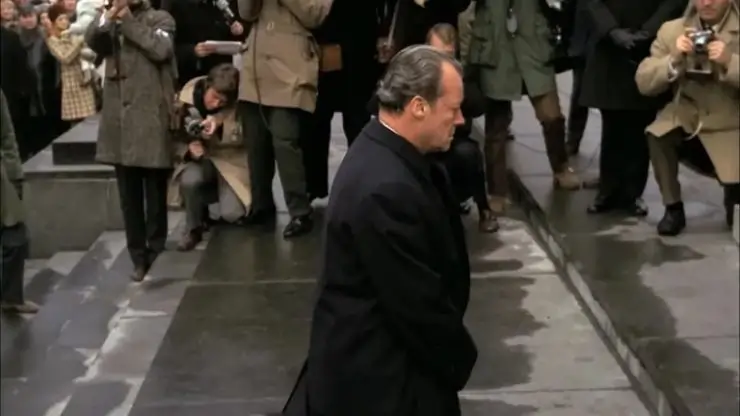
Great literature works have warned us; personal heartbreaks have prepared us. Politicians have failed us, yes, but I know no single soul that has never craved resolution. Yet, sorry still seems to be the hardest word.
Let’s be real for a second: those residing in colonial countries must know by now that European forces have started addressing the crimes committed during their imperialistic times (not that these are mere stories from the past). It is a process that has been inaugurated alongside the reshuffling of pain, sparking a perplexing series of debates. No one (historically literate) expects an easy fix—we are, anyhow, battling with hundreds of years of damage. But the approach, nearly farcically, reinforces the hierarchies and replicates the stakes. I am not sure how this period will stay in the records of history, I mean, who will claim responsibility, and to what end. But it’s about time filmmakers join the dance.
Belgian director Kristof Bilsen is one of the few who recognized potential in capturing the decolonizing process, bare of aesthetic tropes. Departing from the Belgian rally (led by the Parliamentary Commission on Colonial Past), which, after nearly 3 years of conversational gatherings and caressing parties, did not even manage a spectacular crash, Bilsen fashions a parallel investigation into what it takes to resolve conflict. The Apologist follows his process, which reflects the same form of the national strategy. With theatrical rehearsals, visits to archives of public apologies, and laboratory explorations, the documentary compiles many projects in one, while demonstrating at the same time how opening up dialogues can often lead to further muddling the waters.
The premise of the film subtly changes along the way, as the filmmaker and the characters he follows stumble across the underlying intricacies and implications. Sure, there is dust and dirt and mess resurfacing when searching through relics, and sure, there is value in merely attempting to clean up. But there is more value beyond the symbolism of it all, and it lies not in the concept of trusting the process, but in vulnerability and receptivity when doing so.
The Apologist primarily attends to a definitional approach, which is both funny and stimulating. Traditionally, when a public debate is led by politicians, it often explodes in scale, rendering participation and understanding basically impenetrable due to legislative complexities. Here, Bilsen offers a simpler entry point, one that is almost mundane and thus relatable for an unstrecthed mind. Certain propositions, such as not only seeing the pain of the other side but also staying with it, are brilliant additions that stand out to an otherwise swamped narrative composed of fragmented particles. For the rest, it is a mashup of different approaches that, for lack of editorial decision, numbs even further the possibility of reconciliation.
I wonder how this could be better supported. For instance, what if it were told through a series of testimonies (films) that don’t simply bring us along on the research, but actually grapple with what it takes to deliver an honest sorry and move forward? Maybe that’s too much to ask from one single documentary. But seriously, I’d also like to know.
★★★
Premiered at the 2026 Sheffield DocFest as part of the International Competition / Dir: Kristof Bilsen / Production: Limerick Films / Belgium, Netherlands, France
Discover more from
Subscribe to get the latest posts sent to your email.
