
Well, the day is finally here. The Canadian Radio-television and Telecommunications Commission’s (CRTC) new rules prohibiting activation fees are now in effect. Several Canadian carriers have now removed various fees, while some have tried to introduce new fees in order to work around the new rules.
First, a refresher on the rules. The commission announced in March 2026 that it would prohibit fees that discourage Canadians from switching plans.
Specifically, the CRTC amended the Telecommunications Act to prohibit service providers from charging fees “related to the activation or modification of a telecommunications service plan, or any other fee whose main purpose is, in the opinion of the Commission, to discourage subscribers from modifying their service plan or cancelling their contract for telecommunications services.”
However, the commission also included exemptions to the rule for “reasonable fees,” for example, those related to the physical installation of services at a customer’s home.
In other words, things like the $80 connection fee customers had to pay when switching carriers are no longer allowed, but carriers can still charge for installing a new internet line at your home. Moreover, carriers can still charge fees for optional, additional products or services that customers choose to purchase.
The new rules also prohibit some cancellation fees, though it’s worth noting that cancellation fees may still apply in certain cases. For example, customers who finance a device and cancel early will still need to pay off the remainder of their financing agreement.
Carriers that added new fees
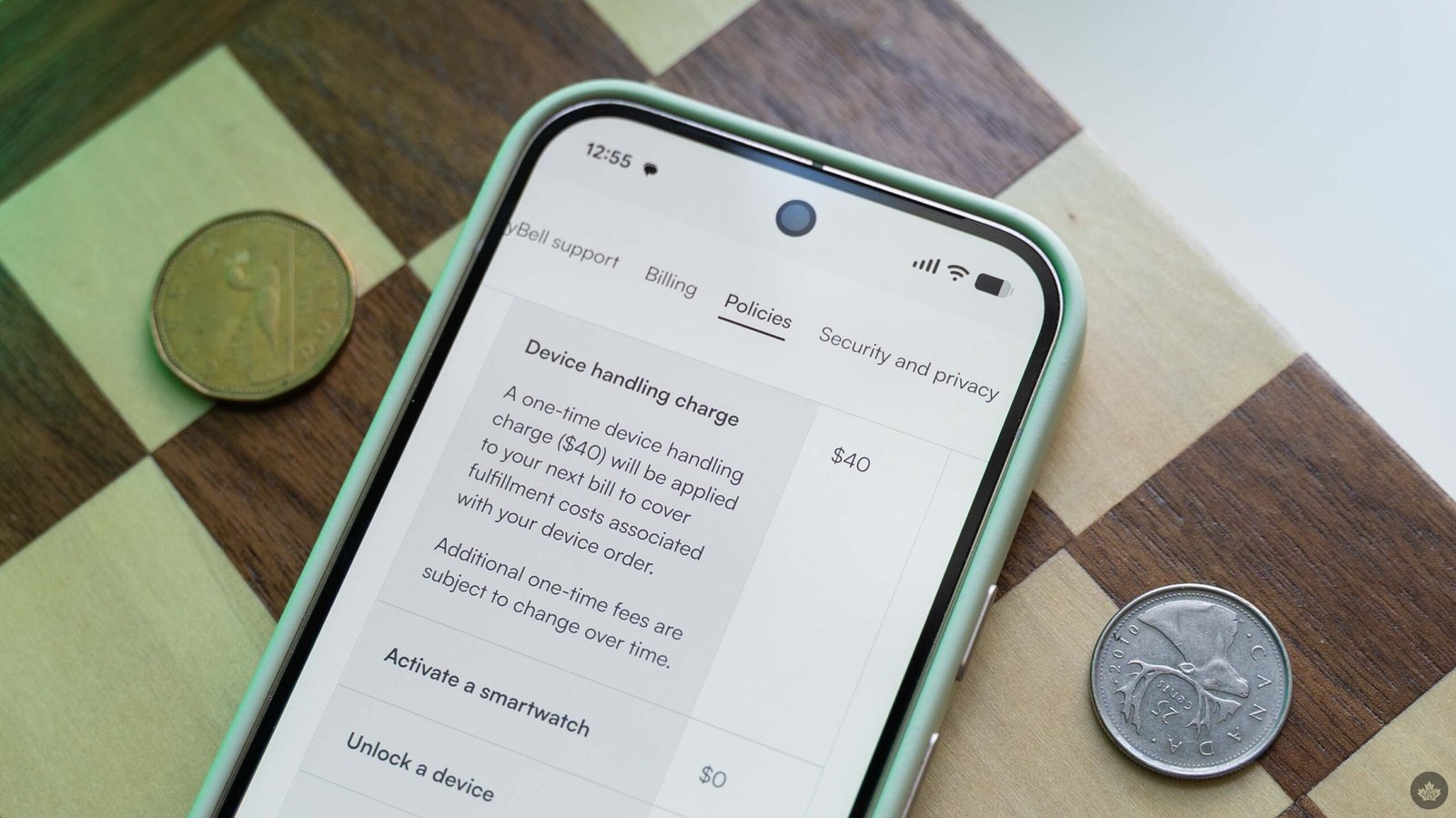
I’ll keep this section short since we’ve already written about these carriers at length, but so far, Bell and Telus have responded to the new fee rules by introducing new charges for customers. Bell replaced its connection fee with a $40 device handling charge in May, and just this week, Telus replaced its connection fee with a $15 SIM charge. These fees also apply to Bell’s Virgin Plus and Telus’ Koodo brands.
The CRTC responded to both Bell and Telus with letters indicating the new fees may also violate the rules, as the new fees are for products that are required to provide telecom services. The commission encouraged both carriers to resolve the situation before it needed to resort to regulatory intervention.
At the time of writing, both Bell and Telus still had their new charges on their respective websites. It remains to be seen whether either carrier will change course or if the CRTC will move ahead with regulatory intervention.
Carriers that have removed fees
As of June 12, several carriers that previously charged connection fees have now removed them. In some cases, carriers have removed additional fees as well.
Freedom Mobile
Freedom Mobile has removed the $45 connection fee it previously charged. Mention of the fee has been stripped from the carrier’s website as of June 12.
Interestingly, a Reddit post notes some additional fees that were removed or altered, including the hardware upgrade fee for existing customers who get a new phone, the $30 Roam Beyond fee, a prepaid fee, and an in-store SIM swap fee. MobileSyrup wasn’t able to independently verify the changes to the hardware upgrade fee or in-store SIM swap fee, but can confirm the removal of the Roam Beyond fee and the new prepaid fee.
Previously, Freedom charged a $30 fee for early cancellation of plans which include Roam Beyond data. These plans require a minimum three-month subscription, and Freedom would charge $30 to customers who cancel early. However, that fee is no longer listed on Freedom’s website, though the Roam Beyond plans still require a three-month subscription.
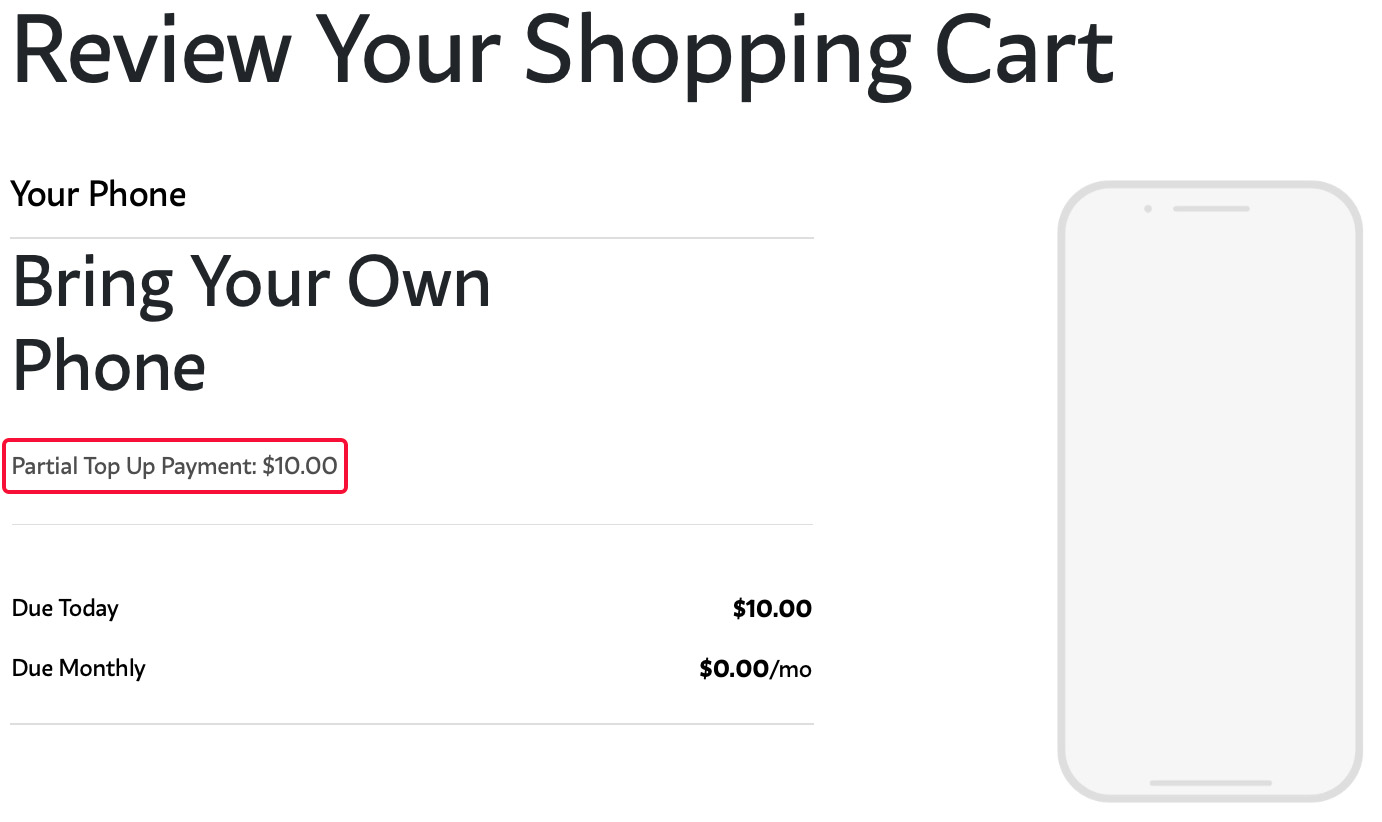
Freedom’s $10 partial top-up fee for online prepaid orders.
As for the prepaid fee, Freedom is charging a $10 partial top-up payment for online prepaid activations. It’s not entirely clear why Freedom is charging this fee, and the Reddit post highlighting it claims Freedom will credit the fee back to customers on their first top-up. The Reddit post also says the fee doesn’t apply to in-store activations, but MobileSyrup can only confirm that Freedom charges the $10 partial top-up for online orders.
Rogers and Fido
Next up are Rogers and its flanker brand Fido. Both providers used to charge an $80 connection fee (or, as they called it, a “Service Set Up Fee”). As of June 12, this fee was quietly removed from both providers’ websites.
At the time of writing, MobileSyrup wasn’t aware of any other fee changes for Rogers or Fido. Rogers does have several support pages listing various fees customers might see on their bills, including general charges, wireless charges, and administrative fees. Most of these do not appear to fall under the new rules.
Other providers
It’s worth noting that there are plenty of providers that already didn’t charge activation fees prior to the new rules, including several prepaid providers like Public Mobile, Lucky Mobile, and Chatr Mobile. However, some of these providers still charge for SIM cards.
Telus-owned Public Mobile is currently offering a $0 eSIM for new activations, but the provider’s website clearly notes that this is a limited-time offer and that eSIMs usually cost $5. It also notes that physical SIMs cost $15. Moreover, Public charges customers $5 to generate a new eSIM, rather than allowing customers to transfer existing eSIMs to a new device.
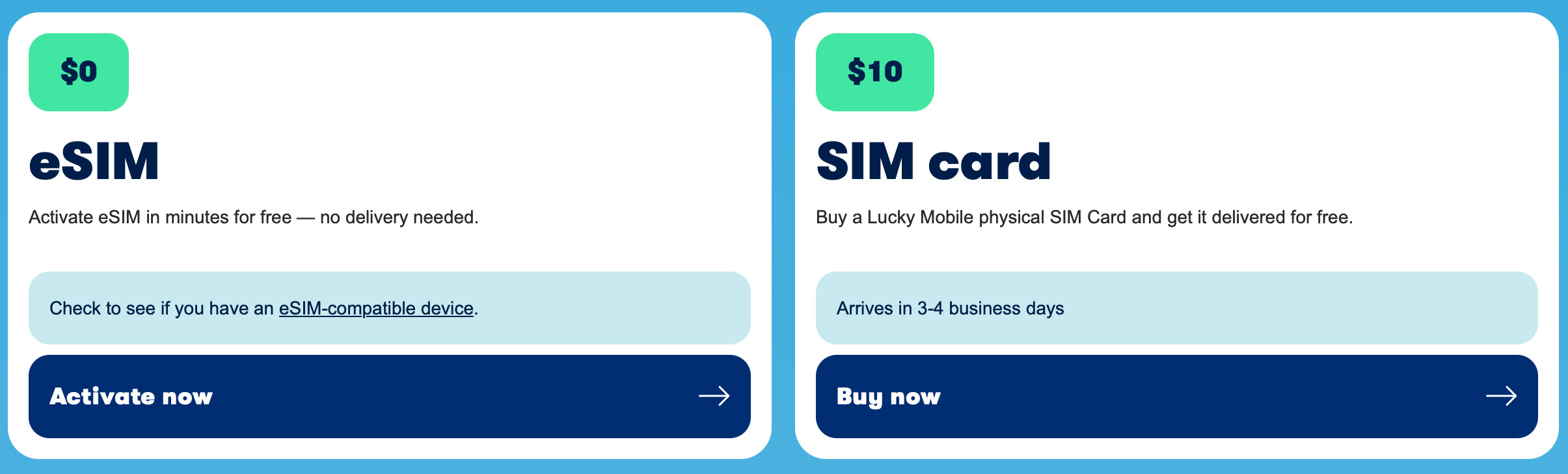
Lucky Mobile’s SIM fees.
Bell’s Lucky Mobile and Rogers’ Chatr Mobile, on the other hand, both offer $0 eSIM activations. However, customers who want or need a physical SIM must pay a $10 fee.
It remains to be seen if this violates the new rules around required products. While it could be argued that the physical SIM card is an ‘optional’ product and thus exempt from the fee rules, many people still have devices that do not support eSIM. In those cases, the physical SIM is no longer an optional product, and charging for one could therefore violate the rules.
Finally, government-owned SaskTel does not charge an activation fee.
