
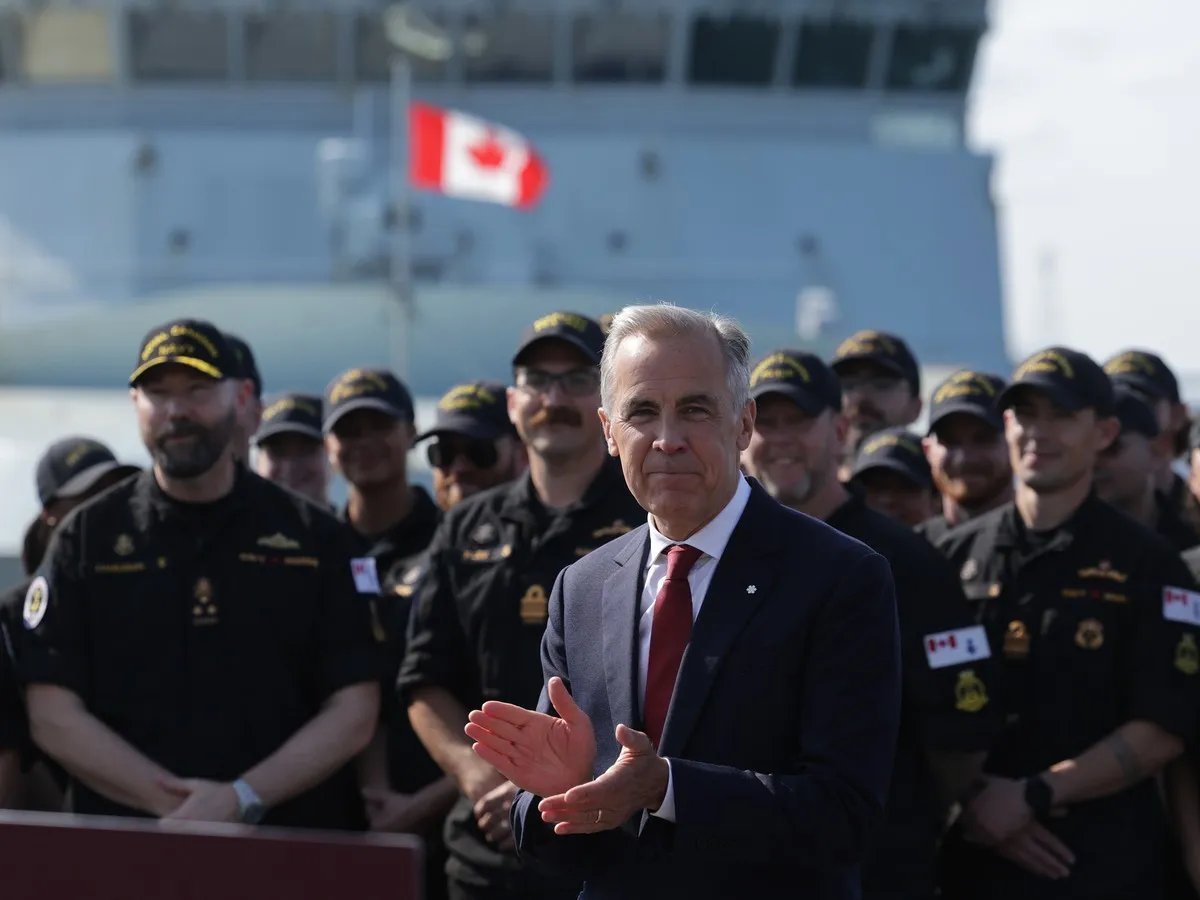
Six days after the federal government said only one of Canada’s four submarines is seaworthy, that submarine sank an American warship off Hawaii.
HMCS Corner Brook launched a Mark 48 heavyweight torpedo at the decommissioned cruiser USS Mobile Bay on July 12, and the Canadian shot was the one that sank it, CTV News reported . It was Canada’s first submarine at the Rim of the Pacific exercise in 12 years.
Capt. Landon Creasy, the Canadian task group commander, said in a statement that live-fire targeting exercises are “invaluable to our submariners,” CTV reported.
The U.S. Navy said in a release that Mobile Bay went down in waters 15,000 feet deep, more than 50 nautical miles off the northern coast of Kauai. The release said a second decommissioned ship, the amphibious assault vessel USS Peleliu, was sunk in the same area July 17.
The release said units from Australia, Canada, Italy, Japan, New Zealand, Spain and the U.S. Navy, Air Force and Army took part in the sinkings, gaining proficiency in tactics, targeting and live-firing against a surface ship at sea.
Vice-Admiral Jeffrey Jablon, commander of the RIMPAC combined task force, said in the release that sinking exercises are “a prime example of the strength and readiness our partnerships create.”
Lieut.-Cmdr. Linda Coleman, a Royal Canadian Navy spokesperson deployed in Hawaii, said in a statement that the submarine proved it retains “precision strike capability” in complex marine environments, CTV reported.
Submarine work at the exercise is usually less dramatic. A boat at RIMPAC will often act as a “clockwork mouse,” moving predictably so surface ships can practise tracking it, said Paul Mitchell, a professor at the Canadian Forces College who is writing a book on the Victoria Class. “No submariner wants to be a clockwork mouse because it’s boring and dull and there’s no glory in it,” he told National Post .
A July 6 news release from the Prime Minister’s Office said Canada’s submarine fleet is aging, with only one of four submarines seaworthy. The release named Thyssenkrupp Marine Systems as the preferred supplier to begin negotiations on up to 12 new submarines, in what it called the largest defence procurement in Canadian history.
Corner Brook is Canada’s lone operational submarine, National Post reported this month. Mitchell said the navy has to keep the aging boats running for another decade because it needs them to train crews for the incoming German-built fleet. “By hook or by crook, the navy has to make these things work for the next 10 years because they have to generate crews,” he said.
CTV reported that Corner Brook returned to service last year after running aground off Vancouver Island in 2011, and that repairs cost about $20 million, with a further $695 million in maintenance, upgrades and life-extension work.
CTV reported Canada also sent two Halifax-class frigates, a replenishment ship, a long-range patrol plane, two maritime helicopters and more than 800 Armed Forces members to the exercise.
The U.S. Navy said Mobile Bay was commissioned in February 1987 at the Alabama State Docks in Mobile, Ala., and that over three decades of service it supported Operations Desert Shield, Desert Storm and Iraqi Freedom and delivered humanitarian assistance after the 1991 Mount Pinatubo eruption in the Philippines. The release said the cruiser was decommissioned in August 2023 after more than 36 years.
The U.S. Navy said RIMPAC’s 30th edition runs to July 31 with 30 nations, 30 surface ships, five submarines, more than 190 aircraft and 30,000 personnel. Canada helped found the exercise in 1971 and has taken part in every one since, CTV reported.
Our website is the place for the latest breaking news, exclusive scoops, longreads and provocative commentary. Please bookmark nationalpost.com and sign up for our newsletters here.
