
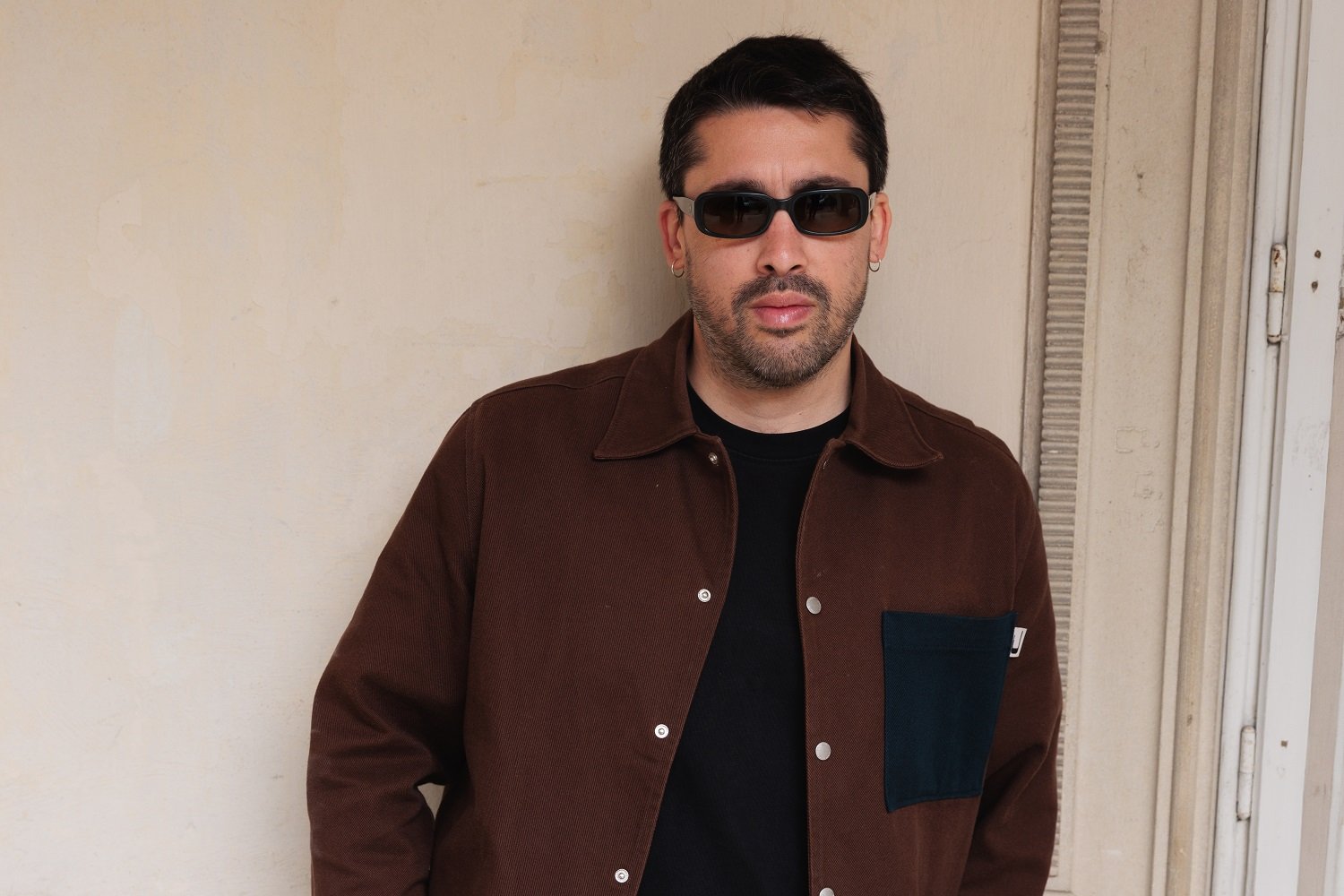
“My job was more about setting the mood and creating the right conditions for things to happen”
– The Spanish filmmaker discusses the long process of building trust behind his debut film, an intimate journey marked by reconciliation and inherited silences
(© Claudiu Anghel)
We spoke to Carlos Saiz for the screening of his debut feature film, Lionel, which was presented at the Seminci Film Festival in Valladolid and is now competing at the Transylvania Film Festival. The director reflects on the origins of the project, his approach to working with real people, and how the film ultimately became a meeting place for its protagonists.
Cineuropa: You’ve mentioned before that, when you met Lionel, you felt the urge to portray him. What drew you to his personality and his story?
Carlos Saiz: I knew instantly. Lionel had all the makings of someone who could end up in a dark place, but at the same time he possessed a radiance and an ability to captivate those around him that drew me in from the start. During my film studies, I would constantly turn to him for inspiration when writing. Later I met Lionel’s father, and I realised that the relationship between the two of them deserved a film.
The film portrays a very deep intimacy. How did the father and son agree to become the protagonists?
It was a very organic process. Before the feature film, I made a short documentary with them, La hoguera, which was the beginning of everything. There was never a formal conversation to persuade them. Over the years, we built a relationship of trust. The film also ended up almost as a tool for communication, like a kind of therapy. There were things they struggled to say to each other in private but which, in front of a camera, they were able to express.
Where do Lionel and his father fit into Spanish society today?
While writing, we talked a lot about that clash between different forms of masculinity. Lionel breaks certain stereotypes. Because of his appearance — with the tattoos and everything — he might fit a very specific image, but in reality he’s extremely sensitive, with a deep need to explore his emotions and understand the wounds of his past. That was exactly what fascinated me about him.
His father, on the other hand, represents an older, more emotionally closed-off masculinity. He believes in certain traditional structures and finds it difficult to accept a freer way of life. But he is also full of contradictions and humanity. The film tries to look beyond his flaws and find the heart behind them.
The father seems to belong to a generation marked by the excesses and contradictions of post-Franco Spain.
Absolutely. He was the black sheep of a very structured family, with generations of firefighters. He suffered a very serious accident when he was young, spent years in hospital, and that changed his life. Then came marriages, divorces and many mistakes. Interestingly, someone who led such a chaotic life is now trying to impose discipline on his son. He’s full of contradictions, and that makes him a very interesting character.
Although the film seems very spontaneous, you did work from a script, didn’t you?
Yes, there was a very detailed script, but they never read it. The film is based on who they really are, so I needed them to react naturally. My job was more about setting the mood and creating the right conditions for things to happen.
We also shot chronologically – in Murcia, France and, finally, back in Murcia – to follow the evolution of their communication. From a production point of view, it wasn’t the most cost-effective option, but it was essential, because the journey genuinely transforms their relationship. Before the film, they had never spent more than a few days together since Lionel was a child. That evolution needed to happen authentically in front of the camera.
Music plays a very significant role in the film.
I wanted it to serve as an emotional guide for the viewer and also as a way of linking this story to certain conventions of the road movie. Many of the songs come from a playlist that Lionel shared with me while I was writing. It’s music that matters to him and his father, so the soundtrack is taken directly from their lives. As the journey progresses, the music evolves too. It shifts from lighter moments to more dramatic ones and finally to brighter ones.
The film is now being screened in Transylvania, a place closely linked to your family history. Tell us more.
It’s really exciting. Ten years ago, Lionel spent a year on the Erasmus programme in Cluj-Napoca, and his father never really understood why he went – he thought it was a waste of time. Now the three of us are travelling there to present the film, and it’ll be the first time Lionel’s father has ever been on a plane. I like to emphasise this connection, perhaps because he might finally understand that that experience meant something to his son. In a way, the film keeps living on and continues to stay with us.
(Translated from Spanish)
