
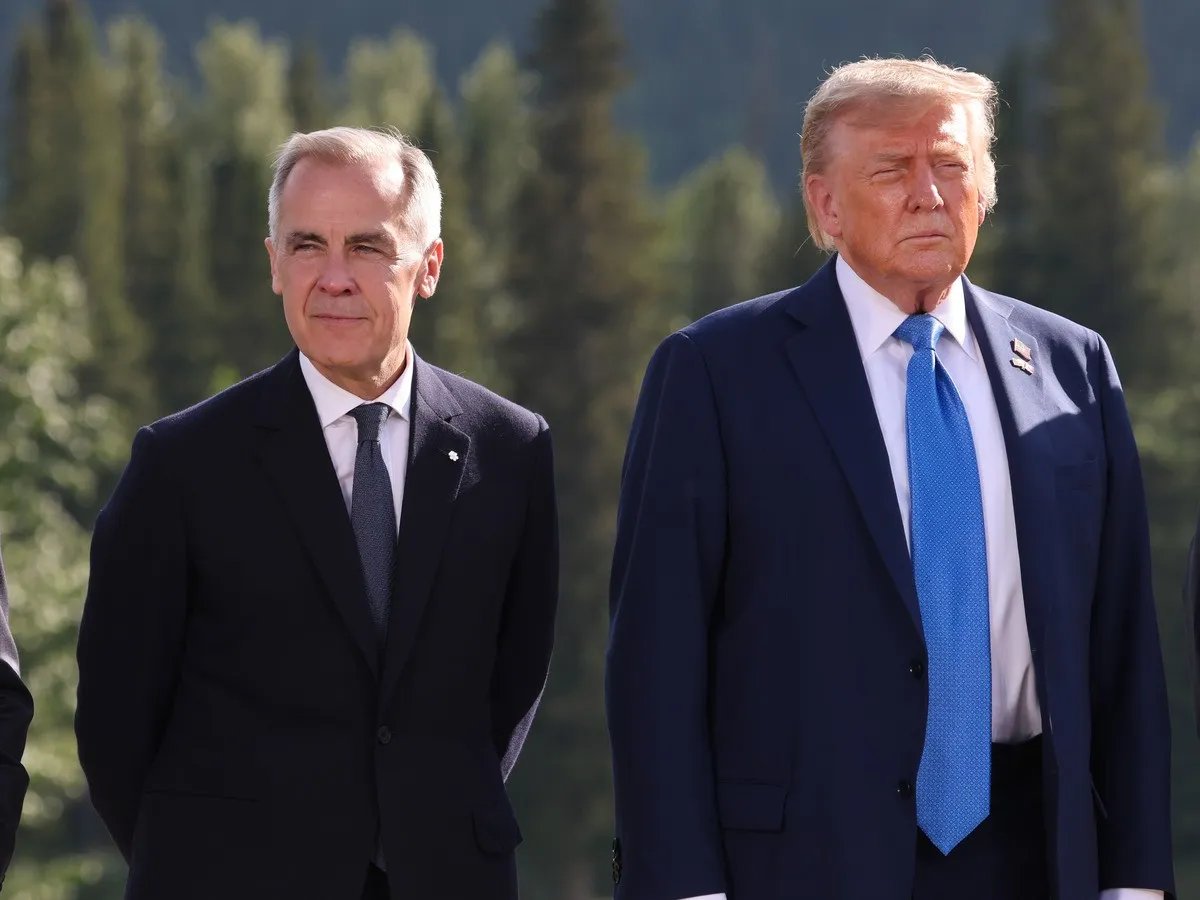
WASHINGTON, D.C. — U.S. President Donald Trump has a shifting list of grievances with Canada. These have included an ad featuring Ronald Reagan criticizing tariffs, Prime Minister Mark Carney’s EV deal with China, and his pro-globalization Davos speech.
Ottawa also moved to raise costs for auto giants, reportedly irking the White House, and Carney has drawn criticism for inviting former president Barack Obama to meet with him in Toronto this month.
There have been reports about Trump demanding “entry fees” — concessions Carney must make before talks begin. And, of course, there have been various slights in the media, including Commerce Secretary Howard Lutnick saying Canadian trade negotiators “suck.”
For all the posturing, however, there has been no hint of progress in easing U.S.-Canada tensions or on the upcoming Canada-U.S.-Mexico Agreement (CUSMA) review, and that has business leaders and politicians worried.
Things are tense enough that some Republicans have begun to wonder whether Carney is serious about reaching an agreement with the U.S. at all.
“They don’t even believe that Canada is serious about seeking a deal,” said Dimpee Brar, director of engagement for Allies for a Strong Canada, who recently spoke at the first-ever North America Summit sponsored by the America First Policy Institute in Washington.
Both sides appear to be waiting for the other side to blink.
“In normal times,” said Wendy Cutler, senior VP at Asia Society Policy Institute and a former trade negotiator at the Office of the U.S. Trade Representative, “the two sides would be negotiating already. It wouldn’t be a question of who would reach out to whom — there’d be continuous contact.”
“Given the tensions, I think both sides are playing a game with each other, trying to show that they’re the stronger partner,” she added.
There haven’t been any formal, publicized meetings in months between the two sides, but a source privy to information about the negotiations said this week that talks are ongoing and that they’re being kept “hush-hush.”
“They don’t want to say anything to the press that might get misconstrued and upset the administration.”
Minister responsible for Canada-U.S. Trade Dominic LeBlanc’s team also said the two sides were communicating.
The Canadian team is “engaging on an ongoing basis with their U.S. counterparts,” said LeBlanc’s spokesperson Gabriel Brunet, who noted Ottawa has shared its proposals with the U.S.
Carney has said Canada has some issues to iron out in the CUSMA talks, particularly around autos. His team is also seeking relief from the Section 232 tariffs on metals and lumber.
But Ottawa is not seeking major changes to the trade deal.
“The Canadians feel that the USMCA is good as it is and doesn’t need to have any adjustments or changes,” the source close to the negotiations said, noting that because the treaty was passed by the three countries’ legislatures, they “don’t really see a lot of room for changes.”
Washington, however, has demands.
Its main concerns, said Cutler, “are Canadian barriers in dairy, digital, and other sectors, plus the push for more North American content and less Chinese content.”
Trump wants Carney to ditch Canada’s supply management system and open the dairy market to more U.S. dairy farmers. While Canada abandoned its Digital Services Tax as a concession last year — getting nothing in return — Washington also wants Ottawa to drop the Online News Act and Online Streaming Act, which it sees as unfairly protectionist.
The White House also wants stricter rules of origin to restrict foreign components, and related to that are U.S. concerns for the need to block Chinese-linked imports from North America.
“The issue is all about China, China, China,” said Brar.
Cutler also noted that the Canada-China EV deal is a problem.
Trump “wasn’t happy when Carney went to China and reached the deal with Xi Jinping to allow 49,000 Chinese EVs into Canada,” she said.
Many of Washington’s demands — on dairy access, digital rules, and North American content — predate Trump, while Ottawa faces its own political limits in sectors like supply management and autos.
Meanwhile, negotiations between the U.S. and Mexico have advanced, with the two sides said to be close to a deal.
“The U.S. now is gravitating towards Mexico in an effort to sideline Canada,” said Cutler.
U.S. Trade Representative Jamieson Greer heads to Mexico next week to meet with President Claudia Sheinbaum, a trip he will use to pressure Canada.
On June 1, shortly after his trip to Mexico, Greer will face Congress and report on Washington’s intentions for the CUSMA review.
Another pressure point Washington may use is the 301 tariff investigation into forced labour laws, which could result in a broad tariff that does not exempt CUSMA-compliant goods.
How Canada responds to the mounting pressure will likely help determine what Greer tells lawmakers.
Whatever happens between now and the July 1 review deadline, nobody expects a resolution anytime soon. Trump could still instruct Greer to blow up CUSMA.
“I’ve heard a rumour,” said Cutler, “that people shouldn’t be surprised if Trump, in July, just says we’re gonna withdraw from the agreement full stop.”
If that happens, Trump would have six months to effectuate that.
Others have said, given that the U.S. faces midterm elections in November — with Democrats favoured to win the House — that abandoning CUSMA is not the best move for Trump. But Cutler doesn’t think the timing will play into the president’s decision.
“I think since the negotiation will go beyond the midterms, it’s unclear what role Congress will play in this negotiation until any revised agreement is brought to them for approval,” she adds, noting talks could last two years.
If Trump signals an exit from the deal, Andrew Hale, fellow for Advancing American Freedom, said that move may be “very different from reality.”
“This administration,” he explained, “is all about performative messaging.”
If the threat becomes a reality, however, the economic pain will be tremendous.
Cutler also said it could economically damage all three countries, but she doubts Trump will follow through.
“I think (Trump) may just threaten that — a lot of bluster and then it becomes TACO (Trump Always Chickens Out),” she said. “I don’t think he would really withdraw, but I think that could be used as drama to send a shot across the bow.”
Our website is the place for the latest breaking news, exclusive scoops, longreads and provocative commentary. Please bookmark nationalpost.com and sign up for our newsletters here.
