
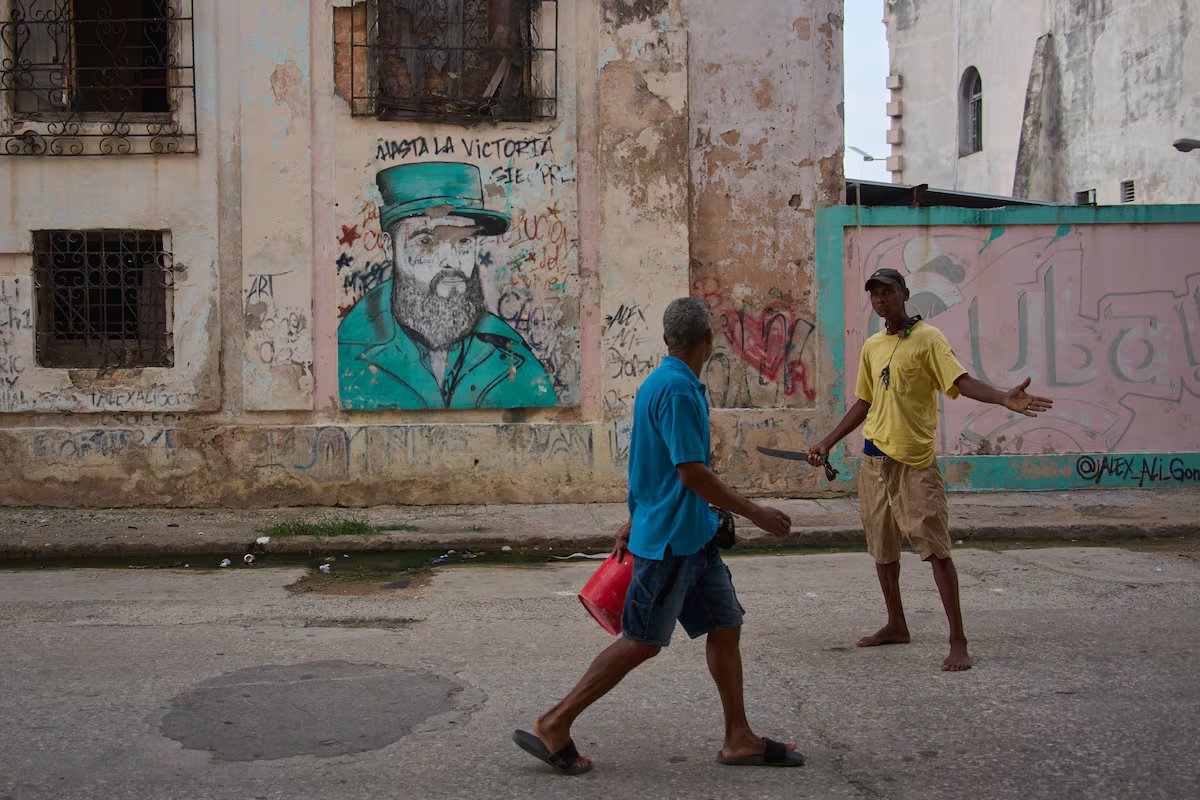
When the United States captured Venezuelan President Nicolás Maduro in his room at Fort Tiuna, in Caracas, many people made a seemingly simple calculation: in politics, as in medicine, evil must be nipped in the bud. And, since the American government had first gone after the successor to Hugo Chávez — who governed Venezuela from 1999 until his death in 2013, before Maduro took over — the next step was to go after the Castro regime in Cuba.
However, all these months later, it hasn’t happened… at least, not in that way.
When U.S. Navy ships were sighted patrolling the Caribbean waters, those same people thought that now, finally, the regime in Havana would be dismantled in the blink of an eye. When Raúl Castro (Fidel Castro’s younger brother, who served as first secretary of the Communist Party from 2011 until 2021) was indicted for murder, they concluded that — just as when the White House formally accused Maduro, in order to deliver the final blow — this was what was needed to begin liberating Cuba.
Everything since the beginning of the year has been a sign: the CIA chief’s visit to the island, the dozens of sanctions imposed, Donald Trump’s calm and smiling threats from Air Force One, the secret meetings with Castro’s grandson… the list goes on. The only member of the U.S. administration who hasn’t been sending false signals is Secretary of State Marco Rubio. Emphatic and understated, in his latest comments, he has made it clear that, if Cuba falls, it will fall under the weight of its own suffocation… and that won’t happen until 2029, when Trump’s second term ends.
In an interview with the American media outlet Axios, the Cuban-American politician asked those interested in change to have “patience and persistence.” But the Cuban people are running out of hope, as they continue to pay the price of hunger and politics. With the ongoing oil embargo — imposed by the United States since January — serving as a catalyst, the population is facing the worst crisis they’ve experienced since the 1959 Revolution.
Rubio also told Axios: “My level of confidence is that when this administration is over, at a minimum, Cuba will be on an irreversible glide path toward a different future.”
While Trump has ventured to say that “Cuba is going to be next” — after his intervention in Venezuela and the attacks on Iran — the truth is that Rubio has never gone that far. In fact, the Cuban-American community, which shaped him and made him a political son of South Florida, expected the now-secretary of state to speak in more radical terms, as he did during his years as a senator (2011-2025). Based on what he said, that fiery version of Rubio only lacked the power to end the Castro regime — not the will. But these days, his rhetoric has been far more restrained. In fact, he recently reminded people during an interview on The Katie Miller Podcast that, “at the end of the day,” he doesn’t work for Cuba, but for Washington. “I care about Cuba, obviously I have a personal connection to it, but I don’t work for Cuba; I work for the United States. And I believe it’s in the national interest of our country to have a Cuba that’s safe and stable and aligned with the U.S.”
The person who has consistently floated the idea of intervention has been Trump. Back in January, he asserted that he believed the island was “ready to fall.” In February, he hinted that he would love to carry out a “friendly takeover” of Cuba. In March, the president declared: “Cuba is next.” In April, speaking from the White House, he said “we may stop by Cuba.”
In May, he boasted: “It looks like I’ll be the one that does it.” And, in June, Axios journalist Marc Caputo asked him if there would be an operation in Cuba similar to the mission in Venezuela. Trump replied, “Possibly. It’s possible.”
However, by this point in time, he had spoken a bit more at length and acknowledged that Havana was neither Caracas nor Tehran. Cuba, according to him, is a small, suffocating territory… a country without oil and with nothing to offer the U.S. In July, during a speech in North Dakota, the president said that “Cuba, after many, many decades, it’s coming our way, coming our way.” And, in August, he hasn’t said a word so far regarding the situation.
While the United States has never ruled out a military operation in Cuba — as CIA Director John Ratcliffe recently reiterated — Rubio (who, according to Trump himself, is in charge of the matter) has maintained a single constant in his discourse throughout his tenure: either to pursue an economic opening that, sooner or later, will supposedly lead to the dismantling of the existing Cuban power structure, or to impose economic strangulation that will force the regime to yield.
“Rubio never said that Cuba would be next,” Michael Bustamante asserts. He’s a professor at the University of Miami and author of the book Cuban Memory Wars: Retrospective Politics in Revolution and Exile (2021). “Rubio has always been a bit more cautious [than Trump]. It’s very difficult to know [if] he had a shorter timeframe in mind [before] taking more decisive action, or [if he felt] the policy of economic pressure alone to be effective… but clearly, in [the recent] statements he’s made, he’s implying that the situation in Cuba now has a different timeline.”
The shadowy policy toward Cuba
Since the United States banned all oil shipments to the island from abroad in late January, only one shipment has arrived in Cuba: the Russian tanker Anatoly Kolodkin, which unloaded about 100,000 tons of crude oil (enough to cover the island’s demand for nine to 12 days). Since then, the island has survived on its meager domestic production, as well as on imports by private companies that have been granted permits by the White House to purchase crude oil from places like Miami and Texas. “For the first time in Cuba’s history, Cuba lacks two things they’ve always relied on: an outside sponsor and the U.S.’ lack of attention on it as a top priority,” Rubio told Axios. “They’re not going to get a sponsor in the next two-and-a-half years, so that’s the dynamic that’s changed. It’s forced them into a very tough spot.”
This translates into days of continuous blackouts, food rotting in refrigerators and disrupted school schedules. Life has been brought to a standstill in a country that cannot survive on humanitarian aid alone.
“The situation is worsening exponentially,” Manuel Cuesta Morúa notes. He’s the president of the Council for Democratic Transition in Cuba (CTDC). He spoke with EL PAÍS from Havana. “[America’s] geopoliticization of the Cuban economy is a reality. And the sanctions against the ruling elite are quickly being passed on to the population, primarily to those living on the edge of poverty and destitution. People [were] experiencing this with anguish… [and] now [they’re in] despair. Especially those members of society who once believed in [applying] pressure [against the government]. An immediate solution is nowhere in sight, but from my perspective, it’s important that Cubans recognize that the solution lies in our own hands.”
The country, meanwhile, is becoming increasingly isolated, with the withdrawal of hotel groups, businesspeople, and investors. They fear being caught in the long shadow of the sanctions that the Trump administration has imposed over these past two years to besiege Havana. To date, at least 40 sanctions have been implemented against entities, conglomerates, or institutions that maintain some link with the government. Almost the same number of officials have been sanctioned, including President Miguel Díaz-Canel and his wife, Liz Cuesta.
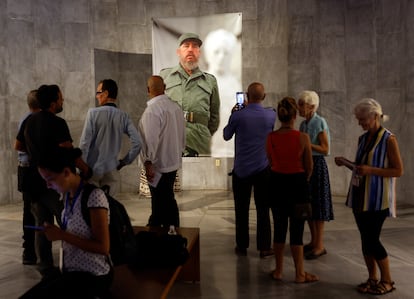
In recent days, there’s been talk of the creation of a CIA task force in Havana. And The New York Times revealed the Trump administration’s intention is to find a Cuban official to take over the government, in the same way that incumbent Venezuelan President Delcy Rodríguez replaced Maduro.
For months, speculation has centered on Oscar Pérez-Oliva Fraga, Cuba’s deputy prime minister and minister of Foreign Trade and Investment. He’s also a great-nephew of Fidel Castro. Ana María Mari Machado, vice president of the National Assembly, has also been considered, should a woman be needed. And Minister of the Interior Lázaro Alberto Álvarez Casas has also been mentioned as a candidate. But the truth is, the U.S doesn’t seem to have found the right person… and the ruling Communist Party isn’t so easily penetrated.
It has been Raúl Guillermo Rodríguez Castro, Raúl Castro’s grandson, who has met with the U.S. to discuss Cuba’s future. Even so, the Trump administration’s plans for the island remain vague.
On July 20, the State Department issued a 100-page report in which Washington essentially justifies each and every action it might take against the island, including those already initiated at the beginning of this year. It does so on the basis that, according to the report, for nearly seven decades now, the Cuban regime has infiltrated all levels of the U.S. government, recruited activists, supported terrorism, infiltrated the left and influenced movements such as the Black Panthers, Weather Underground, and Antifa.
According to Jorge Duany, former director of the Cuban Research Institute and professor emeritus at Florida International University, this report “serves as a justification for tightening economic and diplomatic sanctions against Cuba, reinforcing the anti-Castro rhetoric utilized by Trump and Rubio, [as well as potentially] paving the way for a military intervention,” he asserts. “These accusations align with the sustained effort by President Trump and his allies to portray Democrats as communist sympathizers and thus mobilize their conservative electoral base.”
For some, the political rhetoric toward Cuba — and the tact that Rubio has displayed on the issue — are directly linked to the secretary of state’s career aspirations, should he decide to run for president in the 2028 elections. But the game is different in the United States. Elections are about more than just Cuban-American voters who want military intervention on the island: they are about millions of people who are fed up with U.S. interventionism, or are more concerned about domestic issues.
“Rubio is possibly afraid of the consequences of a military operation that could worsen the situation in Cuba, especially given the power vacuum on the island,” Professor Bustamante says. “How do you sell that to a political base — not just in Miami, but nationally — that’s already somewhat fed up with this administration’s foreign policy and its consequences? [Some are questioning if this mandate] has truly been ‘America First.’”
Even though many Cuban-American voters prefer military action over a diplomatic solution to the Cuba issue, so far, the MAGA wing of the community seems to be remaining loyal to the Trump they elected in 2024. “Given the broad support that they’ve expressed for this administration, it’s unlikely they’ll change their Republican preferences in the upcoming midterm elections in November, or in the 2028 presidential election,” Duany asserts.
“People suffer on a daily basis”
María José Espinosa is a Cuban foreign policy expert and executive director of the Center for Engagement and Advocacy in the Americas (CEDA), an organization based in Washington, D.C. She’s not so much concerned about the issue of military intervention as she is about “the greatest immediate danger” amid the “humanitarian collapse” that the island is experiencing.
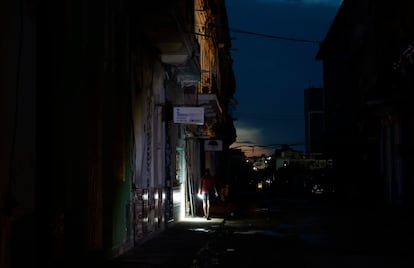
“The country is already collapsing; people are suffering on a daily basis. The question shouldn’t just be whether ‘Cuba is next,’ but [rather about] how far the administration is willing to go with a pressure campaign on an already deeply fragile society, and what it hopes to achieve before the damage becomes irreversible,” she argues.
So far, the pressure from Washington hasn’t been able to make the government in Havana budge from its intentions to maintain total control of the country. Political prisoners haven’t been released — one of the citizens’ biggest demands in any negotiation — nor has there been any talk of changes that could transform the Constitution or the Cuban power elite. And the economic changes that are intended to liberalize the economy — which the government recently announced — apparently haven’t satisfied White House officials. The State Department dismissed them as “superficial smoke signals from the Cuban regime.”
The days continue to weigh heavily on the shoulders of Cubans. Their tables are empty, they don’t have electricity at night and the public transportation system has collapsed. Their lives are practically under siege. At this point, the question that many are asking is: How long will this go on?
“The administration seems determined to continue closing off avenues for economic relief until the Cuban government is further weakened… but what we don’t clearly know is the ultimate goal. The sanctions aren’t functioning as a diplomatic tool linked to concrete objectives and concessions, but rather as a strategy of attrition without a visible resolution,” Espinosa argues. “The most likely outcome, at least in the short term, is increased suffering, [worsening] socioeconomic conditions and the risk of a new migration crisis, with consequences for the entire region.”
“It’s hard to see how a strategy that deepens the [economic] and energy [problems] can lead to stability. Even if the pressure is accepted as a temporary tactic, prolonging it indefinitely will have costs that will make any future transformation much more difficult,” she concludes.
Sign up for our weekly newsletter to get more English-language news coverage from EL PAÍS USA Edition
