
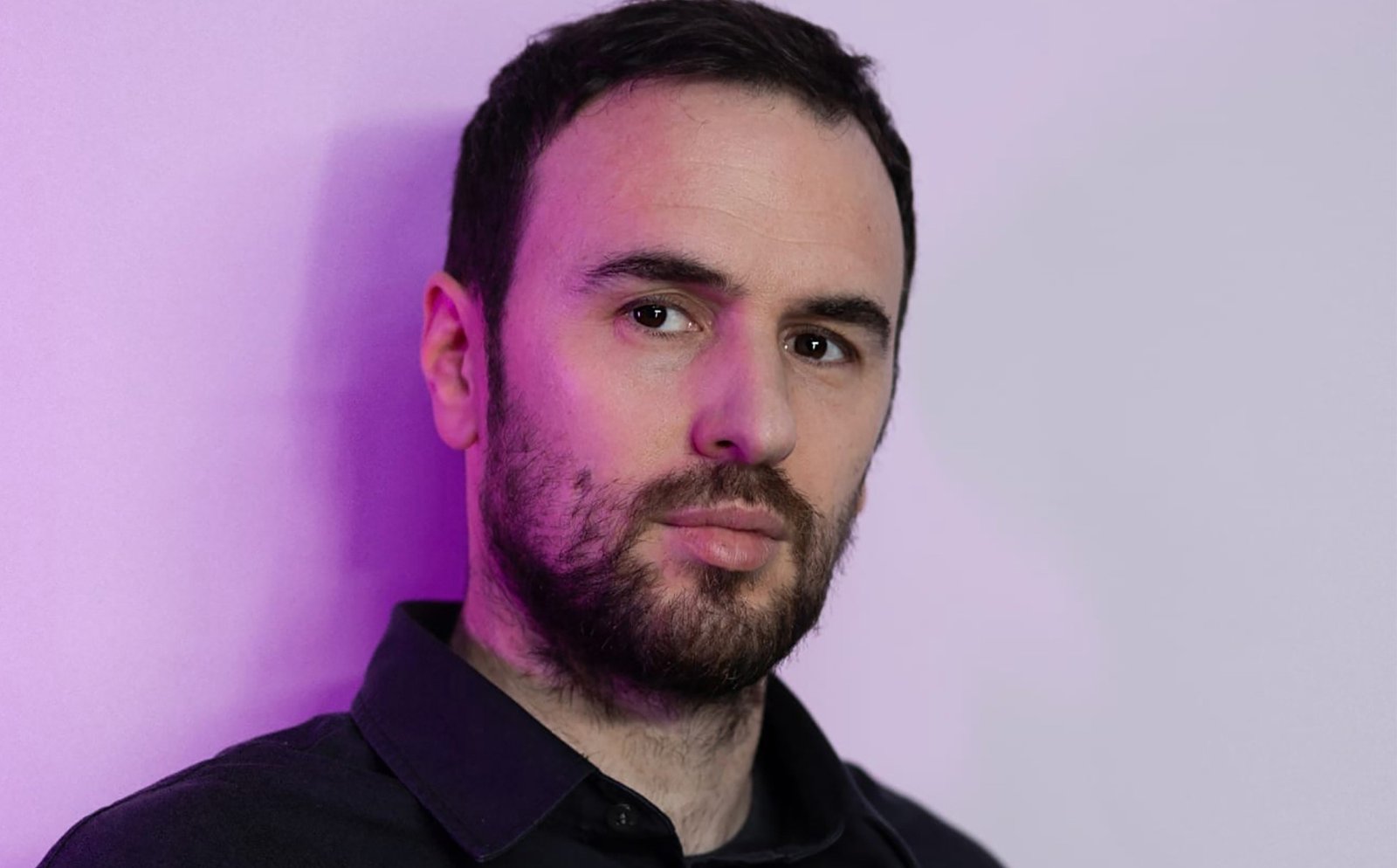
“On a personal level, this project is a quest to find my proximity to, and distance from, landscapes that have been part of my life”
– We caught up with the winner of the Eurimages Co-production Development Award at Visions du Réel to discuss his new project and his vision of cinema
For his new project, Uganda, the winner of the Eurimages Co-production Development Award at Visions du Réel (see the news), Daniel Mann has chosen to explore a little-known historical event that has come to symbolise colonial violence and the terrible consequences of it. With a touch of humour, yet always with respect and great rigour in his research and use of archival material, the director draws unsettling parallels between the past and the present. Cineuropa spoke to him about his vision of cinema and how this allows him to reflect on his life journey.
Cineuropa: What prompted you to take an interest in a little-known historical event such as the “Uganda Plan”?
Daniel Mann: In the last few years, I have been looking back at Tel Aviv, the place where I grew up, from London, where I now live. Witnessing the genocide in Gaza unfold on my screens, I became increasingly preoccupied with the difficult question of where, how and under what historical circumstances European Jewish leaders adopted the settler-colonial rule book, which I see today erupting into full violence. I discovered a history that is still in the making. Having lived in the UK for many years, I have also found through my archival research that this is a story about the history of the British Empire. In the British National Archives, I discovered a field diary written in Yiddish by a man named Nahum Wilbush, who in 1904 travelled through the highlands of Uganda to survey the land as a future Jewish state.
The story goes that in 1903, the Zionist Congress gathered in a casino in Basel, Switzerland, to debate the question of a Jewish state. The Zionists and the British Colonial Office quietly teamed up. The British wanted to send white colonisers to Uganda and to rid themselves of the Jewish population amassing in London. The Zionists recognised that, in order to survive, they would have to become colonisers themselves. There was no one better to teach them this than the British. Botanists and scientists proposed that Uganda and Palestine shared similar ecological characteristics, and that one could replace the other. Two leaves were compared, one from Uganda and the other from Palestine. The similarity between them was taken as proof that Uganda and Palestine could be made interchangeable. To test the soil, flora and water resources, the Zionist Organisation quickly put together an expedition to Uganda. One Jewish man was sent, together with a Swiss-German botanist, to survey the land and assess it as a “New Palestine”, as the British called it.
The film I am working on with producer Fabrizio Polpettini from La Bête and Christophe Gougeon from Acqua Alta is a reconstruction of that expedition, but in Palestine/Israel. Set around the making of a film, and unfolding through auditions, rehearsals, location scouting and narration from the man’s field diary, it tells the hidden story of the secret expedition for the first time. I felt that only in Palestine/Israel could the fantasy of a Jewish state in Uganda be recreated, sparking the most urgent question of all: how is fiction used to bind a people to a land? On a more personal level, this project is a quest to find my proximity to, and distance from, landscapes that have been part of my life.
As the award jury noted, your film “engages with historical material in a way that feels both inventive and critically aware”. Could you tell us more about that?
I often ask myself how to make a film about an early 20th-century expedition that documents a colonial fantasy. How can a field diary written during that expedition be translated into sounds and images? It was somehow clear to me from the very beginning that I did not intend to film in Uganda myself, since doing so would risk echoing and replicating the violence embedded in the expedition. Instead, I am fascinated by the attempt to remake it in an artificial setting, and to allow the line between fiction and non-fiction to remain blurry.
How to bring this story into the present is also a question I keep returning to. There is only one place that can provide the ground for the tensions I am after, and that is Palestine itself. Uganda was meant to replace Palestine as the intended Jewish state; my film will be made in Palestine in order to respond to Uganda. This inversion is not merely conceptual; it is about allowing real interactions and real environments to speak. Creating a film through layers of archival footage, re-enactments, location tests and even AI-generated environments is a way of sustaining the colonial delirium while also cracking it open.
Why did you decide to tell a historical story through the lens of humour and the absurd?
That is a good question. There is a deeply absurd element in the attempt to make Uganda the designated territory for a Jewish state, an absurdity that lies at the very core of the colonial expedition. Nachum Wilbush, the man who made the journey, was not an “explorer”, but he took on the role almost like a performer, wearing the uniform and helmet, and carrying the rifle. The story, in that sense, is already prone to being restaged.
Humour is a powerful tool with which to reveal truths. Of course, humour and irony then crash back into the real once the consequences are revealed. One of my intentions in the film is to make that shift visible and sensible.
How do you plan to shoot your film? What are the main difficulties you think you’ll face?
This film will combine carefully planned scenes on the one hand, and experiment on the other. The carefully staged sequences include re-enactments, rehearsals and readings, all filmed with close attention to archival material, its textures and early 20th-century visual forms. These will exist alongside a rawer attempt, developed in conversation with the actors, to re-create the Uganda expedition through its restaging in Tel Aviv. By bringing real actors together, and even giving the main actor a camera to document his own process of becoming Wilbush, I will allow the unexpected to saturate the film.
