
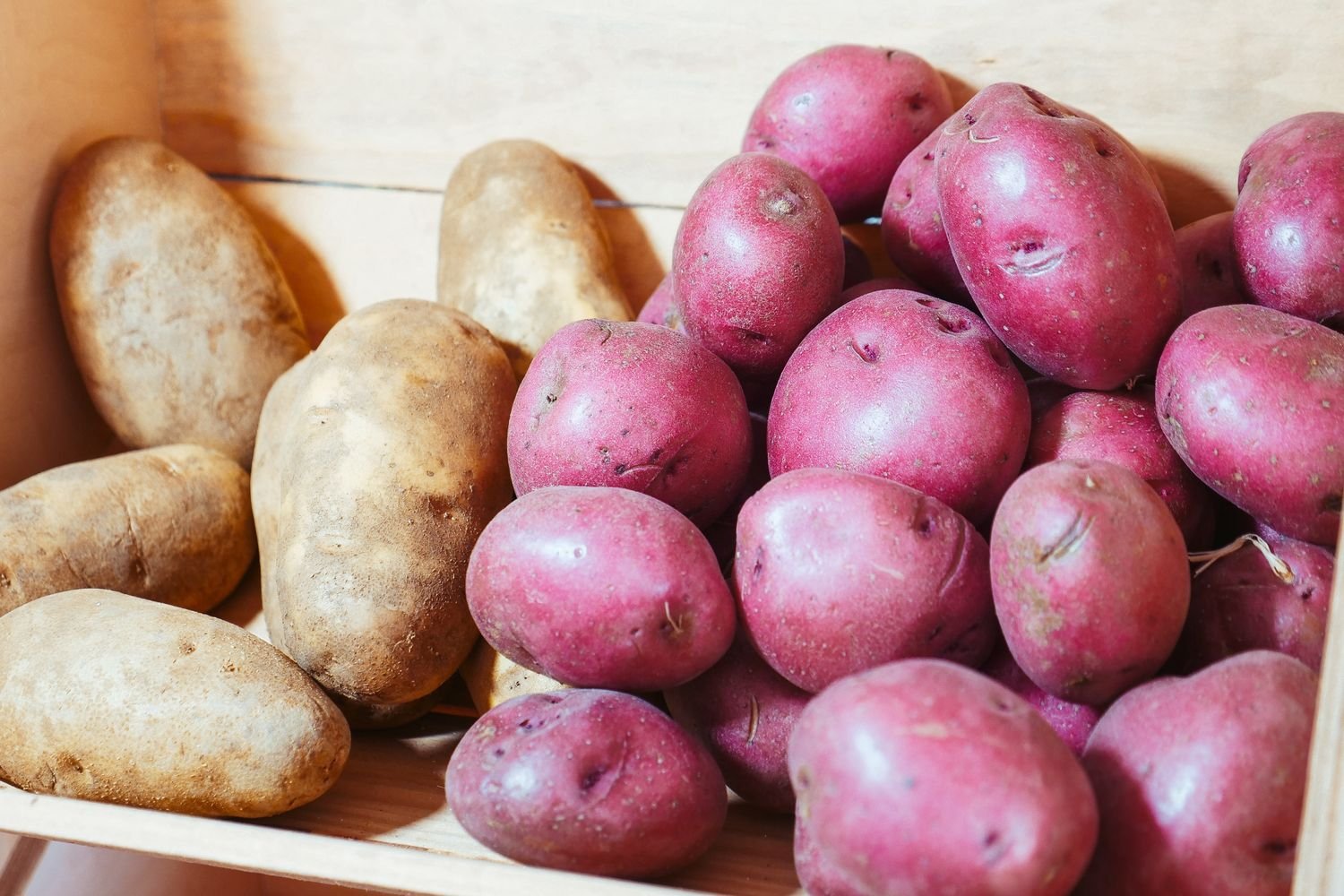
You bought a bag of russet potatoes two weeks ago and most are still sitting in the pantry. One has sprouted. Another has a greenish patch on the skin. A third feels a little soft. And somewhere in the fridge is a container of leftover mashed potatoes from the weekend. What is still good?
Do potatoes go bad?
The short answer: Yes. Whole potatoes last 3 to 5 weeks in a cool dark pantry, or up to 2 to 3 months in a cold cellar or basement. On a warm kitchen counter they last only 1 to 2 weeks. Cut raw potatoes need to be used within 24 hours. Cooked potatoes last 3 to 4 days refrigerated per the USDA FoodKeeper app. Green skin and long sprouts are the two signs that a potato has produced solanine, a natural toxin that cooking does not destroy.
For storage guidance on other produce and pantry staples, see our Food Storage Guide. If you cook with onions and garlic alongside potatoes, see Do Onions Go Bad? and Does Garlic Go Bad?
Key Takeaways
- Whole potatoes in a cool dark pantry (45 to 55°F): 3 to 5 weeks
- Whole potatoes in a cold cellar or basement: 2 to 3 months
- Whole potatoes on a warm counter: 1 to 2 weeks only
- Cut raw potatoes: submerge in cold water, refrigerate, use within 24 hours
- Cooked potatoes: 3 to 4 days airtight in the refrigerator (USDA FoodKeeper)
- Freezer: raw potatoes do not freeze well; cooked potatoes freeze for up to 12 months
- Small firm sprouts: remove deeply and use if the potato is firm and not green
- Green skin or flesh: solanine toxin. Small patch: cut away at least 1/4 inch. Large green area: discard.
- Foil-wrapped baked potatoes: remove foil before refrigerating. Foil creates botulism conditions.
- Do not wash potatoes before storing. Moisture accelerates sprouting and decay.
How Long Do Potatoes Last?
| Type | Room Temp Counter (65 to 70°F) | Cool Pantry (50 to 60°F) | Cool Cellar (45 to 55°F) | Freezer |
|---|---|---|---|---|
| Whole raw potato | 1 to 2 weeks | 3 to 5 weeks | 2 to 3 months | Not recommended (raw) |
| Cut raw potato | No | No | 24 hours in cold water (refrigerator) | Not recommended (raw) |
| Cooked potato (any preparation) | 2 hours max | No | 3 to 4 days airtight | 10 to 12 months |
Temperature determines shelf life more than location. A cool cellar, root cellar, or basement held at 45 to 55 degrees Fahrenheit (7 to 13 degrees Celsius) is the ideal environment and extends shelf life significantly. A typical kitchen pantry or cupboard runs warmer at 50 to 60 degrees, which is still far better than a warm counter. The refrigerator is not recommended for whole raw potatoes for quality reasons covered in the companion post Do Potatoes Need to Be Refrigerated? Cooked potato figures per the USDA FoodKeeper app.
The Best Place to Store Potatoes
Potatoes are a cool-climate root crop that evolved underground. They need three things: darkness, cool temperatures, and airflow. A pantry, cupboard, or basement that stays between 45 and 55 degrees Fahrenheit is the ideal location. A wire basket, paper bag, or cardboard box provides the airflow they need. Plastic bags trap moisture and should not be used for potato storage.
Do not wash potatoes before storing them. Moisture on the skin accelerates mold growth and sprouting. Wash them only when you are ready to cook.
Keep potatoes away from onions in storage. Onion gases can cause potatoes to sprout faster, and the two do not make good pantry neighbors despite being frequent cooking companions. Keep them on separate shelves or in separate areas of the kitchen.
Keep potatoes away from light. Light is what triggers the production of chlorophyll and solanine in the potato skin. A bag of potatoes left on a sunny counter can begin greening within days.
Sprouted Potatoes: When They Are Safe and When They Are Not
A sprout on a potato is not automatically a discard signal. Whether a sprouted potato is safe depends on how far the sprouting has progressed and whether there is any green discoloration.
Small, firm sprouts with no green discoloration: The potato is likely still safe to eat if the flesh is still firm. Cut the sprouts out deeply, removing a generous amount of the surrounding flesh and any visible eyes. Do not just snap off the surface growth. The toxin concentration is highest in and immediately around the sprout. Peel the potato thoroughly, especially around the eyes. Michigan State University Extension recommends trimming away any small sprouts before cooking.
Long sprouts, soft or shriveled flesh, or any green discoloration: Discard the potato. Long sprouts indicate the toxin solanine has been produced in higher concentrations throughout the potato. A soft or shriveled texture means the potato has lost too much moisture and nutritional quality to be worth eating. Green skin alongside sprouts is a definitive discard signal.
Green Potatoes: A Genuine Food Safety Issue
The green color on a potato skin is caused by chlorophyll, which is not toxic. But chlorophyll is a reliable marker that solanine and chaconine, two glycoalkaloid toxins, have also accumulated in the flesh. These toxins are produced when potatoes are exposed to light or damaged. Solanine and chaconine can cause nausea, vomiting, stomach cramps, headaches, and in large quantities, more serious neurological symptoms. The critical point confirmed by Poison.org and Michigan State University Extension: cooking does not destroy solanine. Baking, boiling, and frying do not neutralize it. If a potato has a small green patch, cut it away deeply, at least 1/4 inch below the surface, and cook the rest. If a potato has extensive greening, discard it entirely. A bitter taste after peeling is a warning sign that solanine is present in the flesh.
How to Tell If a Potato Has Gone Bad
Signs a Potato Has Gone Bad
- Soft or mushy texture: Fresh potatoes are firm throughout. A potato that gives when pressed has lost moisture and begun to break down. Discard.
- Extensive green skin or flesh: Solanine accumulation from light exposure. Small patch: cut away deeply. Large area: discard.
- Long or extensive sprouts: Discard the whole potato. Small firm sprouts with no greening can be cut out deeply.
- Liquid at the bottom of the bag: Bacterial soft rot. Discard the entire bag. The infection spreads from potato to potato and any others in the bag are likely affected even if they do not show visible signs yet.
- Foul or musty smell: Fresh potatoes have a mild earthy smell. A rotten, sour, or chemical odor means discard.
- Mold: Any visible fuzzy growth means discard the potato. Do not cut around it.
- Shriveled or hollow skin: A potato that has dried out to a papery shell with no firm flesh inside has deteriorated past use.
Storage Best Practices
- Store in a cool, dark, well-ventilated place in a paper bag, wire basket, or cardboard box
- Do not use plastic bags; they trap moisture and accelerate sprouting
- Do not wash before storing; wash only when ready to cook
- Keep away from light sources, including kitchen windows and under-counter lighting
- Keep away from onions; store on separate shelves
- Remove foil from baked potatoes before refrigerating
- Label cooked potato containers with the date
Foil-Wrapped Baked Potatoes: Remove the Foil Before Refrigerating
This is one of the most overlooked food safety points for potatoes. A baked potato left in aluminum foil creates a warm, low-oxygen environment after cooking that can support the growth of Clostridium botulinum, the bacterium responsible for botulism. Michigan State University Extension and the USDA both flag foil-wrapped baked potatoes as a food safety concern. The fix is simple: remove the foil before storing the potato in the refrigerator. Store it in an airtight container or wrap it loosely in plastic wrap instead. Refrigerate within two hours of cooking.
Cut Raw Potatoes: The 24-Hour Rule
Once a potato is cut, it begins oxidizing rapidly at the cut surface and turning brown. The browning is enzymatic oxidation and not a food safety issue on its own, but cut potatoes also begin losing moisture and texture quickly. The standard approach is to submerge cut raw potatoes in cold water immediately after cutting. The water prevents oxidation and keeps the texture firm. Refrigerate the water-covered bowl and use the potatoes within 24 hours.
Can You Freeze Potatoes?
Raw potatoes do not freeze well. The high water content causes ice crystals to form that rupture the cell walls, leaving a grainy, waterlogged texture after thawing. Do not freeze raw whole or cut potatoes.
Cooked potatoes freeze very well. Mashed potatoes, roasted potatoes, and blanched potato wedges or fries all freeze for up to 10 to 12 months with good results. For mashed potatoes, spread on a baking sheet to freeze first, then transfer to a freezer bag. For roasted potatoes or fries, blanch briefly before freezing for the best texture after reheating. Thaw cooked potatoes in the refrigerator overnight and reheat thoroughly before serving.
Further Reading
Do Potatoes Go Bad FAQ
Is it safe to eat a potato that has sprouted?
It depends on the extent of the sprouting and whether the potato has any green discoloration. A potato with one or two small, firm sprouts and no green skin can be eaten after cutting the sprouts out deeply along with the surrounding eyes. If the potato has long sprouts, is soft or shriveled, or shows any green on the skin or flesh, discard it. Registered dietitian Naria Le Mire, MPH, RD, confirms that greening is more concerning than sprouting and that a firm, non-green potato with small sprouts removed is generally safe to eat.
Can green potatoes make you sick?
Yes. Green potatoes contain elevated levels of solanine and chaconine, glycoalkaloid toxins that cause nausea, vomiting, stomach cramps, and headaches. In larger quantities they can cause more serious symptoms. Critically, these toxins are heat-stable: baking, boiling, and frying do not destroy them. A small green patch can be cut away deeply and the rest of the potato used. A potato with extensive greening should be discarded. A bitter taste after peeling is a sign that solanine has penetrated the flesh.
How long do cooked potatoes last in the fridge?
Cooked potatoes in any form, baked, mashed, roasted, or boiled, last 3 to 4 days in an airtight container in the refrigerator per the USDA FoodKeeper app. The key is cooling them within two hours of cooking and storing them airtight. Foil-wrapped baked potatoes should have the foil removed before refrigerating to eliminate the low-oxygen environment that can support bacterial growth.
Why do my potatoes always sprout so fast?
The two most common causes are warmth and light. Potatoes sprout faster at room temperature than in a cool pantry, and light exposure dramatically accelerates the process. If your potatoes are stored on a counter near a window, in a bowl under kitchen lighting, or in a warm spot near the stove, they will sprout within days. Move them to the coolest, darkest spot in your kitchen or pantry, store them in a paper bag or basket that blocks light, and keep them away from onions. Buying smaller quantities more frequently is the most practical solution if your storage conditions are not ideal.
Do sweet potatoes go bad the same way regular potatoes do?
Similar principles but different specifics. Sweet potatoes last about 1 to 2 weeks on a room-temperature counter and 3 to 5 weeks in a cool pantry. They prefer slightly warmer storage than regular potatoes, around 55 to 60 degrees Fahrenheit, and should not be refrigerated raw for the same quality reasons. Crucially, sweet potatoes do not produce solanine when exposed to light, so greening is not the food safety concern it is with regular potatoes. Spoilage signs are similar: soft spots, visible mold, foul smell, and shriveled skin mean discard. Cooked sweet potatoes last 3 to 5 days refrigerated in an airtight container.
Do different types of potatoes last the same amount of time?
Not exactly. Russet potatoes have thick, dry skin that holds up well in long-term storage and are generally the best keepers among common varieties. Yukon Gold, red, and new potatoes have thinner skins and higher moisture content, which makes them more susceptible to bruising and mold. They typically last a week or two less than russets under the same conditions. Fingerling and baby potatoes are similarly shorter-lived. Buy thinner-skinned varieties in smaller quantities and plan to use them faster than you would a bag of russets.
Discard the entire bag. Liquid at the bottom of a potato storage bag is a sign of bacterial soft rot, a fast-moving infection that spreads from potato to potato through contact. Even potatoes in the bag that appear firm and undamaged have likely been exposed to the bacteria. The infection is not always visible from the outside. When one potato liquefies in a bag, the safe assumption is that the rest are compromised.
Better Living may earn commissions through affiliate links and may occasionally feature sponsored or partner content. If you make a purchase through our links, we may receive a small commission at no cost to you.
