
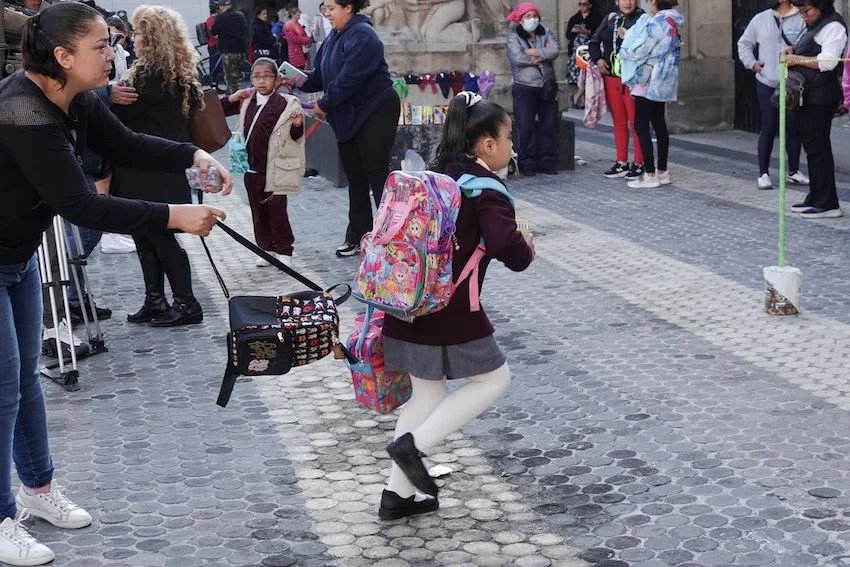
Mexico’s 2025-2026 school year will not end on June 5, as the Ministry of Public Education (SEP) announced last week, but on July 15 as originally planned.
After a lengthy meeting on Monday with federal education officials, including Education Minister Mario Delgado, state education ministers told reporters that an agreement was reached to keep July 15 as the final day of the current school year.
Delgado subsequently confirmed that the school year would end on July 15, saying that the agreement reached by Mexico’s 32 federal entities seeks to guarantee students’ right to a comprehensive education.
According to a version of the agreement seen by the newspaper Reforma, adjustments to the school year could still be made on a state-by-state basis based on local conditions. Delgado confirmed that this was the case, saying that logistics related to the staging of FIFA men’s World Cup matches and weather conditions could lead the federal government to make adjustments in consultation with state education authorities and in accordance with the General Education Law.
Guanajuato Education Minister Luis Ignacio Sánchez said that the decision taken on Monday to follow the original 2025-26 school year calendar was “unanimous.”
Campeche Education Minister Víctor Sarmiento said that the opinions of citizens had been taken into account.
“Of course we’ve listened to all the voices of the people of Mexico,” he said.
The Education Ministry’s announcement last Thursday that the school year would end almost six weeks early due to the staging of 13 World Cup matches in Mexico and hot weather triggered an immediate backlash. Only three Mexican cities — Mexico City, Guadalajara and Monterrey — will host World Cup matches, while the school year hasn’t previously been shortened due to climatic conditions, not even in 2024, the hottest summer on record since 1880.
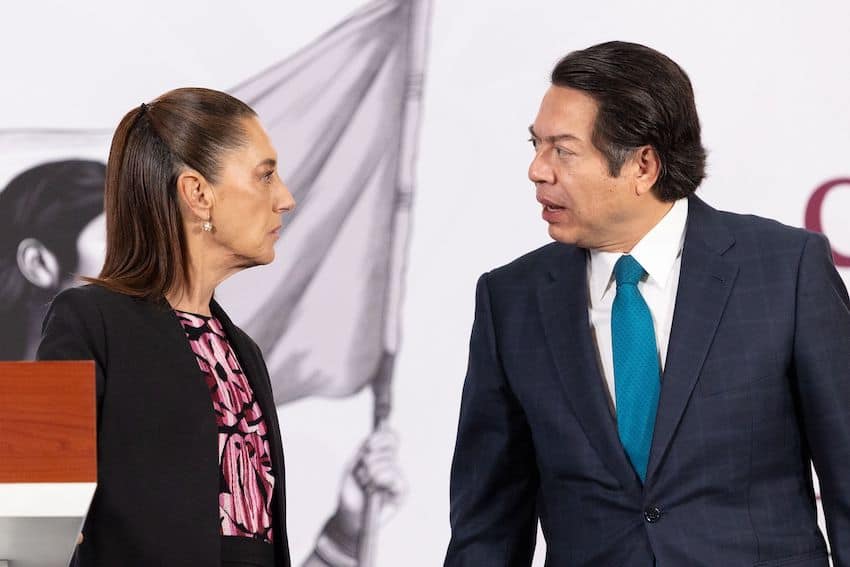
Last Friday, President Claudia Sheinbaum questioned the wisdom of an early end to the academic year, and declared that a new school calendar had not been drawn up — even though the SEP had already published an updated calendar showing that the school year would end on June 5.
Delgado subsequently said that education ministers would review the decision on Monday, while insisting that the school year would indeed end on June 5. Sheinbaum’s opposition to the early end to the school year — expressed amid widespread backlash to SEP’s announcement — appeared to be a factor in the decision to scrap the plan to cancel classes beyond the first Friday in June.
Despite the president’s concern for the nation’s young people, on Monday morning, Delgado essentially described the last month of the school year as a waste of time.
“Classrooms are kept open without a pedagogical purpose, just to comply with a count [of school days]. Teachers’ dignity is detracted from and school becomes a forced stay,” he said.
Whether that is the case or not, the decision Delgado announced last Thursday was overridden on Monday.
Millions of working parents across Mexico — many of whom would have had to make alternative arrangements for their children if the school year finished 40 days earlier than anticipated — will no doubt be relieved that it was.
With reports from Reforma, Milenio and El Universal
