
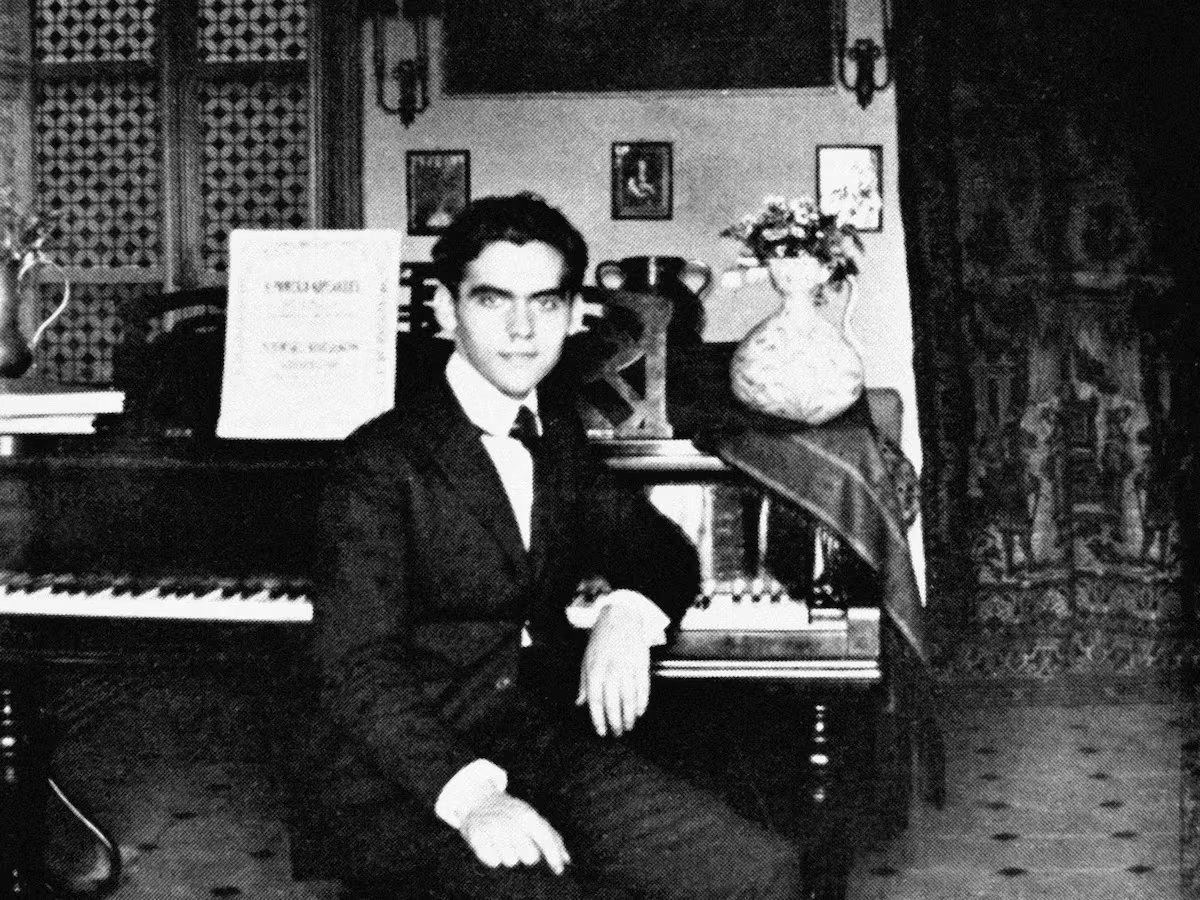
“Dear Pepe: I have been to see you and I think I will return tomorrow.” In early July 1936, less than a month before his execution, Spanish poet Federico García Lorca wrote this message on stationery bearing the letterhead of the magazine and publishing house Cruz y Raya. The note was addressed to its editor, José Bergamín, and was placed on top of the manuscript of Poet in New York, which served as the basis for the book’s first two posthumous editions (published in New York and Mexico in 1940) and, many years later, for the first critical edition (Barcelona, 2013), after the manuscript was recovered.
This is one of two notes from Lorca that never received a reply. Together, they chart the final weeks before the poet’s arrest and execution in August 1936, an event whose 90th anniversary is being commemorated this year.
The second note is dated August 17, 1936. The original has not survived: “Father, please give the bearer 2,000 pesetas.” According to Francisco Murillo, the family’s former chauffeur, the poet’s father, Federico García Rodríguez, handed that sum to “El Panaero, the most criminal of all the assassins in the Escuadra Negra [Black Squad, a right-wing death squad operating around Granada at the start of the Spanish Civil War in 1936],” unaware that his son was already dead. The date of Lorca’s execution has long been debated, but it appears clear that he was shot in the early hours of August 17, rather than on August 18.
To understand the situation, it is necessary to go back a little in time. In February 1936, the Frente Popular (Popular Front) won Spain’s general election. Lorca publicly supported the coalition on several occasions, although he never joined the Communist Party.
Evidence of his intellectual independence can be found in the fact that, in April, he delivered a radio address about Easter Week in the southern Spanish city of Granada and, around the same time, announced that he was finishing “a social drama, still untitled, involving participation from the audience both inside the theater and in the street, where a revolution breaks out and the theater is stormed.” He was referring to El sueño de la vida (The Dream of Life), the unfinished play that would be his final dramatic work.
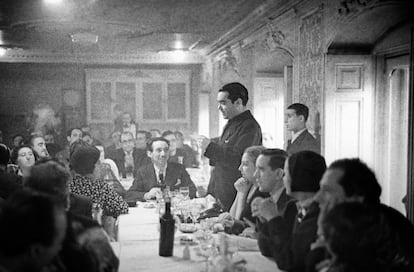
In May of that same year, Lorca met the 19-year-old Juan Ramírez de Lucas. According to memoirs due to be published this autumn, the two embarked on what would become the poet’s last love affair.
On June 10, in an interview with Luis Bagaría published in Madrid’s El Sol, Lorca described his hometown of Granada as: “a poor, cowed city; […] a ‘land of penny-pincher,’ where today the worst bourgeoisie in Spain is stirring.”
Just over a week later, on June 19, he dated the completion of The House of Bernarda Alba. Through July 12, he gave readings of the new play to friends. He then began work on another drama, writing the first act of The Dreams of My Cousin Aurelia, a work left unfinished, like an embroidery abruptly abandoned. He took all these manuscripts with him to Granada, along with the first act of El sueño de la vida.
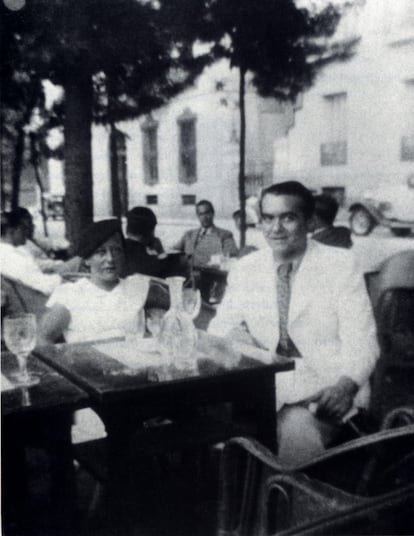
On July 5, the poet’s parents traveled from Madrid to Granada. Lorca followed them on July 13, taking the overnight train. Five days later, the military uprising against Spain’s democratically elected Republican government began.
Literary critic Rafael Martínez Nadal, a friend of Lorca’s, recounted that farewell on numerous occasions from 1963 onward (although he maintained that the poet actually departed on July 16), embellishing it with dramatic details and ominous premonitions amid the tense political climate of the time. His account culminated in Lorca handing him a package containing the manuscript of The Public, with the instruction: “If anything happens to me, destroy everything.”
Writer Ramírez de Lucas, for his part, says he was the one who saw Federico off at the station, where footballer Rafael Rodríguez Rapún and, for a moment, Martínez Nadal also passed.
On July 14, Lorca settled into the family home, the Huerta de San Vicente, in Granada, and telephoned his friend Constantino Ruiz Carnero, editor of El Defensor de Granada. Ruiz Carnero announced the poet’s arrival on the newspaper’s front page the following day.
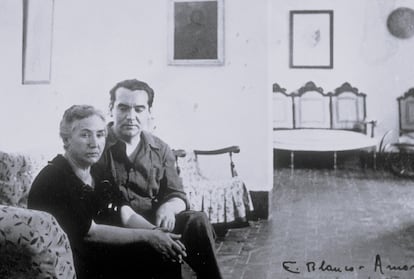
As father and son celebrated their saint’s day, St. Federico’s Day, on July 18, the military coup was already underway. In Granada, the uprising erupted on July 20. Lorca’s brother-in-law, Manuel Fernández-Montesinos Lustau, who had been serving as the city’s Socialist mayor for only a few days, was arrested. Commander José Valdés Guzmán assumed control as civil governor. Granada and the surrounding area were cut off from the rest of Spain, which intensified the repression that followed. Resistance in the Albaicín district lasted for three days.
On August 6, a squad of Falangists, members of the Spanish fascist movement that supported the military uprising, led by the feared Captain Rojas, entered the Lorca family’s Huerta de San Vicente residence to conduct a search. The operation ended without any notable consequences.
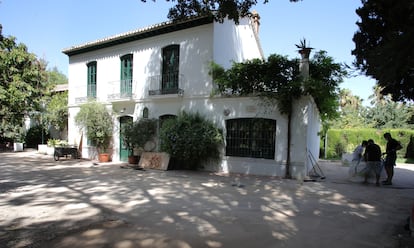
The following day, Alfredo Rodríguez Orgaz, a municipal architect and friend of Lorca’s, arrived at the family estate while fleeing men who were pursuing him. Lorca’s father helped him cross on foot into Republican-held territory. Federico chose not to go with him.
On August 9, about a dozen armed men arrived to question Gabriel Perea, the caretaker of the Huerta, about the whereabouts of his brothers, who were accused of killing two livestock dealers in Asquerosa. They mistreated Perea’s mother and daughters. Lorca was insulted and beaten. Terrified, he turned to his friend, the poet Luis Rosales, whose older brothers were early members of the Falange.
From August 11 onward, the Rosales family took Lorca in at their home on Angulo Street. He lived there without incident, spending time with everyone in the household, especially Esperanza Camacho, the family matriarch, and her sister, Aunt Luisa, and gradually regained some sense of calm.
Everything changed a few days later, on August 16. At dawn, Manuel Fernández-Montesinos, the husband of Lorca’s sister Concha and the father of the poet’s young nieces, was executed by firing squad in Granada’s cemetery. Early that afternoon, Lorca himself was arrested in an operation involving a large contingent of police and militia forces led by Ramón Ruiz Alonso, a former deputy of the right-wing CEDA party whom José Antonio Primo de Rivera, the founder of the Falange, had nicknamed “the trained worker.”
Ruiz Alonso brought along Miguel Rosales, a member of the Falangist family that had been sheltering Lorca, because only women were present in the house. Miguel was unable to locate his brothers Antonio, José and Luis, all of whom were away at the front.
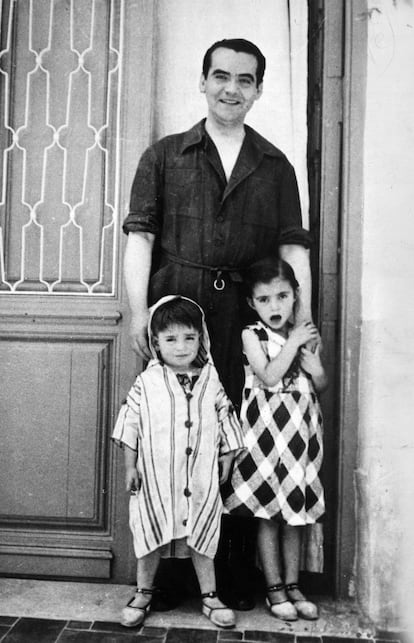
They took Lorca to the Civil Government building, now home to the University of Granada’s Faculty of Law, about 300 meters from Angulo Street, and locked him in an office. When José and Luis Rosales returned that evening, they went to the Civil Government headquarters to demand an explanation for the search of their home and the arrest of their guest. With Governor Valdés absent, his deputy, Nicolás Velasco, told Luis to submit a formal statement. Ruiz Alonso accepted responsibility for the arrest in front of him. Luis forced him to stand to attention before a superior officer. Later, his brother José confronted Valdés directly. The governor referred to allegations against Lorca that he claimed he was obliged to investigate.
Both Rosales brothers later suffered repercussions from their own side. One passage in Luis’s statement in Lorca’s defense read: “Given that my relationship with the detainee was literary in nature, I never imagined that he could be an enemy of the cause I defend.”
That same night, the poet was taken to the Cuzco Palace in Víznar, which served as the headquarters of the military sector commanded by Falangist Captain José Nestares Cuéllar, and then to the former summer camp called La Colonia, on the road to Alfacar, where prisoners were held before being executed.
At dawn, Federico García Lorca was executed by firing squad alongside Dióscoro Galindo, a schoolteacher from Valladolid who worked in Pulianas and was known for his large build and limp, and alongside the anarchist bullfighters’ assistants (banderilleros) Francisco Galadí Melgar and Juan Arcollas Cabezas. Efforts by composer Manuel de Falla and by Luis and José Rosales to intercede with the military governor had come too late.
Although there appears to have been no formal written complaint against Lorca, the excerpt of the Political Responsibilities File, compiled in 1940, listed some of the accusations against him: “His political affiliation is unknown but his ideology is frankly leftist […] he published several poems denying the existence of God and moreover his acquaintances were Don Fernando de los Ríos and other leftist politicians […] Religious standing: secular […] Assessment of his private life: he appears to have been a homosexual.”
The violent language of the judicial and police records, with its insinuations, insults and slanders, speaks for itself. The military governor of Granada, Colonel González Espinosa, signed an edict published in the province’s Official Bulletin on October 7: “I order and command: All citizens of Granada […] are obliged to cooperate […] by discovering and unmasking those who, during the Marxist domination, acted within the orbit of the Popular Front, and who today, cowardly hidden, have not even had the gallant gesture of leaving the city to join the red [Republican] columns.”
Or consider this report from the Investigation and Surveillance Police, dated January 1, 1937, seeking to prosecute Roberto Gómez Hurtado as a “prominent member of the Popular Front”: “From the reports obtained, it appears that this gentleman was affiliated with Izquierda Republicana [Republican Left], an intimate friend and right-hand man of the known extremist Constantino Ruiz Carnero, with whom he maintained extremely close friendship; some believe this was due only to the relation between two homosexual individuals engaged in sexual relations, but other details show that Roberto Gómez Hurtado was also a devoted supporter of [leading figure of Spain’s Second Republic, Manuel] Azaña; as an editor for the leftist newspaper El Defensor de Granada, he attended the most important leftist rallies held in this capital as a stenographer.”
Antonio Gómez Hurtado escaped execution at that time. He died in August 1939 while fighting for the Republican cause. He was married to a daughter of Antonio Dalmases, a Socialist councilor who was executed at Víznar on August 8 in reprisal for a bombing raid, alongside nearly all the city’s Republican councilors, former Granada mayor Vicente Almagro, and Constantino Ruiz Carnero, whose fate was particularly cruel. Hours before his execution, a rifle butt smashed his glasses, driving shards into his eyes. By the time the firing squad shot him, he was already dead.
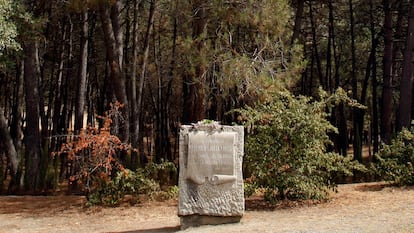
Lorca’s body has never been found. What remains is Víznar. In a statement issued on September 12, 2003, Lorca’s heirs argued that, rather than prioritizing the search for his remains, efforts should focus on “preserving the burial site of those murdered for political reasons as a place of collective, public and civic memory, without exhuming or singling out any of the bodies buried there,” so as not to erase the site’s political, ethical, collective and social significance. Excavations carried out in 2009, 2014, 2016 and since have all proved unsuccessful.
As a coda, it is worth turning to a moving and remarkably lucid poem by José Ángel Valente, Víznar (1988):
“From Granada we climbed toward Víznar.
We wandered along the shadowed edge of the ravine.
’Where?’ we asked.
It was autumn.
Brothers, widows, the children of the dead came carrying great bouquets.
They entered the woods and left them somewhere, uncertain, feeling their way.
Where had it happened?
‘They killed him here,’ said the woman, ’but they killed so many others here too, so many that no one remembers anymore.’
’He is no longer himself,’ I told her. ’He is the name taken by the unextinguished memory of them all.’”
Sign up for our weekly newsletter to get more English-language news coverage from EL PAÍS USA Edition
