
By Kirana Luna Mostert and Raquel Rodriguez Mulero at the border
LARGE crowds gathered outside the Gibraltar-Spain border yesterday to say goodbye to decades-long barriers that made crossing into Gibraltar slow and frustrating.
A relaxed excitement was exacerbated by the crowd mostly wearing sunglasses, shorts and sunscreen.
A wall of happy faces got ready to wave goodbye to queues that were often hundreds deep and could take many hours.
“Frankly, I am very happy that this has finally been done,” said Juan Galeano, 85, a local resident who has lived through different stages of the frontier – from open doors to firmly closed gates.
“This is the best thing that the Spanish and English governments have done. Undisputedly.”
It has been a long and chequered history being a border for over 300 years.
The gate was entirely closed in 1969 by Spain’s dictator, General Franco, but reopened in 1985 ten years after his death.
Despite that, the 15,000 Spanish workers who crossed it every day needed to go through queues and identity checks.
READ MORE: Sanchez says ‘three-century-old wound’ has healed as Gibraltar border fence is finally removed
One of them is Fernando Simoes, 39, who lives on Spanish soil but works in Gibraltar.
“I cross it every day,” Simoes said. “Without the border, it takes me no time to get back home, but with the border controls, the queues can take up to three hours.”
He smiles and looks relieved. “This makes my life a lot easier,” he said.
The former office for passport control that caused all the waiting now stands deserted.
Right next to it, a stream of curious tourists, couples with their buggies and elderly people with their walking sticks crossed from one country into the other – all without needing to show their passports.
READ MORE: Gibraltar border finally opens as UK-EU treaty ushers in new era on the Rock
The change is the latest step in Gibraltar’s integration into the Schengen free movement area under the UK-EU treaty.
Routine passport checks and physical barriers at the land border have been removed.
Instead, immigration controls have been moved to Gibraltar’s airport and port, where travellers arriving from outside Schengen will undergo both Gibraltar and Schengen entry checks.
On the other side of the border, Britain’s influence is more than present.
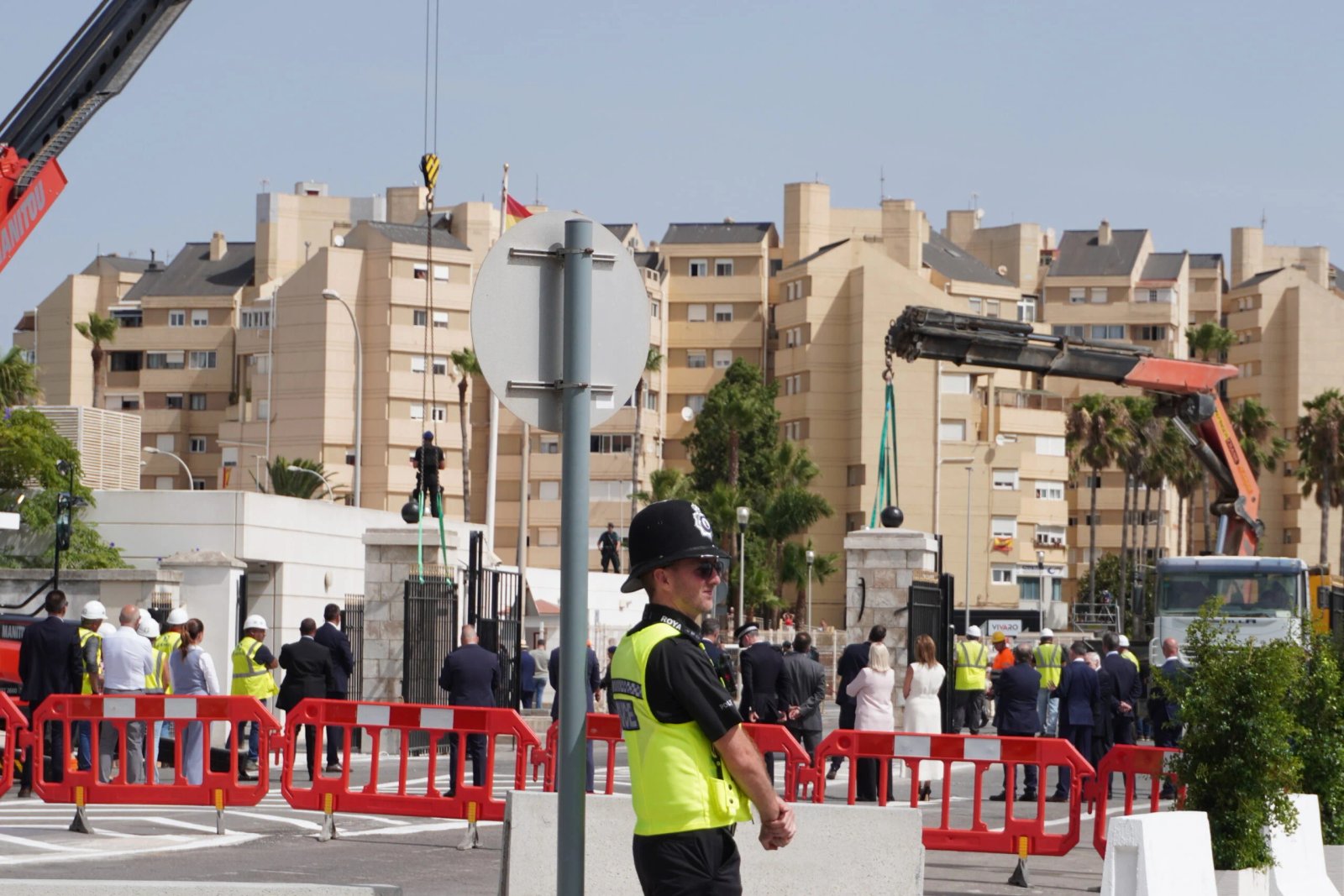
The black hats of the Spanish Policia Nacional have been replaced by larger, rounder helmets, iconic to the British police.
At the bus stop, further down the road, a red double-decker bus is letting people off.
On the opposite side, at the local supermarket, customers pay with both euros and Gibraltar pounds.
“I used to live on the Spanish side,” said Bettina Manner, a 38-year-old Hungarian woman who has Gibraltarian citizenship.
“Fifteen thousand people cross the border every day. This is good for the local business.”
“I am happy for those who work here. It will make the border crossing easier for them,” she said.
The event was cemented by Spanish Prime Minister Pedro Sanchez, who gave his speech on the Spanish side of the border.
“Today we are making history,” Sanchez said. “Because the last wall of continental Europe is falling.”
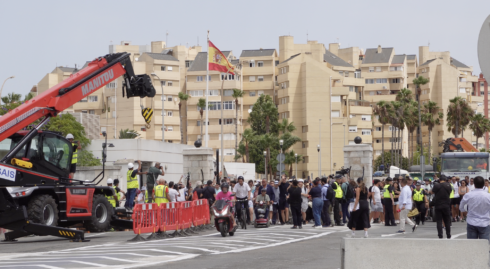
Following his speech, the historic gates were torn down by cranes as crowds gathered to cross the border on foot, by bike or with rollerblades.
“This is wonderful,” Galeano, 85, said with a glimmer in his eyes. “Both for workers and for the town to be united.”
His biggest hope is that this historic decision will bring people on both sides of the border closer together.
“Life is short, and we have to live it,” he emphasised.
Click here to read more Gibraltar News from The Olive Press.
