
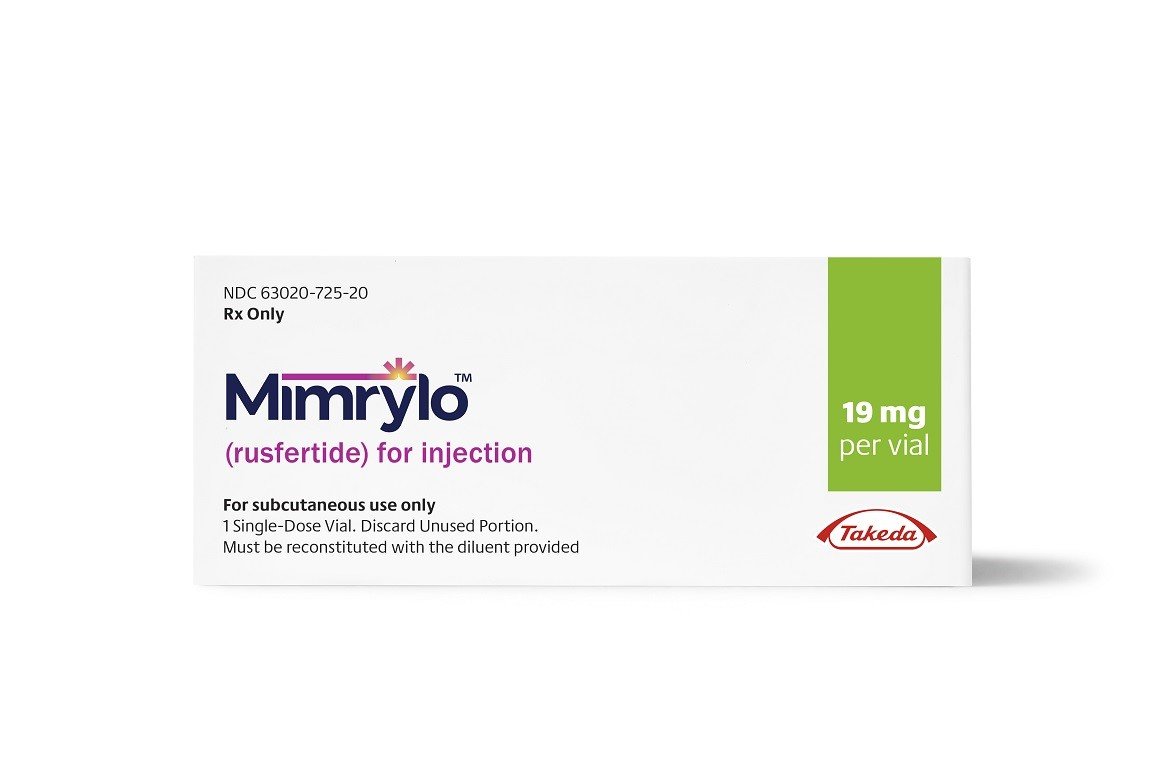
Polycythemia vera, a rare blood disease that that leads to a range of cardiovascular problems, has a new FDA-approved treatment, a Takeda Pharmaceutical drug whose first-in-class approach could make the therapy a new first-line treatment for this condition.
Patients with polycythemia vera develop excessively high levels of red blood cells called erythrocytosis. The regulatory decision announced after Friday’s market close covers the treatment of erythrocytosis in adults with polycythemia vera. Known in development as rusfertide, the once-weekly injection will reach the market under the brand name Mimrylo.
Polycythemia vera is a myeloproliferative neoplasm, a type of rare blood cancer that develops from acquired mutations that lead the bone marrow to produce too many blood cells. Symptoms include headache and dizziness as well as persistent fatigue. The disorder also results in excessively thick blood that raises a patient’s risk of complications such as heart attack and stroke.
Standard polycythemia vera treatment has been therapeutic phlebotomy, a procedure in which some of a patient’s blood is removed to bring the red blood cell count closer to normal levels. Mimrylo, which was initially developed by Protagonist Therapeutics, works in a way that more closely mimics the way the body manages erythrocytosis. The peptide drug is an engineered version of hepcidin, a hormone produced by the body. Naturally occurring hepcidin regulates iron in the body. By making less iron available to bone marrow, hepcidin reduces the amount of iron that can be used to make red blood cells.
Hepcidin as it’s found naturally in the body is not a very good drug. It’s unstable, not soluble, and not very potent, Protagonist CEO Dinesh Patel said in an interview ahead of the regulatory decision. Mimrylo came from a Protagonist platform technology that engineers peptides with better drug properties.
In 2024, when Protagonist was already in Phase 3 testing of Mimrylo, Takeda paid $300 million up front to collaborate on the drug. Protagonist remained responsible for completing the pivotal trial. Phase 3 results showed 76.9% of patients treated with once-weekly injections of the study drug did not require therapeutic phlebotomies measured at 32 weeks. By comparison, 32.9% of patients in the placebo group required phlebotomies. The most common adverse reactions were injection site reactions and anemia.
Results measured at one year were presented last December during the American Society of Hematology annual meeting. In an interview at the conference, Dr. Andrew Kuykendall, lead investigator in the study and associate member in the department of hematology at Moffitt Cancer Center, said the drug has the potential to change the way physicians treat polycythemia vera.
“It’s replacing therapeutic phlebotomy, which is archaic,” he said. “And given that therapeutic phlebotomy is really the mainstay of treatment for everyone at some point in time during their [polycythemia vera] course, then I think it certainly is something that can be practice changing.”
A limited number of drugs are already available for polycythemia vera. Incyte’s JAK inhibitor Jakafi, initially approved in 2011 for myelofibrosis, added polycythemia vera to its label in 2014. But this approval is as a second-line treatment for patients who don’t respond to first-line treatment with hydroxyurea, a drug used to treat certain cancers, including blood cancers. The first-line setting also includes PharmaEssentia’s Besremi, an engineered version of interferon alpha, a signaling protein that regulates and activates the immune response.
Kuykendall said Besremi is not appropriate for all polycythemia vera patients. Interferon therapies can’t be used by those with mood disorders because this type of drug exacerbates depression symptoms. Besremi is also not suitable for polycythemia vera patients who have autoimmune conditions because interferon therapies can overstimulate the immune system. Those risks are flagged in a black box warning on the drug’s label, and Kuykendall said they leave an unmet need for patients who can’t take existing therapies or have a need for a therapy offering better disease control.
The label for Mimrylo is broad, with no restriction to a particular line of therapy. While the Phase 3 study enrolled patients who had uncontrolled high levels of red blood cells and relied on therapeutic phlebotomy, the FDA approval does not require patients to be phlebotomy dependent.
Takeda’s initial deal with Protagonist called for the partners to share in U.S. profits from sales of an approved drug, but it also gave Protagonist the option to opt out of that arrangement in exchange for cash. In April, Protagonist chose the cash, receiving an immediate $200 million payment with another $200 million to be paid upon approval of the drug. The approval also triggers a $75 million milestone payment. Protagonist remains eligible for up to $975 million more in milestone payments, plus royalties from Takeda’s sale of the product.
Patel said that even though Protagonist intended to keep Mimrylo and commercialize it, the financial terms offered by Takeda proved too attractive. The additional financial upside was what led the company to ultimately opt out of sharing in the commercialization of its former lead drug asset, securing capital to deploy toward its other drug candidates.
“It takes us on a path of financial independence, relatively speaking, funding our R&D pipeline in a non-hesitant manner, not a careless manner, but in a confident manner, and creating value for shareholders without diluting them,” Patel said of Protagonist’s exercise of the opt-out provision.
Takeda now holds exclusive commercialization rights to Mimrylo globally. The drug joins a hematology portfolio that consists of Takeda products for rare blood disorders, including several for hemophilia. Takeda has said Mimrylo could reach up to $2 billion in peak revenue. That gives the company another prospective blockbuster product to make up for the decline in revenue as its current top seller, the inflammatory bowel disease drug Entyvio, faces patent expirations. Prior to Mimrylo’s approval, Leerink Partners had modeled the drug reaching $2 billion in sales by 2035, which would translate to about $470 million in royalty payments to Protagonist.
A Takeda spokesperson said Mimrylo’s list price is $4,200 per vial; assuming a single vial for each weekly dose, that price works out to $218,400 annually. The drug is now available. An open-label extension of Mimrylo’s pivotal study is ongoing; Takeda said it will share additional data at upcoming medical conferences. The pharma company also said it is working to bring Mimrylo to other markets around the world.
PharmaEssentia Drug Expands Label to Another Rare Blood Cancer
In other blood cancer news, PharmaEssentia’s Besremi is expanding beyond polycythemia vera with an additional FDA approval in essential thrombocythemia.
Like polycythemia vera, essential thrombocythemia is a type of myeloproliferative neoplasm, but this disease is characterized by excessively high levels of platelets in the blood. Patients face greater risks of blood clots, abnormal bleeding, and enlarged spleens. The class of cancer drugs called hydroxyureas are a standard first-line treatment for this essential thrombocytopenia. Second-line treatment is typically anagrelide, a drug that reduces platelet counts.
Besremi is an engineered version of interferon alpha, a signaling protein that plays a role in the immune response to viruses and cancers. The exact way that this drug leads to therapeutic effects is not fully understood, but its binding to the interferon alpha receptor starts a signaling cascade that is believed to modulate the excessive production of the components of blood, including platelets. The drug is administered as a subcutaneous injection every two weeks. The Phase 3 study that supported the Besremi’s regulatory submission showed durable responses and reduced blood clot events compared with anagrelide measured over 12 months of treatment.
“The approval of Besremi provides an important new treatment option that is supported by strong clinical evidence and that also works at the source of the disease rather than solely managing symptoms,” Dr. Ruben Mesa, principal investigator in the study and president of Advocate Health’s Cancer National Service Line, said in PharmaEssentia’s Monday announcement.
Photo by Takeda Pharmaceutical
