Close Menu

    Subscribe to Updates

    Get the latest creative news from FooBar about art, design and business.

    What's Hot

    Washington, DC, voters cast ballots in crucial primaries as Trump reshapes the capital

    June 16, 2026

    Supreme Court declines to hear Carter Page case against FBI officials

    June 16, 2026

    BAN vs AUS, T20I Series 2026: Broadcast and Live Streaming details – When & Where to watch in India, Bangladesh, US, UK & other countries

    June 16, 2026
    Facebook X (Twitter) Instagram
    Select Language
    Facebook X (Twitter) Instagram
    NEWS ON CLICK
    Subscribe
    Tuesday, June 16
    • Home
      • United States
      • Canada
      • Spain
      • Mexico
    • Top Countries
      • Canada
      • Mexico
      • Spain
      • United States
    • Politics
    • Business
    • Entertainment
    • Fashion
    • Health
    • Science
    • Sports
    • Travel
    NEWS ON CLICK
    Home»Top Countries»Spain»He Tingbo: The woman who wants to change the chip industry | Economy and Business
    Spain

    He Tingbo: The woman who wants to change the chip industry | Economy and Business

    News DeskBy News DeskJune 15, 2026No Comments5 Mins Read
    Share Facebook Twitter Pinterest Copy Link LinkedIn Tumblr Email VKontakte Telegram
    He Tingbo: The woman who wants to change the chip industry | Economy and Business
    Share
    Facebook Twitter Pinterest Email Copy Link

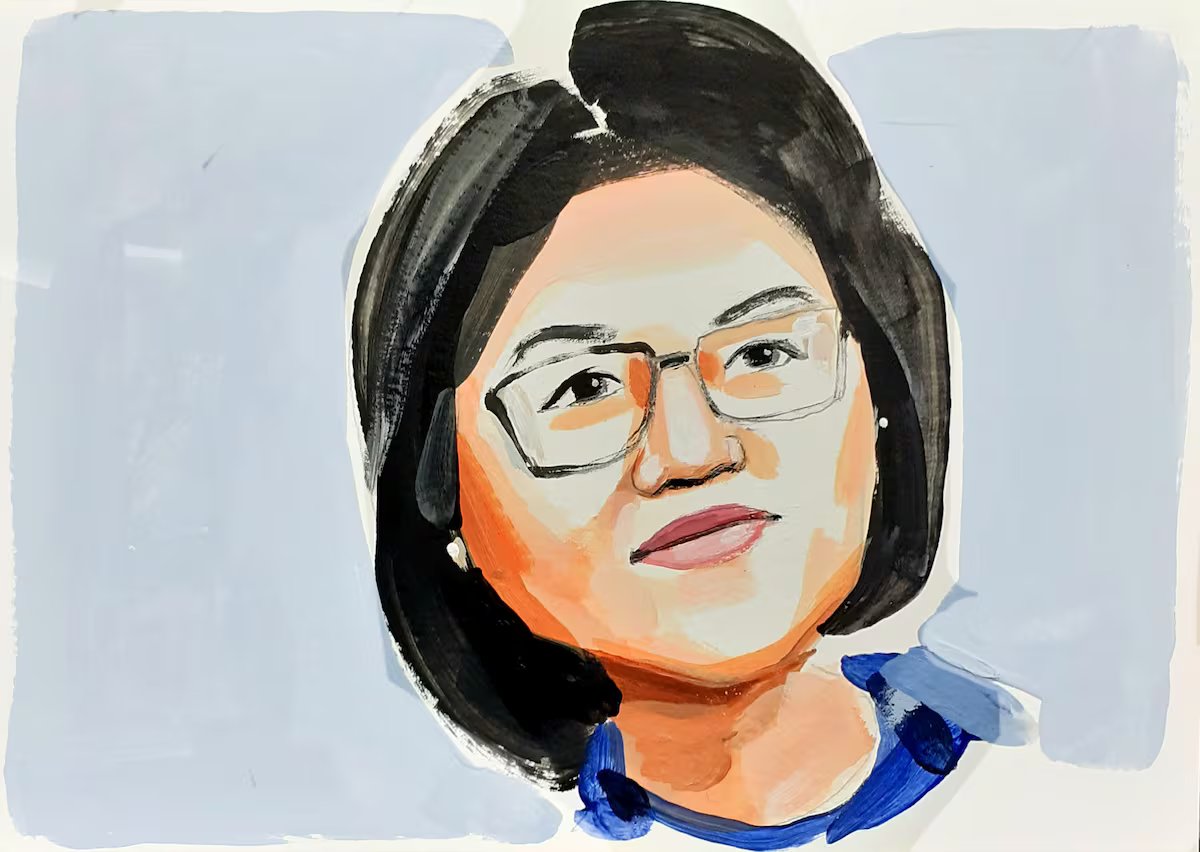
    More than 60 years ago, the chemist Gordon Moore predicted that the number of transistors that could fit on a chip would double every two years. He was right. Computing power increased for decades and costs fell. But many smartphones, computers, and an era of artificial intelligence later, Moore’s Law has reached its limits. That’s where He Tingbo (China, 1969), president of Huawei’s semiconductor business, comes in. She has proposed an alternative law to ensure that chips continue to gain power and efficiency without the need to keep shrinking the transistor.

    The new method, announced on May 25 at a conference titled “New Semiconductor Path in Practice,” is called the Tau scaling law. It proposes trading size for time: instead of continuing to reduce the size of the transistor—the industry currently manufactures at nodes of just a few nanometers, a technically challenging and extremely costly process—it proposes cutting the time it takes for the electrical signal to travel between the chip’s components. It does this using a technique called LogicFolding, which involves stacking circuits vertically, in layers, rather than spreading them out on a single plane.

    He Tingbo stated that her team has been using the method for six years and has mass-produced 381 chips using it. The Kirin 2026, expected to launch this fall, could be the first in the world to feature this technology. The reaction has been a mix of enthusiasm and skepticism. Several analysts acknowledge that Tau’s law is the most coherent theoretical framework offered so far for the post-Moore era. But stacking computing in three dimensions is not new—other companies have been doing it for years—and experts warn that more layers also mean more heat, poorer manufacturing yields, and higher costs. Nvidia CEO Jensen Huang said it was a major breakthrough for Huawei, but maintained that it does not threaten TSMC.

    Huawei was one of the first major companies forced to seek alternatives to Moore’s Law. In 2019, during his first term, Donald Trump added the company to the U.S. trade blacklist. Washington did not manufacture its own chips, but it controlled the design software and equipment without which no one could produce them. The company’s response was to focus on self-sufficiency and invest a massive portion of its resources in R&D (more than 192 billion yuan in 2025, 22% of its revenue). So much so that one of its rotating chairmen, Xu Zhijun, has even thanked the U.S. for the pressure: “If they hadn’t forced us, we wouldn’t have done something like this.”

    He has become China’s key asset in weathering U.S. sanctions and building an independent semiconductor industry. In addition to heading Huawei’s semiconductor business, she chairs its scientific committee and is one of only two women on the company’s 17-member board, alongside Meng Wanzhou, the daughter of founder Ren Zhengfei.

    He Tingbo grew up in Changsha, the capital of Hunan Province, in the Dongtang area. She attended Huangtuling Primary School, a prestigious institution in the city, for both elementary and middle school. She studied at the Beijing University of Posts and Telecommunications, which she entered after graduating from high school with excellent grades. There she completed her entire higher education: a double bachelor’s degree in Semiconductor Physics and Communications Engineering, followed by a master’s degree in Semiconductor Devices and Physics.

    She joined Huawei in 1996 and has been with the company ever since. She started as an engineer, working on the design of optical communication chips at the company’s headquarters in Shenzhen. In 1998, she moved to Shanghai to build a wireless chip team from the ground up and focus on the development of 3G chips.

    The turning point came in 2003: Zhengfei put her in charge of chip development with an annual budget of $400 million and a mandate to reduce reliance on foreign suppliers. The following year, Huawei formally established HiSilicon as its semiconductor subsidiary, of which she eventually became president. Under her leadership, HiSilicon evolved from a small internal department into the brainpower behind nearly everything Huawei sells. Her team designed the Kirin processors that power the brand’s phones, the Ascend chips with which the company is taking on Nvidia in artificial intelligence within China, the Kunpeng processors for servers, and the semiconductors that govern 5G networks and antennas.

    Before the sanctions, that business was among the largest in the world. But in 2020, the United States barred any factory using American technology—including TSMC—from producing its chips, and the company it had spent 15 years building suddenly lost its manufacturing base: its revenue plummeted by 81% in a single year. It managed a partial comeback in 2023, when it made a surprise reappearance with a phone powered by its own in-house-manufactured chip, though its technology still lagged behind the leaders.

    Tau’s strategy is, at its core, the ultimate response to the setback of 2019: if you can’t make smaller parts because you lack the machinery, stop competing on size and start competing on speed. It’s a way to keep moving forward by circumventing the only bottleneck that nearly brought the company to its knees.

    Sign up for our weekly newsletter to get more English-language news coverage from EL PAÍS USA Edition

    china Huawei Jensen Huang Nvidia Corporation Semiconductores y Sistemas Taiwán
    Share. Facebook Twitter Pinterest LinkedIn Tumblr Email Telegram Copy Link
    News Desk
    • Website

    News Desk is the dedicated editorial force behind News On Click. Comprised of experienced journalists, writers, and editors, our team is united by a shared passion for delivering high-quality, credible news to a global audience.

    Related Posts

    Spain

    Bad Bunny echa el cierre a la casita y convierte el perreo en revolución en su último concierto en España

    June 15, 2026
    Spain

    Aubrey Plaza shows off pregnancy with boyfriend one year and four months after husband’s death: social judgment remains relentless | People

    June 15, 2026
    Spain

    Esto es un procedimiento fantasma para erosionar a un Gobierno

    June 15, 2026
    Spain

    Noboa’s emblematic jail hit with wave of torture and death allegations | International

    June 15, 2026
    Spain

    “Empatamos, pero es como si ganásemos el Mundial”: Burela celebra el primer España

    June 15, 2026
    Spain

    Toothless Spain held by Cape Verde on World Cup debut

    June 15, 2026
    Add A Comment
    Leave A Reply Cancel Reply

    Don't Miss

    Washington, DC, voters cast ballots in crucial primaries as Trump reshapes the capital

    News DeskJune 16, 20260

    WASHINGTON (AP) — Voters in the nation’s capital head to the polls on Tuesday to…

    Supreme Court declines to hear Carter Page case against FBI officials

    June 16, 2026

    BAN vs AUS, T20I Series 2026: Broadcast and Live Streaming details – When & Where to watch in India, Bangladesh, US, UK & other countries

    June 16, 2026

    Giants Reportedly Open To Offers On Devers, Adames

    June 16, 2026
    Tech news by Newsonclick.com
    Top Posts

    6 questions to ask before committing to your next work goal

    May 17, 2026

    UK unveils sweeping social media ban for users under 16

    June 15, 2026

    Pakistan name strong squad for Women’s T20 World Cup 2026; Fatima Sana to lead

    May 17, 2026

    Picturehouse Entertainment adquiere ‘A Town In Nova Scotia’, protagonizada por Bill Nighy, para Reino Unido e Irlanda

    May 17, 2026
    Stay In Touch
    • Facebook
    • Twitter
    • Pinterest
    • Instagram
    • YouTube
    • Vimeo

    Subscribe to Updates

    Get the latest creative news from SmartMag about art & design.

    Editors Picks

    Washington, DC, voters cast ballots in crucial primaries as Trump reshapes the capital

    June 16, 2026

    Supreme Court declines to hear Carter Page case against FBI officials

    June 16, 2026

    BAN vs AUS, T20I Series 2026: Broadcast and Live Streaming details – When & Where to watch in India, Bangladesh, US, UK & other countries

    June 16, 2026

    Giants Reportedly Open To Offers On Devers, Adames

    June 16, 2026
    About Us

    NewsOnClick.com is your reliable source for timely and accurate news. We are committed to delivering unbiased reporting across politics, sports, entertainment, technology, and more. Our mission is to keep you informed with credible, fact-checked content you can trust.

    We're social. Connect with us:

    Facebook X (Twitter) Instagram Pinterest YouTube
    Latest Posts

    Washington, DC, voters cast ballots in crucial primaries as Trump reshapes the capital

    June 16, 2026

    Supreme Court declines to hear Carter Page case against FBI officials

    June 16, 2026

    BAN vs AUS, T20I Series 2026: Broadcast and Live Streaming details – When & Where to watch in India, Bangladesh, US, UK & other countries

    June 16, 2026

    Subscribe to Updates

    Get the latest creative news from FooBar about art, design and business.

    Facebook X (Twitter) Instagram Pinterest
    • About Us
    • Editorial Policy
    • Privacy Policy
    • Terms and Conditions
    • Disclaimer
    • Advertise
    • Contact Us
    © 2026 Newsonclick.com || Designed & Powered by ❤️ Trustmomentum.com.

    Type above and press Enter to search. Press Esc to cancel.