
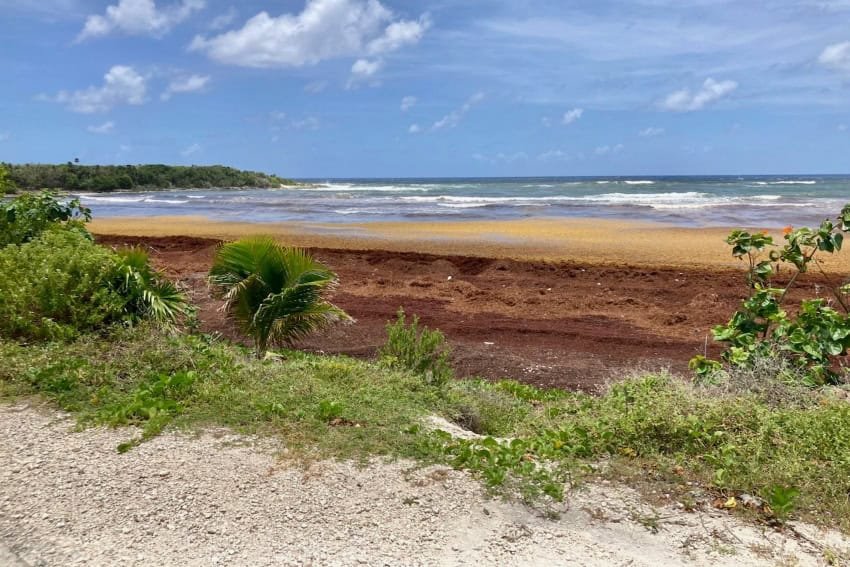
I moved to paradise: Cozumel, the beautiful island in the Mexican Caribbean. Like the rest of the Riviera Maya, its warm, clear water called to me like a siren song. Then came sargassum.
That, in itself, is not unusual. Sargassum is part of life in this region. But over the past eight years living on Cozumel, I’ve noticed a change: every year, there seems to be more of it. Much more.
When sargassum becomes a season
Sargassum is no longer just a nuisance. It is a season.
During the height of it, the beach can disappear completely. “What beach?” is the joke among locals, and it lands because it’s true. The days of long walks, beachcombing and lazy picnics by the water can vanish under thick, rust-colored mats.
Even restaurants feel it. People pull over for lunch or a drink, catch the smell of rotting seaweed, and get right back in the car.
On the island’s east side, the buildup can become so dense that boats have to carve tunnels through it just to get out to sea. That may sound dramatic, but on some days it is exactly what happens.
How it changes daily life
For anyone who spends time in the water, sargassum changes everything.

I swim every other day, and like most swimmers, I get out if there is too much of it. When the wind swings around from the northwest, things can get ugly fast. That is when sargassum hits the protected side of the island — the side where the reefs, boat tours, diving, snorkeling and day trips are concentrated, and where most of Cozumel’s population lives.
So yes, sargassum affects everyone. Tours get canceled. Water activities are cut short. People who were excited to dive or snorkel suddenly decide not to.
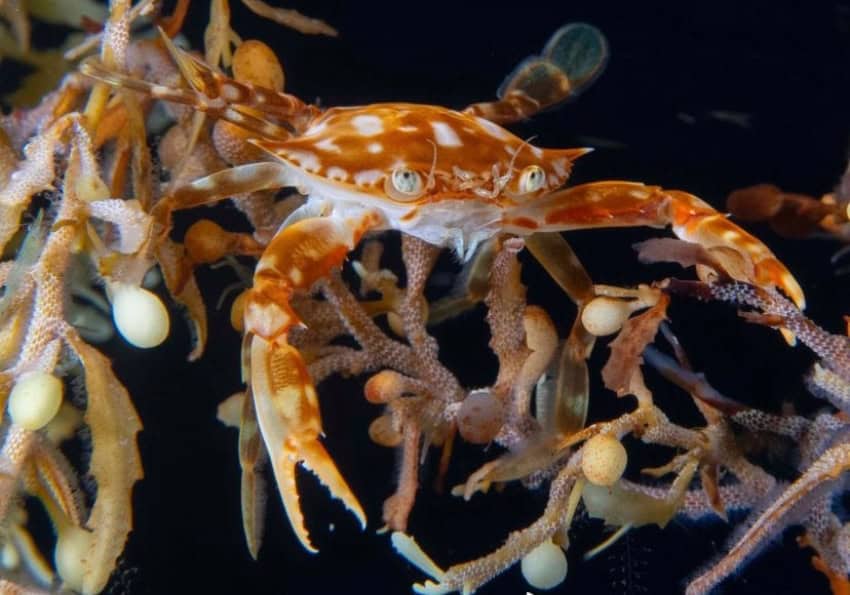
It is not only unpleasant; it is physical. Sargassum gets tangled in your hair, and with it comes an entire miniature ecosystem. Tiny sargassum crabs. Stinging creatures. All the things you would rather not discover on your body mid-swim.
Just last week, the wind changed while I was in the water. What had started as a perfect morning swim — purple sea fans swaying below, butterfly fish darting past, angelfish circling in pairs — turned in minutes into stingers, seaweed and a quick retreat to shore. The Caribbean can go from postcard to problem very quickly.
And that is the point: sargassum does not just affect divers, snorkelers and swimmers on vacation. It affects the people who live here and the people whose businesses depend on being in, on or near the ocean.
The cost to local business
That impact is clearest among small local businesses.
My swim coach is one example, and the effect on his work is hard to watch. When sargassum moves in, people cancel lessons. Income drops. Athletes training for major island events such as Ironman and Oceanman lose training days, which affects not only local coaches and guides but also the athletes’ preparation and, potentially, whether they come at all.
That matters because these events are not small. Ironman Cozumel is the island’s biggest event of the year and a major economic driver. If athletes cannot train or compete in decent conditions, they can choose another Caribbean destination instead.
Oceanman is smaller, but the logic is the same. If the water is unusable, the island loses business — not only for race organizers, but for hotels, restaurants, drivers, guides and shops.
Surf schools on the wild side are another good example. Surfing remains one of Cozumel’s most popular activities, but when sargassum piles up thick enough to choke the shoreline, there is no clear way into the water. In some bays, half the ocean seems to turn into a floating field of brown weed. At that point, businesses either relocate or close, sometimes for weeks.
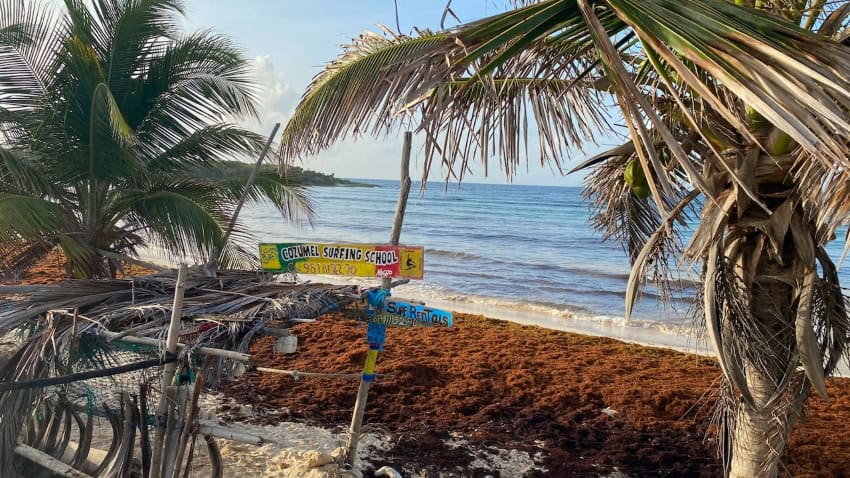
And no, however optimistic anyone may be, you cannot surf on seaweed.
Restaurants suffer too. Beach clubs, bars and waterfront stops that would normally be full can feel deserted when the smell rolls in and the view turns from turquoise blue to mounds of drying algae. Across the channel in Playa del Carmen, the situation is much the same, with heavy equipment often brought in to clear beaches.
A paradise with a problem
This year broke records, and sargassum is clearly not going away anytime soon.
Cozumel is still paradise in many ways. That has not changed for me. But sargassum is now part of the story of living here, and it is becoming a bigger part of the economic and environmental story of the entire Mexican Caribbean.
A possible use for the waste
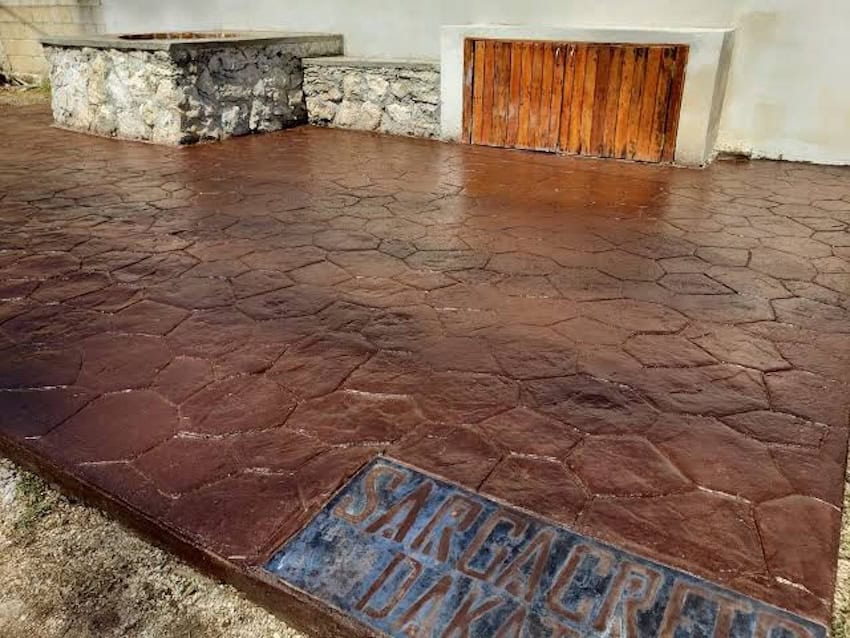
One reason this issue has become more interesting lately is that people are looking beyond cleanup and asking a more practical question: What can be done with all this seaweed?
One answer is Sargacreto, a concrete-like construction material made with processed sargassum. Grupo Dakatso says it spent five years researching, testing and certifying the material before bringing it to market, and the company has promoted it as a commercially viable way to reuse part of the enormous volume washing ashore.
In simple terms, Sargacreto replaces part of a standard concrete mix with biochar made from treated sargassum. The process uses pyrolysis, which heats the algae without oxygen. According to the company, the finished material retains the structural properties of conventional concrete.
There is obvious appeal in that. Cement is one of the most carbon-intensive materials used in construction, so reducing the amount of cement in a mix could lower environmental impact. Using sargassum in building materials also means less of it going into landfills.
Useful, but only part of the answer
That does not mean Sargacreto is a magic fix.

Even if production scales up, the volume of sargassum arriving each season remains enormous. Mexico News Daily reported earlier this year that sargassum had returned early to Quintana Roo and cited reports of millions of tonnes moving across the Atlantic basin toward the Gulf of Mexico and Caribbean, underscoring the scale of the challenge.
So the debate is fair. Is it worth it if the material costs more? Is it meaningful if it only absorbs a fraction of what comes ashore? Those are reasonable questions.
Still, using some of the waste productively seems better than simply piling it into landfills. Whether it ends up in roads, paving stones, walkways or larger construction projects, it is at least one way to put a dent in a problem that is getting harder to ignore.
Not a solution, but a start
That may be the most realistic way to look at it.
Sargassum is not going to disappear because a new building material exists. The real long-term answer will probably have to include better containment and collection before so much of it reaches shore, alongside local reuse projects for what does make landfall
But if some of that seaweed can help build roads, stations, walkways or homes instead of choking beaches and filling dumps, that is not nothing. In a region where sargassum has become part of everyday life, even partial solutions matter.
Mexico Correspondent for International Living, Bel is an experienced writer, author, photographer and videographer with 500+ articles published both in print and across digital platforms. Living in the Mexican Caribbean for over seven years now, she’s in love with Mexico and has no plans to go anywhere anytime soon.
