
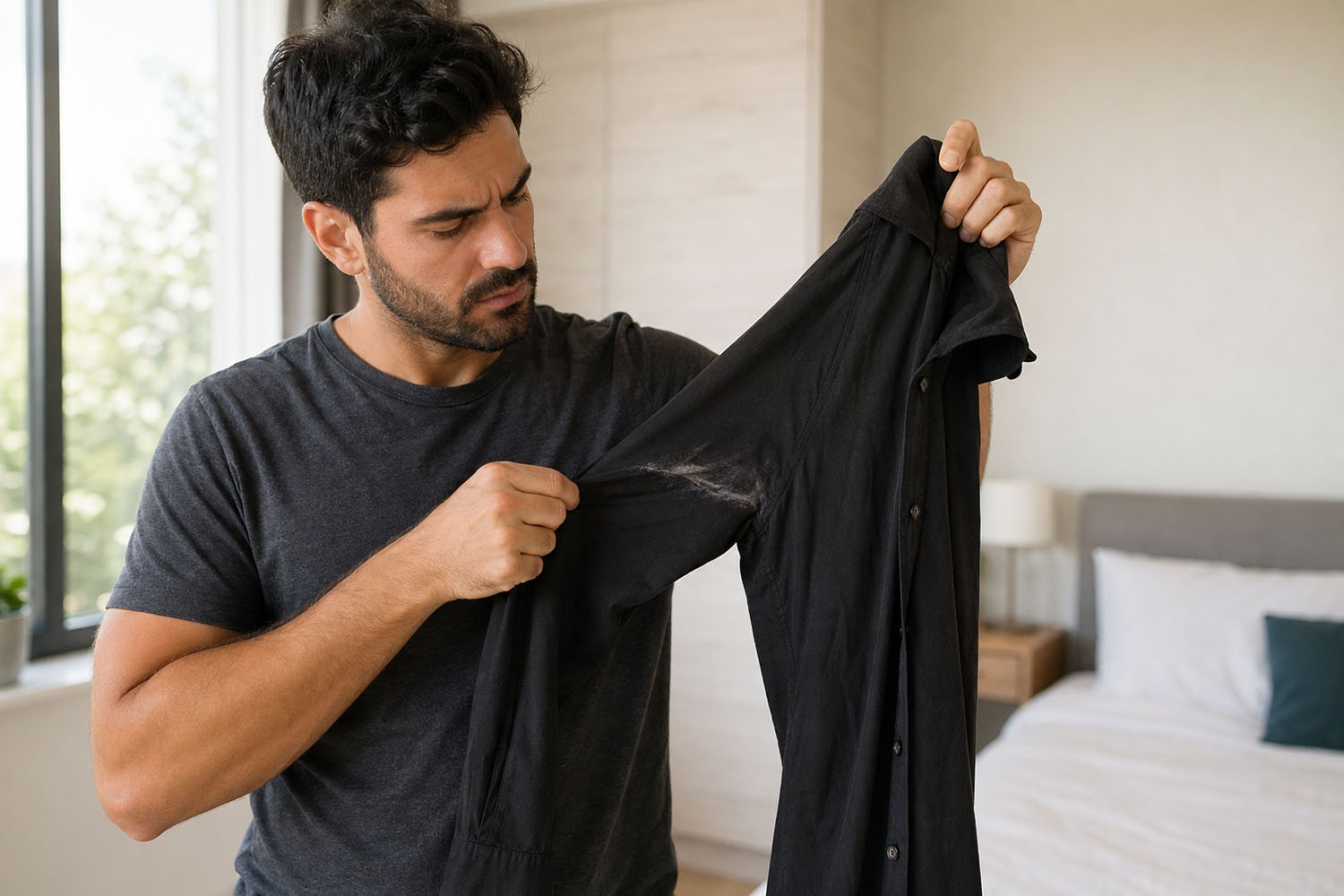
I was walking out the door when I saw it.
Black dress shirt, ironed, ready for a dinner reservation I had made three weeks ago. And right across the left side, a white chalky streak from my antiperspirant that had transferred when I pulled the shirt over my head. Twelve minutes until I needed to leave.
Most people in that moment throw the shirt in the wash and grab something else. I didn’t have something else. So I stood in my bathroom researching frantically, found a method that took ninety seconds, and walked out the door looking completely normal.
💡 Here’s what most guides about how to get deodorant off black clothes get wrong: they treat every deodorant mark as the same problem. It isn’t. A fresh white streak you just made pulling your shirt on is a completely different situation from the crusty gray buildup in your armpits that’s been accumulating for months.
The fix for one takes ninety seconds and no products. The fix for the other takes an hour and a different set of tools entirely.
Quick Answer: How to Get Deodorant Off Black Clothes
For a fresh white mark made today: don’t add water. Rub the stained area firmly with a piece of nylon fabric (a pair of tights, a nylon sock, or even the inside of a nylon bag) in small circular motions. The texture lifts the dry aluminum salt residue off the fabric surface without damaging the dye. Takes sixty to ninety seconds. For set-in buildup that’s been through multiple washes: soak the affected area in undiluted white vinegar for 30 to 60 minutes, scrub gently with an old toothbrush, and launder in cold water. Never use chlorine bleach on black clothes, and use hydrogen peroxide with extreme caution as it can strip dark fabric dye.
Two Different Problems That Need Two Different Solutions
Understanding why deodorant marks look the way they do on black clothes changes everything about how you treat them.
The white streaks you see when you’ve just pulled on a shirt are dry aluminum salt residue. Most antiperspirants use aluminum chlorohydrate or aluminum zirconium compounds to physically block sweat ducts and reduce moisture. These aluminum salts are white solids suspended in a liquid or wax base. When the deodorant hasn’t fully dried before you dress, those white solids transfer directly from your skin to the fabric. They sit on the surface of the fibers, not bonded to them. That’s why the fresh-mark fixes work so well and so quickly. You’re removing a surface deposit, not breaking a chemical bond.
The gray or white crusty buildup you see in the armpit area of shirts you’ve worn many times is a different problem entirely. That’s accumulated aluminum salt that has mixed with sweat proteins, dried repeatedly, and over multiple wash and dry cycles has begun to bond with the fabric fibers themselves. Regular laundry detergent can’t touch it because the chemical bond requires acid to break. The buildup also stiffens the fabric, which is why old armpit areas on black shirts often feel crunchy or rigid.
The first problem needs friction. The second needs acid chemistry. Using the wrong approach on either one wastes time and sometimes makes things worse.
The Fresh Mark Fixes: No Water, No Washing, Ninety Seconds
These methods work specifically on marks made today, before the shirt has been worn and sweated in. The aluminum hasn’t bonded. It’s sitting on the surface. Your goal is to lift it off without adding moisture that could spread it or push it into the fabric.
The nylon trick: Grab any piece of nylon fabric: a pair of tights, a nylon stocking, the inside of a nylon bag, or even a nylon sponge. Rub it firmly over the white mark in small circular motions. The texture of nylon picks up the dry aluminum salt particles and lifts them off the fabric surface. This is the method I used in twelve minutes. Sammy Wang, senior fabric-care scientist at P&G, confirmed to Reader’s Digest that rubbing a fresh deodorant mark “briskly but gently” with a tight-knit fabric like tights is the correct first approach. It works better than anything else for a fresh mark on a dry shirt because it removes the deposit rather than dissolving it.
The fabric-against-itself method: On durable fabrics like cotton and denim, fold the garment so the stained area rubs against a clean section of the same shirt. The friction transfers the aluminum residue to the other section, spreading it thin enough to become invisible. This sounds counterintuitive but works on fresh dry marks. Don’t use this on delicate fabrics where the rubbing could damage the weave.
Baby wipes: For synthetic fabrics where rubbing with nylon might snag the weave, a firm dab with a baby wipe can dissolve the aluminum salts without saturating the fabric. Press and lift rather than rubbing. Let the damp spot dry completely before leaving the house or the moisture shadow will be visible on dark fabric.
The foam eraser: A clean white foam eraser (like a Magic Eraser, but a plain white one to avoid color transfer) used very gently on the surface of the stain can lift dry deodorant residue without adding moisture. Use with a light touch on delicate fabrics.
Warning About Hydrogen Peroxide on Dark Fabrics
Hydrogen peroxide is an oxidizing agent that works well on white and light fabrics. On black and dark clothes, it’s genuinely risky. Hydrogen peroxide can strip or lighten the dye in dark fabric, especially if left on too long, used in high concentration, or applied to fabric that has been weakened by repeated washing. Some sources recommend it for dark fabric deodorant stains, but multiple fabric care experts advise against it because the color damage can be irreversible. If you choose to try it, use the weakest concentration (3%), test on a hidden seam area first, limit contact time to 5 to 10 minutes maximum, and rinse thoroughly. The vinegar method is safer and comparably effective on aluminum stains. Chlorine bleach should never be used on dark clothes under any circumstances.
Why Regular Washing Doesn’t Work on Deodorant Buildup
This is the thing most people can’t understand: the shirt goes through the wash and comes out looking exactly the same. The buildup doesn’t shift.
The reason is chemistry. Standard laundry detergent is formulated to remove water-soluble soils and some surface oils. Aluminum salt compounds that have bonded to fabric fibers are neither. They require acid to break the specific chemical bond between the aluminum compounds and the textile fibers. Most detergents have a neutral to slightly alkaline pH, which does nothing against aluminum salts and may actually reinforce their bond.
Hot water makes it worse. Heat causes the aluminum compounds to bond more aggressively with fabric fibers, which is why buildup gets progressively harder to remove the longer it’s allowed to accumulate through wash and dry cycles. Cold water is correct for washing after treatment, and avoiding the dryer until the buildup is fully cleared is essential.
Fabric Considerations for Dark Clothes
Cotton and cotton blends: The most forgiving. Handles vinegar, baking soda, and enzyme treatment well. Responds to the nylon friction trick for fresh marks.
Polyester and synthetics: Aluminum salts embed more aggressively in synthetic fibers because of their chemical affinity for oil and mineral compounds. Vinegar soaks need to be longer (up to an hour) and may need to be repeated. Use baby wipes rather than the fabric-friction method for fresh marks as rubbing can snag synthetic weaves.
Linen: Responds well to vinegar treatment. Use lukewarm rather than very cold water throughout. Air dry rather than machine dry to protect the dark dye.
Wool and cashmere: Professional cleaning for any significant buildup. A very dilute vinegar solution (one part vinegar to four parts water) can be tried on minor marks, but the fabric is too delicate for scrubbing or enzyme treatment.
Silk: Professional cleaning only. No home treatment for silk with deodorant buildup.
My Step-by-Step Protocol
For a fresh white mark right now:
Step 1: Don’t add water. Keep the shirt dry.
Step 2: Grab nylon fabric and rub firmly in circular motions until the white mark disappears.
Step 3: If you don’t have nylon, fold the shirt and rub against itself, or use a baby wipe with a press-and-lift motion.
Step 4: Let any damp spot dry before leaving.
For set-in armpit buildup:
Step 1: Turn the garment inside out.
Step 2: Apply undiluted white vinegar to the stained area. Soak 30 to 60 minutes.
Step 3: Scrub gently with an old toothbrush.
Step 4: If residue remains, apply baking soda paste over the vinegar-treated area. Let sit 30 minutes.
Step 5: Launder in cold water.
Step 6: Check before the dryer. Any remaining marks mean repeat from Step 2.
Warning: Never Do These Things
- Never use chlorine bleach on black clothes. It will strip the dye and permanently damage the fabric.
- Don’t use hydrogen peroxide without testing first. It can lighten dark fabric dye irreversibly if left too long.
- Don’t mix vinegar and baking soda together. They neutralize each other. Use them separately and in sequence.
- Don’t use hot water on deodorant buildup. Heat bonds the aluminum compounds more deeply to the fabric fibers.
- Never put the garment in the dryer until the buildup is confirmed gone. Heat sets aluminum deposits permanently.
- Don’t add water to a fresh dry mark. Moisture spreads the aluminum salts and makes them harder to remove.
What Definitely Does Not Work
Regular detergent alone: Laundry detergent has the wrong pH chemistry for aluminum salt bonds. The shirt will go through the wash and come out looking essentially unchanged.
Hot wash cycles: Counterproductive. Heat bonds aluminum compounds more deeply to fabric fibers and causes dark dye to fade faster.
Rubbing a fresh mark with water: Water dissolves the dry aluminum salts into a liquid suspension and spreads the stain over a wider area. Keep fresh marks dry until you can use the nylon method.
Scrubbing dry without the right texture: Using your fingers or a cloth to scrub a fresh dry mark just pushes the aluminum particles around. The nylon texture is what actually lifts them.
How to Prevent Deodorant Marks on Black Clothes
Most prevention comes down to application habits rather than product switching.
Let your deodorant dry completely before dressing. This is the single most effective prevention measure. Most antiperspirants need at least 60 seconds to dry adequately. Two minutes is better. Wet deodorant transfers directly to fabric.
Apply deodorant at night rather than in the morning. Dermatologists and the manufacturer guidance from multiple antiperspirant brands recommend nighttime application to completely dry skin. The product absorbs into sweat ducts overnight, requires less product, and transfers far less to clothing.
Use less product. Two to three swipes is sufficient. More product means more aluminum salt available to transfer.
Consider spray or gel formats. Roll-on sticks apply more product in thicker layers that transfer more readily. Sprays apply a thinner, more even layer that dries faster. Clear gel formulas are specifically formulated to dry transparent rather than chalky.
Dress with care. Pull dark shirts on from the bottom rather than over the head, or hold the armpit area away from the shirt as you pull it on.
The One Thing I Wish I Had Known Sooner
The two-problem distinction. For years I treated every deodorant mark on dark clothes the same way (threw it in the wash) and got the same result every time, which was no improvement.
Fresh dry marks need friction and no moisture. Set-in buildup needs acid chemistry and time. Once I understood which problem I was dealing with before reaching for anything, my results changed completely. The nylon trick for fresh marks is so fast and effective it feels like cheating. The vinegar soak for buildup is slower but works on shirts I had essentially written off.
The black dress shirt, by the way, made it to dinner. Nobody knew.
Final Thoughts
Deodorant marks on black clothes have two versions and two solutions. Fresh white streaks need the nylon trick, ninety seconds, no water. Set-in armpit buildup needs white vinegar, time, and patience. Natural deodorant oil residue needs dish soap.
Knowing which problem you have before you reach for anything is the whole skill.
Have you found a method that works well on deodorant marks on dark clothes? Drop a comment below.
Frequently Asked Questions
How do you get white deodorant marks off black clothes fast?
Rub the mark firmly with a piece of nylon fabric: a pair of tights, a nylon sock, or the inside of a nylon bag. The texture lifts the dry aluminum salt residue off the fabric surface in sixty to ninety seconds without adding moisture or damaging the dye. This works specifically on fresh marks that haven’t been wetted or washed. Don’t add water first. Keep the fabric dry and let the friction do the work.
Why does deodorant leave white marks on black clothes?
White marks on black clothes are caused by aluminum salts in antiperspirants. These compounds are white solids suspended in a liquid or wax base that transfer from skin to fabric when the deodorant hasn’t fully dried before dressing. On black fabric, the white color contrast makes them immediately visible. The marks become worse and harder to remove over time as the aluminum salts mix with sweat proteins and bond to fabric fibers through repeated wear and heat exposure.
Does white vinegar remove deodorant stains from black clothes?
Yes, and it’s the safest and most effective home method for set-in aluminum deodorant buildup on dark fabrics. The acetic acid in white vinegar dissolves the chemical bond between aluminum compounds and fabric fibers. Apply undiluted white vinegar directly to the stained area, let it soak for 30 to 60 minutes, scrub gently with an old toothbrush, and launder in cold water. Repeat if needed. It won’t strip dark fabric dye when used correctly, which makes it significantly safer than hydrogen peroxide on black clothes.
Can you use hydrogen peroxide on black clothes for deodorant stains?
Use it with caution. Hydrogen peroxide is an oxidizing agent that can lighten or strip dark fabric dye, especially if left on too long or used at higher concentrations. Some sources recommend it for deodorant stains on dark fabrics, but fabric care experts advise that white vinegar is safer and comparably effective on aluminum-based stains. If you choose to try hydrogen peroxide, use 3% concentration only, test on a hidden seam first, limit contact to 5 to 10 minutes, and rinse thoroughly.
How do you get rid of deodorant buildup on black shirts?
The buildup that accumulates over months of wear requires acid treatment to break the chemical bond between aluminum deposits and fabric fibers. Soak the affected area in undiluted white vinegar for 30 to 60 minutes, scrub gently with an old toothbrush, and launder in cold water. For heavy buildup, follow with a baking soda paste applied after rinsing the vinegar, let it sit 30 minutes, and wash again. For buildup that also has a protein component (the fabric feels stiff or crunchy), add an enzyme stain remover as a third step before laundering.
Does deodorant wash out of black clothes?
Fresh surface deposits wash out easily if caught before they bond to the fabric. Set-in buildup that has gone through multiple hot wash and dry cycles does not wash out with standard detergent alone because laundry detergent doesn’t have the right chemistry to break the aluminum-fabric bond. The longer buildup accumulates, the harder it becomes to remove. Treating with white vinegar before washing, rather than just washing, is what makes the difference between buildup that clears and buildup that stays.
More Stain Removal Guides:
More Cleaning Tips:
Better Living may earn commissions through affiliate links and may occasionally feature sponsored or partner content. If you make a purchase through our links, we may receive a small commission at no cost to you.
