
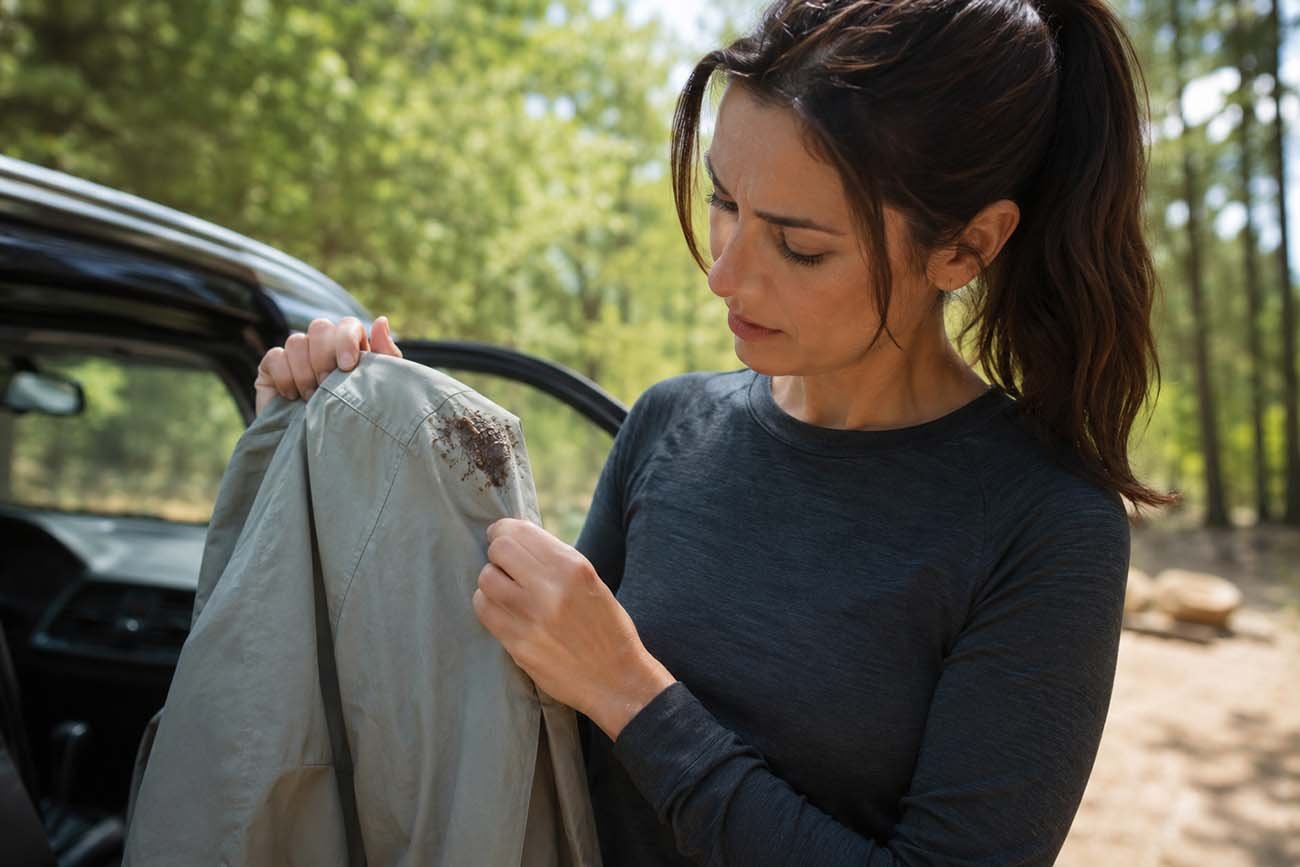
I brushed past a pine tree on a trail and felt nothing. Got back to the car, peeled off my jacket, and found a brown sticky patch on the shoulder that had not been there in the morning. By the time I noticed it the sap had been sitting on the fabric for three or four hours. I did the obvious thing: picked at it with my fingernail. That turned one concentrated spot into a smeared streak that covered twice the area.
The problem was that I was treating it like a stain when it is not a stain. Tree sap is a resin, a hydrophobic compound that repels water and bonds to fabric at a molecular level. Water and soap do nothing meaningful to it. The correct treatment depends on how old the sap is, because pine resin oxidizes and polymerizes over time, hardening progressively from tacky to rubbery to brittle. Fresh sap and three-day-old sap are chemically different problems that need different solvents. That mismatch is why most people’s first attempt fails.
The Short Answer:
To remove tree sap from clothing: scrape off as much bulk sap as possible with a dull knife or frozen-stiff cloth, then apply rubbing alcohol (isopropyl 70% or higher) directly to the stain. Let it soak for one to two minutes, then blot with a clean cloth. Wash in warm water with regular detergent. Check before drying.
For sap that has been on the fabric more than 24 to 48 hours: use 90% or higher isopropyl alcohol, or Goo Gone, with a longer dwell time of five to ten minutes before blotting.
For sap that has fully hardened: turpentine on natural fiber fabrics (cotton, linen, denim) or Goo Gone on synthetics, followed by dish soap to remove the solvent residue, then launder. Do not put the garment in the dryer until the sap is completely gone.
What Tree Sap Actually Is (And Why Water Does Nothing)
Most people use “tree sap” to mean any sticky substance that comes off a tree. The distinction matters for treatment. True sap is the watery, sugar-rich fluid that flows through a tree’s circulatory system. It is water-soluble and washes off easily. What lands on your jacket under a pine tree is not sap in that sense. It is oleoresin: the sticky, fragrant defensive secretion that conifers like pine, fir, and spruce produce to seal bark wounds. Oleoresin is hydrophobic, meaning it repels water, and it is composed of compounds that are insoluble in water and aqueous cleaning products.
Pine resin has two main components. The first is terpenes: volatile, sticky, fragrant compounds that are responsible for the fresh pine smell. Terpenes are relatively easy to dissolve with alcohol because they have not yet polymerized. The second is rosin, a solid resin made of diterpenic acids. As resin sits on fabric and is exposed to air, the terpenes gradually evaporate and the rosin oxidizes and polymerizes, becoming progressively harder and more resistant to solvents. It is this polymerized rosin that forms the stubborn stain that survives a wash cycle.
The practical implication is straightforward: the older the sap, the stronger the solvent required. Standard rubbing alcohol that clears fresh resin in two minutes may make almost no impression on resin that has been hardening on your jacket for a week. Matching the solvent to the age of the stain is the most important decision in this process.
The Golden Rule: Scrape Before You Apply Any Solvent
The same principle that applies to gum applies to tree sap: remove the physical bulk before applying any liquid. Applying solvent to a large mass of sap dissolves the outer layer and spreads it across more fabric rather than removing it. Scraping first reduces the mass the solvent needs to address and prevents the dissolved resin from spreading laterally into clean fabric.
Use a dull knife, the back of a spoon, or a plastic card. Work from the outer edges of the sap deposit toward the center. Do not scrape outward, which spreads it. Do not press hard enough to drive the sap deeper into the weave. Lift it off in layers. Place a piece of cardboard under the stained area while you scrape and treat — this prevents sap from transferring through to the back of the garment.
For a large or fresh glob of sap, pressing a cloth soaked in cold water or a plastic bag filled with ice against the sap for several minutes before scraping helps harden the surface and makes it easier to lift off without smearing. This is less critical than with gum (resin does not have the same polymer-stretch problem) but it helps with large fresh deposits.
Does Tree Sap Come Out of Clothing?
Yes, in most cases. Fresh tree sap treated promptly with rubbing alcohol comes out of most washable fabrics completely. Sap that has been on fabric for several days requires a stronger solvent and more dwell time but is usually recoverable. Sap that has gone through the dryer is the hardest situation: heat cures the polymerized rosin into the fiber structure and some heat-set sap stains are permanent.
The type of tree matters. Pine, fir, and spruce produce the stickiest oleoresin and are the most common source of clothing stains. Deciduous trees like oak and maple produce true sap that is watery and water-soluble; it usually washes off without solvent treatment at all. If you walked past a deciduous tree and got something sticky on you, try water and dish soap first before reaching for alcohol.
How Old Is the Sap? Match Your Method to the Stage
Fresh Sap (Less Than 24 Hours, Still Tacky)
Fresh resin still contains most of its volatile terpene component. Isopropyl alcohol at 70% or higher dissolves it quickly. Hand sanitizer with a high alcohol content works by the same mechanism.
Scrape off bulk sap first. Apply rubbing alcohol directly to the stain and let it soak for one to two minutes. The resin will visibly soften and begin to dissolve into the cloth. Blot with a clean white cloth, working from the outside of the stain inward. Repeat until the stain is gone, using fresh sections of cloth each time to avoid transferring dissolved resin back onto the fabric. Wash in warm water with regular detergent.
Spot test on an inside seam before applying alcohol to the garment. Apply alcohol, wait one to three minutes, blot with a towel. If no color comes off, the fabric is colorfast and the method is safe to use on the stain.
Semi-Cured Sap (One to Three Days, Rubbery or Stiff)
At this stage the terpenes have partially evaporated and the rosin has begun to polymerize. Standard 70% rubbing alcohol loses significant effectiveness against partially polymerized rosin. Use isopropyl alcohol at 90% or higher concentration, which has greater non-polar solvency for the hardened resin components.
Scrape off as much as possible first. Apply 90%+ isopropyl alcohol generously to the stain. Allow it to dwell for five to ten minutes, keeping the area wet by reapplying alcohol if it evaporates. The resin will soften gradually rather than dissolving quickly as fresh sap would. Blot firmly with a clean cloth, rotating to fresh sections frequently. Wash in warm water with extra detergent.
Goo Gone is an effective alternative at this stage. Apply to a cloth first rather than directly to the garment, work into the stain, let dwell five minutes, then launder with extra detergent immediately after treatment.
Set or Hardened Sap (More Than Three Days, Brittle or Firmly Bonded)
Fully oxidized rosin has polymerized into a hard, brittle substance with significant resistance to standard solvents. This requires either a longer dwell time with high-concentration isopropyl alcohol, Goo Gone, or turpentine on natural fiber fabrics.
Turpentine is itself a terpene-based distillate; it has direct chemical kinship with pine resin and is one of the most effective solvents for polymerized rosin. Apply a small amount to the stained area, let it dwell for five to ten minutes, then work the softened resin off with a soft toothbrush or plastic edge. Apply dish soap immediately to the treated area to remove the turpentine residue, rinse thoroughly, and launder in warm water with extra detergent. Turpentine is safe on cotton, linen, and denim but can damage delicate synthetic fibers and should not be used on silk, rayon, or acetate. Work in a well-ventilated area; turpentine fumes are strong.
Goo Gone is the safer alternative for synthetic fabrics and for anyone who prefers to avoid turpentine. It is a citrus-based adhesive remover that is effective on set resin and confirmed safe for fabric, carpet, and upholstery (not safe on silk, leather, or suede). Apply to a cloth first, work into the stain, allow five to ten minutes of dwell time, and launder with extra detergent immediately after.
Five Methods, Ranked
1
2
3
4
5
Pro tip: Tree sap season runs twice a year. Summer hiking and outdoor activity is the most common source, but Christmas tree season (November through January) produces just as many sap-on-clothing situations as any trail. Pine, fir, and spruce trees shed resin when handled, and fresh-cut Christmas trees are particularly sappy. If you are buying or decorating a live tree, keep a bottle of hand sanitizer nearby and treat any spots immediately rather than waiting until after the tree is decorated and the stain has had two hours to begin curing.
For field treatment with no solvent available: a stain remover pen in a hiking pack or camping kit is more useful than you would expect. Most stain pens use enzyme and surfactant formulas that address protein, fat, and starch-based stains rather than resin directly — but they keep the area moist and prevent dirt from bonding to the sticky surface, which preserves the garment until proper solvent treatment is possible at home.
Tree sap is a physics-and-chemistry hybrid problem, similar in some ways to getting gum out of clothes: both involve hydrophobic compounds bonded to fabric that water cannot reach. The key difference is that gum requires changing the physical state (freeze), while tree sap requires matching the right solvent to the curing stage of the resin.
The Full Protocol, Step by Step
Step 1: Do not rub. Rubbing fresh sap spreads it across more fabric. If the sap is fresh and still tacky, blot gently with a dry cloth to absorb what you can from the surface before doing anything else.
Step 2: Scrape. Place a piece of cardboard under the stained area to protect the back of the fabric. Use a dull knife, plastic card, or the back of a spoon to lift off as much bulk sap as possible. Work from the outside edges of the deposit toward the center. For a large fresh deposit, press a cold cloth or ice pack against the sap for a few minutes first to firm it up.
Step 3: Assess the age of the sap. If it is still tacky and fresh, use 70% isopropyl alcohol. If it has been on the fabric for one to three days and feels rubbery or stiff, use 90%+ isopropyl or Goo Gone. If it has been there for more than three days and feels hard or brittle, use Goo Gone or turpentine on natural fibers.
Step 4: Spot test. Apply your chosen solvent to a hidden inside seam. Wait two to three minutes and blot. If no color transfers, proceed.
Step 5: Apply solvent to the stain. Keep the area wet. Allow the dwell time appropriate to the sap age (one to two minutes for fresh, five to ten for semi-cured or set). Blot with clean sections of cloth repeatedly, rotating to fresh cloth as resin transfers.
Step 6: If WD-40 or turpentine was used, apply dish soap to the treated area immediately. Work it in gently and rinse thoroughly before laundering.
Step 7: Apply an enzyme-based stain remover to the area and let sit for 15 minutes before washing. This helps address any remaining residue the solvent loosened but did not fully remove.
Step 8: Wash in warm water with regular detergent. Check before drying. If any sap or residue is visible, repeat Steps 5 through 7 before drying.
Never do these things:
- Don’t rub fresh sap. Rubbing spreads the resin across a larger area of fabric and drives it deeper into the weave. Blot and lift only.
- Don’t use water and soap as your first treatment on conifer resin. Oleoresin from pine, fir, and spruce is hydrophobic and non-polar. Water cannot dissolve it. Soap and water as a first step wastes time while the resin continues to oxidize and harden.
- Don’t put the garment in the dryer before confirming the sap is gone. Dryer heat cures polymerized rosin into the fabric. Heat-set sap stains are significantly harder to remove and some are permanent.
- Don’t use acetone on fabric. Acetone has strong solvency for resin but is too aggressive for most fabric fibers and dyes. It poses a high risk of fiber damage and discoloration and is not recommended for clothing even on stains that have resisted other methods.
- Don’t put a garment soaked in rubbing alcohol or turpentine directly into the washing machine without rinsing first. Both are flammable. Rinse the treated area thoroughly with water before laundering.
- Don’t use turpentine on synthetic fabrics, silk, rayon, or acetate. Turpentine can damage synthetic fibers and affect the dye on delicate fabrics. Goo Gone is the safer choice for synthetics.
By Fabric Type
Cotton, linen, and denim: All five methods are safe. Turpentine is appropriate for set stains on these fabrics. Warm water wash after treatment.
Polyester and synthetic blends: Rubbing alcohol and Goo Gone are safe. Avoid turpentine, which can damage synthetic fibers. Spot test WD-40 before using on synthetics. Wash in warm water.
Down jackets and coats: The American Cleaning Institute specifically confirms that rubbing alcohol is safe on down. Saturate the stained area, let sit for a minute, and launder in warm water. Down can be machine washed but follow the garment’s care label for cycle and temperature.
Wool: The American Cleaning Institute recommends a dry cleaner for tree sap on wool. Do not attempt solvent treatment on wool at home; the risk of fiber damage and shrinkage is too high. Blot off as much sap as possible and take it to a cleaner promptly, telling them what the stain is and how long it has been there.
Silk: Dry cleaner only. No solvents on silk at home. Blot only before the cleaner visit.
Rayon and acetate: Avoid turpentine and acetone entirely. Rubbing alcohol spot-tested first. Goo Gone is a safer option. Dry cleaner for significant stains.
Knit gloves and accessories: The ACI confirms rubbing alcohol works on knit gloves. Saturate, let sit, hand wash or machine wash gentle with cool water.
What Does Not Work
Water and standard dish soap: Effective on true sap from deciduous trees, which is water-soluble. Completely ineffective on oleoresin from conifers, which is hydrophobic. If it did not come off after washing once, it is conifer resin and needs a solvent.
70% rubbing alcohol on set or hardened sap: Works on fresh resin. Loses significant effectiveness on sap that has been oxidizing for more than 24 to 48 hours. If 70% alcohol has not produced visible softening after two minutes of dwell time, switch to 90%+ or Goo Gone.
Baking soda as a standalone treatment: Baking soda does not dissolve resin and has no chemical solvency for terpene or rosin compounds. It is sometimes recommended as a paste, but it addresses surface residue only, not the resin bond itself. After solvent treatment, a light baking soda paste can help lift loosened residue before laundering, but it should not be used as a first or only step on conifer sap.
Scratching or picking: Spreads the resin and drives it deeper into the fiber structure. Scrape with a tool, never scratch with a fingernail.
Acetone (nail polish remover): Has strong solvency for resin but is too aggressive for most fabric fibers and dyes. It poses a high risk of fiber damage and discoloration and is not recommended for clothing even on stains that have resisted other methods.
How to Prevent Tree Sap on Clothing
The easiest sap stain is the one that never happens. When you know you will be near conifers — hiking through pine forest, cutting down a Christmas tree, pruning spruce branches — wear older clothes or an outer layer you can peel off before getting back in the car. Carry hand sanitizer: applied immediately when you notice a fresh spot, it clears most resin before it has a chance to begin curing. Fresh-cut Christmas trees are particularly sappy at the cut end and along the lower branches; gloves and a long-sleeved layer make decorating significantly less hazardous to your wardrobe.
The One Thing I Wish I Had Known Sooner
Three hours was enough for that jacket sap to move from trivial to mildly annoying. I came home, applied 70% rubbing alcohol, and the stain came most of the way out, but a faint shadow remained. A second pass with 90% isopropyl, which I did not have and had to buy the next day, cleared it. If I had treated it in the first hour with whatever alcohol I had on hand, it would have been a two-minute fix. The window between easy and effortful is not days with tree sap. It is hours. Fresh resin is the easy version of this problem. Give it time and you are dealing with a progressively harder one.
Final Thoughts
Tree sap stains are solvent problems, not stain problems. The correct tool is an organic solvent matched to the age of the resin: not more scrubbing, not warmer water, not stronger detergent. Match the solvent to the stage, allow sufficient dwell time, and launder promptly. Check before the dryer every time.
For the same physics-first approach to another adhesive fabric problem, see the guide to getting gum out of clothes. Gum and tree sap both involve hydrophobic compounds bonded to fabric that water cannot reach, but the treatment mechanic is different: gum requires changing the physical state, tree sap requires the right solvent.
Frequently Asked Questions
Does tree sap come out of clothing?
Yes, in most cases. Fresh tree sap treated with rubbing alcohol comes out of most washable fabrics completely. Sap that has been on fabric for several days requires a stronger solvent but is usually recoverable. Sap that has gone through the dryer is the hardest situation and some heat-set stains are permanent. The key is acting quickly and using a solvent rather than soap and water, which cannot dissolve hydrophobic pine resin.
Does rubbing alcohol remove tree sap from clothes?
Yes, for fresh to semi-cured sap. The American Cleaning Institute recommends saturating the stained area with rubbing alcohol, letting it sit for a minute, then laundering in warm water with regular detergent. For sap that has been on the fabric for more than 24 to 48 hours, use 90% or higher concentration isopropyl alcohol rather than standard 70%, as partially polymerized rosin is more resistant to lower-concentration alcohol.
How do you get dried tree sap out of clothes?
Scrape off as much as possible first. Then apply 90% or higher isopropyl alcohol or Goo Gone to the stain and allow five to ten minutes of dwell time. The older and harder the sap, the longer the dwell time needed. For fully hardened sap on cotton or denim, turpentine with five to ten minutes dwell time is the strongest household option. Launder with extra detergent after treatment and check before drying.
Does WD-40 remove tree sap from clothing?
Yes. WD-40’s petroleum distillate content dissolves resin effectively. Apply to the stain, allow five minutes, then apply dish soap to remove the WD-40 residue before laundering. The secondary dish soap step is essential; skipping it leaves a petroleum oil stain. WD-40 works across most sap ages and on most fabric types.
Does hand sanitizer remove tree sap?
Yes, for fresh to semi-cured sap. Hand sanitizer works by the same mechanism as rubbing alcohol: the isopropyl or ethyl alcohol content dissolves the terpene components of fresh resin. It is particularly useful as a field treatment because the gel consistency keeps the solvent in contact with the stain longer than liquid alcohol would. Apply generously, let sit for a minute or two, blot, and launder as soon as possible.
How do you get pine sap out of clothes?
Pine sap is oleoresin, a mixture of terpenes and rosin. For fresh pine sap, rubbing alcohol or hand sanitizer applied for one to two minutes and then laundered in warm water is the standard treatment. For pine sap that has hardened over several days, use Goo Gone or turpentine (on natural fiber fabrics only) with a longer dwell time of five to ten minutes. Scrape off as much bulk as possible before applying any solvent, and always check before putting the garment in the dryer.
How do you get tree sap out of clothes that have been washed and dried?
Heat from the dryer has cured the polymerized rosin further into the fiber. Apply 90%+ isopropyl alcohol or Goo Gone to the stain and allow ten to fifteen minutes of dwell time. The resin may have become significantly more resistant; expect to repeat the treatment two or three times. Turpentine on natural fiber fabrics is the strongest option for heat-set resin. Some stains that have been through the dryer are permanent.
How do you get tree sap out of white clothes?
The solvent protocol is the same as for any other color: scrape, apply 70% rubbing alcohol for fresh sap or 90%+ isopropyl or Goo Gone for older sap, blot, and launder. On white fabric only, if a faint discolored shadow remains after solvent treatment, apply a small amount of hydrogen peroxide (3%) to the area, let sit for five minutes, then rinse and launder. Do not use hydrogen peroxide on colored fabrics, as it can bleach dye. Check before drying.
How do you get tree sap out of hair?
Rubbing alcohol or hand sanitizer works on hair the same way it does on fabric: apply to the sap, work in gently with your fingers, and the resin will soften and release. Peanut butter or coconut oil are also effective through like-dissolves-like chemistry. Work the oil into the sap, comb through gently to release the softened resin, then shampoo thoroughly to remove the oil residue. For large amounts of hardened sap in hair, conditioner applied to the sap and worked through with a wide-tooth comb before shampooing can help loosen the bond.
Better Living may earn commissions through affiliate links and may occasionally feature sponsored or partner content. If you make a purchase through our links, we may receive a small commission at no cost to you.
