
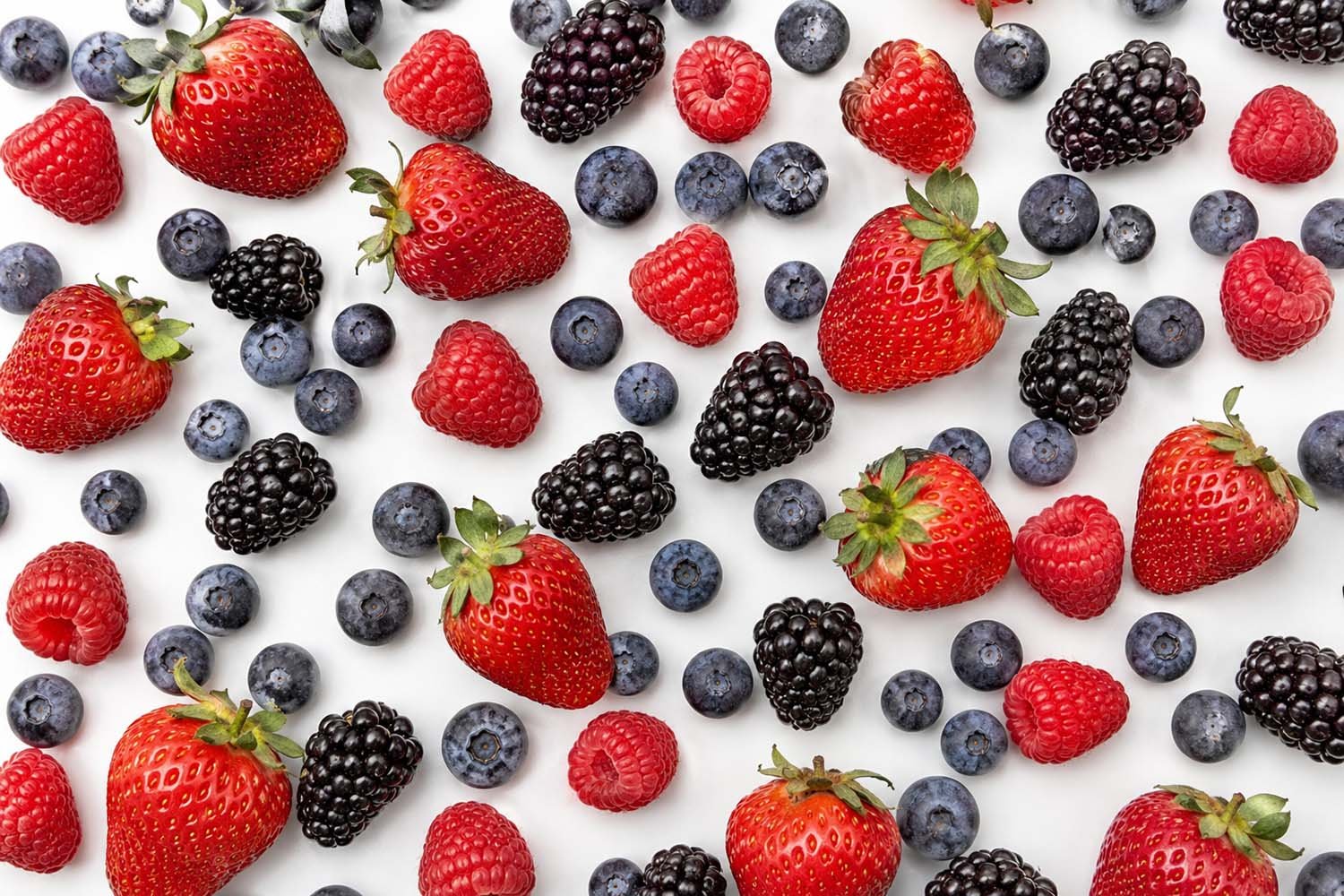
You bring home a beautiful carton of berries, wash them right away, and two days later they are covered in mold. The problem is not the berries. It is the water. The single most common mistake that cuts berry shelf life in half is washing them before storing.
How do you store berries so they last as long as possible?
The short answer: Do not wash berries until you are ready to eat them. Moisture is the primary driver of mold growth on berries, and washing introduces moisture before storage begins. Stored dry in the refrigerator, blueberries and strawberries last up to 2 weeks, while raspberries and blackberries last 2 to 5 days. A dilute vinegar rinse immediately before refrigerating can extend strawberry shelf life up to 2 weeks and is worth doing when you have the time.
For a complete food storage reference covering over 100 ingredients, see our Food Storage Guide.
⚡ Quick Start: Do These 4 Things When You Get Home
- Sort: Remove any soft, moldy, or leaking berries immediately.
- Do not wash: Store dry. Wash only right before eating.
- Paper towel: Line the container to absorb moisture.
- Middle shelf: Refrigerate on a shelf, not in the crisper drawer.
🔑 Key Takeaways
- Do not wash berries until you are ready to eat them. Moisture is the primary cause of premature mold.
- Sort berries immediately when you get home. One moldy berry spreads to its neighbors quickly. Removing it protects the rest of the carton.
- Store berries in the refrigerator, not on the counter. Cold temperatures slow mold growth significantly.
- Line the container with a paper towel to absorb any moisture that accumulates during storage.
- Raspberries and blackberries are the most delicate. Plan to use them within 2 to 3 days. Blueberries are the most forgiving and can last up to 2 weeks.
- Freeze any berries you cannot use in time. Frozen berries last up to 1 year and are excellent for smoothies and baking.
The Number One Rule: Do Not Wash Berries Until You Are Ready to Eat Them
Washing berries before storing them is the most common storage mistake, and the results are predictable: mold within 1 to 2 days instead of 1 to 2 weeks.
Berries have extremely thin, permeable skin. When you wash them before storage, water penetrates that skin and sits on the surface. Mold spores, which are already present on virtually every berry when you bring it home, need moisture to germinate and grow. Remove the moisture, and you remove the primary condition mold requires to spread. This is why unwashed, dry berries kept in the refrigerator consistently outlast washed ones in every tested comparison.
🔬 Why One Moldy Berry Ruins the Carton
Mold on berries is almost always botrytis cinerea, commonly called gray mold. It spreads by releasing spores that land directly on neighboring berries. When berries are piled on top of each other in a carton, a single moldy berry can spread mold spores to every berry it touches rapidly, often within a day or two. This is why sorting immediately when you get home and removing any soft, bruised, leaking, or visibly moldy berries is the highest-leverage thing you can do to protect the rest of the carton.
How Long Do Berries Last?
Shelf life varies significantly between berry types because of differences in skin thickness, water content, and structural integrity.
| Berry | Counter | Fridge (unwashed) | Fridge (vinegar wash) | Frozen |
|---|---|---|---|---|
| Strawberries | 1 to 2 days | 3 to 7 days | Up to 2 weeks | Up to 1 year (best within 6 to 8 months) |
| Blueberries | 1 to 2 days | Up to 2 weeks | Up to 2 weeks | Up to 1 year |
| Raspberries | 1 day max | 2 to 3 days | Up to 5 days | 6 to 12 months |
| Blackberries | 1 day max | 2 to 5 days | Up to 5 days | Up to 1 year |
How to Store Strawberries
Strawberries have the most variation in shelf life depending on storage method, which makes them worth getting right.
✅ Basic Method (3 to 7 days)
- When you get home, sort through the carton and remove any soft, bruised, or leaking berries immediately.
- Do not wash. Leave hulls (green tops) attached, as they create a small barrier that slows moisture loss from the interior of the berry.
- Line the original carton or a container with a paper towel to absorb any moisture that accumulates.
- Refrigerate on a shelf, not in the crisper drawer. The crisper’s higher humidity environment accelerates mold.
- Check every 1 to 2 days and remove any berry that starts to soften or shows mold.
- Wash individually under cold running water right before eating.
The vinegar wash kills surface mold spores before they have a chance to develop, significantly extending shelf life. It does not make the berries taste like vinegar if you rinse properly.
- Mix 1 part white vinegar with 3 parts cold water in a large bowl.
- Add the strawberries and soak for 5 minutes.
- Drain and rinse thoroughly under cold running water. Do not skip the rinse. It removes the surface vinegar and any taste along with it.
- Dry completely. This is the most critical step. Use a salad spinner first, then spread berries on a clean kitchen towel for at least 15 to 30 minutes. Any remaining moisture negates the benefit of the soak.
- Line a container with paper towels, place dry strawberries in a single layer if possible, and refrigerate.
💡 The Mason Jar Method (Taste of Home Winner, 2026)
A May 2026 Taste of Home test of five strawberry storage methods found the mason jar to be the top performer, keeping strawberries fresh and firm for 7 days with virtually no spoilage. The method: place whole, unwashed strawberries loosely in a glass mason jar, seal tightly, and refrigerate. The airtight seal limits air exposure while the small amount of natural moisture inside the jar prevents the berries from drying out. When you open the jar you may hear a slight hiss. That is ethylene gas released by the berries, which is normal. The trade-off is that the jar holds fewer berries than a flat container, making it less practical for large quantities.
⚠️ Common Strawberry Storage Mistakes
- Hulling before storing. Removing the green top exposes the inside of the berry to air, dramatically speeding up moisture loss and softening. Always hull at the time of eating.
- Storing cut strawberries like whole ones. Cut strawberries only last 1 to 2 days even refrigerated. Only cut what you will use.
- Storing in a sealed airtight container unwashed. Without airflow, moisture has nowhere to go. A container with a slightly loose lid or vent works better than a completely sealed one for unwashed berries.
If you are looking for a recipe that makes the most of fresh summer strawberries, our strawberry spinach salad comes together in under 10 minutes and uses them at peak ripeness.
How to Store Blueberries
Blueberries are the most forgiving berry to store. Their thicker skin provides more protection against moisture loss and physical damage, which gives them a natural advantage in the refrigerator.
✅ How to Store Blueberries (up to 2 weeks)
- Sort through the carton when you get home. Remove any soft, shriveled, or moldy blueberries.
- Do not wash. Store them completely dry.
- Keep them in the original container if it has ventilation holes, or transfer to a container with airflow. Do not seal blueberries in a fully airtight container. Trapped moisture will promote early mold.
- Refrigerate on a middle shelf. Do not use the crisper drawer. The Kitchn’s blueberry storage testing found the crisper resulted in roughly double the spoilage rate compared to a middle shelf over 14 days, likely because of the higher humidity environment.
- Check every few days and remove any berries showing early signs of softening or mold.
💡 Blueberries and the Dirty Dozen
Blueberries consistently appear on the EWG’s Dirty Dozen list as one of the produce items most likely to carry pesticide residue. If this is a concern, a rinse in 1 cup white vinegar plus 3 cups water, followed by a thorough cold water rinse and complete drying, is an effective way to reduce surface residue before eating. Do this immediately before eating, not before refrigerating.
How to Store Raspberries
Raspberries are the most delicate berry and the first to go bad. Their hollow center, soft flesh, and very thin skin make them highly susceptible to both physical damage and mold. Plan to use them within 2 to 3 days at most. Freeze them if you cannot.
✅ How to Store Raspberries (2 to 3 days, up to 5 with best method)
- Sort immediately. Raspberries are packaged in a single layer precisely because they are so fragile. One damaged berry in a packed container accelerates the rest.
- Do not wash. Store completely dry.
- Keep in the original clamshell container with its ventilation holes, or transfer to a paper towel-lined container. Single layer if possible. Stacking adds pressure and accelerates the bruising that leads to mold.
- Store near the front of the refrigerator at 32 to 34°F. Do not use the crisper drawer. The humidity causes faster breakdown. Storing them where you can see them also means you will actually use them in time.
- For maximum shelf life, In The Kitchn’s tested comparison of raspberry storage methods, rinsing in cold water, drying thoroughly in a salad spinner, and storing in a paper towel-lined airtight container kept raspberries fresh for up to 13 days. Results will vary depending on berry freshness at purchase and fridge temperature, but this method consistently outperformed others in testing. This is worth doing if you bought a large quantity.
⚠️ If Your Raspberries Are Already Starting to Turn
Do not wait. Raspberries that are going soft will turn fully moldy within hours at room temperature. Freeze them immediately if you cannot use them today. Slightly soft raspberries are still excellent in smoothies, sauces, and baked goods, and freezing preserves that use even when fresh eating is no longer possible.
How to Store Blackberries
Blackberries fall between blueberries and raspberries in terms of durability. They last longer than raspberries but are more delicate than blueberries, typically staying fresh for 2 to 5 days in the refrigerator.
✅ How to Store Blackberries (2 to 5 days)
- Sort and remove any damaged, leaking, or moldy berries when you get home.
- Do not wash. Store dry.
- Transfer to a container with airflow, or keep in the original container. If storing multiple layers, place a paper towel between layers to catch any juice from berries that soften.
- Refrigerate on a shelf. Most produce experts recommend a middle shelf rather than the crisper to avoid moisture accumulation, though some sources suggest the low-humidity setting of a fruit crisper works for blackberries. Avoid room temperature storage. Blackberries deteriorate rapidly without cold.
How to Freeze Berries
Freezing is the right call for any berries you cannot use within their fresh storage window. Frozen berries retain excellent nutritional value and flavor for use in smoothies, baked goods, sauces, and compotes. The texture softens on thawing, which is why they are not ideal for eating fresh after freezing.
✅ How to Freeze Any Berry (up to 1 year)
- Wash berries under cool running water. For strawberries, remove hulls first.
- Dry completely. Any moisture causes ice crystals and clumping.
- Spread in a single layer on a parchment-lined baking sheet.
- Freeze for at least 4 hours or overnight. This flash-freeze step ensures berries freeze individually and do not clump together in storage.
- Transfer to a freezer-safe airtight bag or container. Label with the date.
- Use within 1 year for best quality. According to the USDA, frozen fruit is safe indefinitely, but quality declines after 8 to 12 months.
💡 Freeze Berries at Peak Ripeness
The best time to freeze berries is when they are perfectly ripe, not when they are already going soft. Freezing preserves them at their current quality level, it does not improve it. Berries frozen at peak ripeness will taste significantly better than berries frozen after they have already started to decline.
How to Tell If Berries Have Gone Bad
Most berry spoilage is obvious, but some early signs are easy to miss before they spread to the whole carton.
| Sign | What It Means | Action |
|---|---|---|
| Visible gray or white fuzzy mold | Botrytis cinerea (active mold growth) | Discard the moldy berry and any touching it. Check all others. |
| Mushy or collapsing texture | Cell walls have broken down | Discard or freeze immediately for cooking use. |
| Juice leaking in the container | Berries rupturing; mold risk rising for neighbors | Remove leaking berries, dry the container, replace paper towel. |
| Dull, shriveled appearance | Moisture loss; old or improperly stored | Still edible but use immediately. Good for baking or sauces. |
| Off or fermented smell | Yeast activity beginning | Discard. |
Frequently Asked Questions
Should you wash berries before putting them in the fridge?
No. This is the single most common berry storage mistake. Washing introduces moisture, and moisture is the primary condition that mold needs to grow on berries. Store berries completely dry in the refrigerator and wash them individually right before eating. The only exception is the vinegar wash method for strawberries, which requires thorough drying before refrigerating.
How do you make berries last longer in the fridge?
Four things matter most: do not wash before storing, sort out any damaged or moldy berries immediately, line the container with a paper towel to absorb moisture, and store on a shelf rather than in the crisper drawer. For strawberries specifically, the vinegar wash method can extend shelf life from 3 to 7 days to up to 2 weeks.
Why do my berries go moldy so fast?
Usually one of three reasons: they were washed before storing, there was a moldy berry in the carton that was not removed at home, or they were stored in the crisper drawer where humidity is higher than berries need. Sort when you get home, store dry, and keep on a main fridge shelf.
Does the vinegar wash change the taste of berries?
Not if you rinse properly. The rinse step after the vinegar soak removes the surface acetic acid that would create a vinegar flavor. Berries that have been thoroughly rinsed under cold running water after a vinegar soak and allowed to dry completely do not have a detectable vinegar taste. If you notice a vinegar flavor, the rinse was not thorough enough.
Can you eat berries that have one moldy spot?
It depends on the berry. If a strawberry has a small moldy spot and the rest of the berry is firm and smells normal, cutting away the moldy area plus a generous margin is generally considered acceptable. However, raspberries and blackberries are so soft that mold penetrates the flesh quickly. A moldy raspberry or blackberry should be discarded entirely. Blueberries with one moldy spot can be handled like strawberries: cut away the spot if the rest is firm.
What is the best container to store berries in?
The original vented clamshell container works well for most berries because it was designed for airflow. For maximum shelf life, a container lined with a paper towel and covered with a slightly loose or vented lid is ideal. It absorbs moisture while still allowing some airflow. A fully airtight container without a paper towel actually traps moisture and accelerates mold.
Can you store different types of berries together?
It is not recommended, for two reasons. First, raspberries and blackberries deteriorate faster and can spread mold to blueberries that would otherwise last much longer. Second, berries produce ethylene gas as they ripen, and mixing berries at different stages of ripeness concentrates that gas and accelerates spoilage across the entire group. Berries are also sensitive to ethylene produced by other fruits nearby. Keep apples, bananas, and other high-ethylene producers away from your berry storage area. Store each berry type separately and combine only right before serving.
What should I do with berries that are going soft?
Do not throw them out. Slightly soft berries that have no mold and smell normal are excellent for smoothies, berry compote, macerated berries with sugar, berry sauces, baked goods like muffins or crumbles, or mixed into overnight oats. Only berries with visible mold, a fermented smell, or completely mushy texture need to be discarded. If berries are about to turn and you cannot use them today, freeze them immediately. Slightly soft berries freeze fine and are ideal for cooking uses after thawing.
How do you pick the freshest berries at the store?
Always check the bottom of the carton, where damaged or moldy berries tend to hide and are not visible from the top. Look for berries that are firm, brightly colored, and free of juice stains on the container. Avoid cartons with any visible mold, liquid pooling at the bottom, or compressed berries. Buy from refrigerated produce sections rather than room-temperature displays when possible, as chilled berries have already had less time for mold spores to develop. Farmers market berries are often fresher but also more delicate since they have been picked riper. Plan to use them within a day or two sooner than grocery store berries of the same type.
How long do berries last after washing?
Washed berries last significantly less time than unwashed ones. Washed strawberries last 1 to 2 days in the refrigerator versus 3 to 7 days unwashed. Washed raspberries and blackberries should be eaten the same day. Washed blueberries last 2 to 3 days versus up to 2 weeks unwashed. This is why the core rule is to wash only immediately before eating, not before storage.
Should you keep berries away from apples and bananas?
Yes. Apples and bananas are among the highest ethylene-producing fruits available. Ethylene is the natural ripening gas that fruits emit, and berries are sensitive to it. Storing berries in the same drawer or bowl as apples or bananas will accelerate their ripening and speed up spoilage. Keep berries on a separate shelf away from these high-ethylene producers.
Further Reading
Better Living may earn commissions through affiliate links and may occasionally feature sponsored or partner content. If you make a purchase through our links, we may receive a small commission at no cost to you.
