
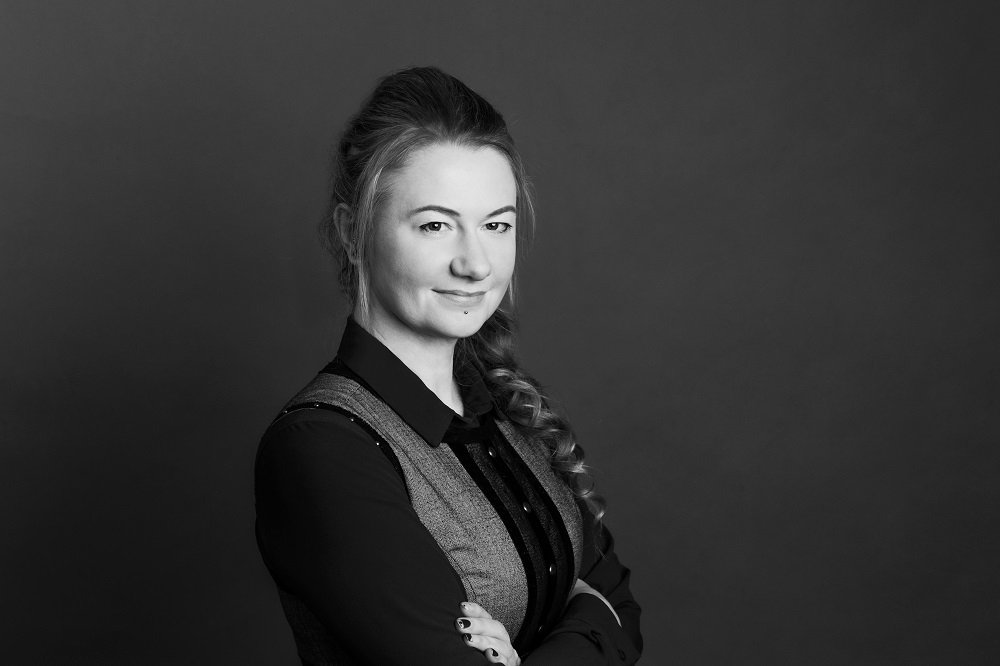
“We’re lucky to have repeat projects and commissions that sustain the company, and many of these are a direct result of the growth that’s occurred in the Irish industry”
– The Irish producer reflects on building her company over two decades, balancing international co-productions with local storytelling, and navigating a rapidly evolving national industry
Having started out in cinematography before moving into producing, Ireland’s participant in European Film Promotion’s Producers on the Move Julianne Forde has spent the past two decades building Tailored Films into a key player within the Emerald Isle’s evolving audiovisual landscape. Working across both local and international projects, she combines hands-on production experience with a strong focus on story development and collaboration.
Cineuropa: What was your way into producing, and at what point did you realise it was the role for you?
Julianne Forde: My love of filmmaking started while making films with friends when I was 12. I studied cinematography in university and worked in camera and lighting before moving into producing. Producing is satisfying as you’re in charge of getting the project off the ground, bringing everyone together and making it happen.
What’s on your slate at the moment, and are you heading to Cannes with specific projects in mind?
Mondegreen is a feature film from writer-director George Kane that explores cancel culture. The meaning of the word ‘mondegreen’ is a misheard or misunderstood word or phrase, which results in the misinterpretation of a song. The film attracted us as it’s full of dark humour and surprising twists and tonal shifts. The complicated female protagonist Nira stood out to us, and we’re looking for co-producing partners and financiers to come on board.
Mercia’s Take will be the debut feature film of Oscar-nominated cinematographer Ari Wegner and her directing partner Leo Woodhead. The film is a Western-style revenge thriller set in the late 1800s in a mining community. The story teaches the protagonist, through hard-won lessons, to value what he has in life, even if wealth seems like the answer. We have an exciting cast attached, and further details will be announced shortly.
How do you usually approach Cannes — do you go in targeting people, or does it evolve once you’re there?
We find it’s very important to set meetings up in advance of attending Cannes. The first year I attended Cannes in 2012, we had a film that I produced which was selling in the market, and I had no clue and no meetings set up. I learned the importance of emailing in advance and securing meetings to make the most of Cannes.
Ireland has become a major production hub. How much of that benefits your own projects directly?
I set up Tailored Films 20 years ago this year. The Irish film industry has changed hugely in that time. We’re lucky to have repeat projects and commissions that sustain the company, and many of these are a direct result of the growth that’s occurred in the Irish industry. It is sometimes hard, however, to convince crews to work on indigenous lower-budget projects if they’ve been used to higher wages on bigger shows with deep pockets.
When working with international partners, how easy is it to keep a strong Irish identity in the stories?
If we’re the lead producers and the story has originated in Ireland, it’s easier to keep the Irish identity. Tailored Films produced Hokum, which is set to hit cinemas this month. The film, which stars Adam Scott from Severance, was shot entirely in Ireland, in West Cork, and very much retains its Irish identity alongside our great international partners. Hokum is the brainchild of Irish writer-director Damian McCarthy.
If we’re the minority co-producers on a project, it’s not as vital to promote the Irishness of the project at the centre of the story; instead, we ensure we bring Irish talent on screen or behind the cameras through collaboration. Screen Ireland supports both English-language and non-English-language films through their co-production scheme.
What do you think is still missing in the Irish ecosystem for producers today?
I believe that the Irish ecosystem is better for producers than it’s ever been before. However, even though a lot of high-level service productions take place in Ireland, it’s still a challenge to get homegrown projects financed and off the ground. Like many countries in Europe, as we have a population of only 5 million people, we can’t rely on large financial contributions from local broadcasters. So, for us, co-production and co-financing models are essential. And, the Galway Film Fleadh has an industry sidebar, so it would be great to see this grow larger, with even more co-production opportunities.
