
An Eli Lilly drug bringing a new approach to blood cancers now has encouraging early data from a small clinical study showing reductions in signs and symptoms of disease, results that lend validation to the pharmaceutical company’s recent acquisition of the startup that developed the molecule.
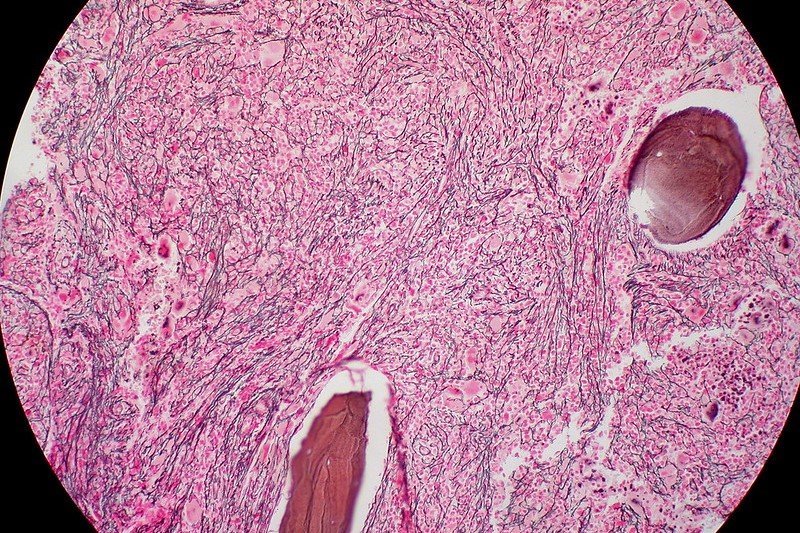
The drug, AJ1-11095, is being evaluated in myelofibrosis, a type of cancer in which inflammation and scar tissue in bone marrow impair production of healthy blood cells. One of the hallmarks of this disease is an enlarged spleen. In clinical testing, results showed reduction in spleen volume. Detailed data were presented over the weekend during the European Hematology Association (EHA) annual meeting in Stockholm.
Certain blood cancers, including myelofibrosis, are driven by abnormal signaling in the JAK pathway. The current standard of care includes JAK inhibitors, led by the blockbuster Incyte drug Jakafi. The other JAK inhibitors approved for myelofibrosis are Ojjaara from GSK, Inrebic from Bristol Myers Squibb, and SOBI’s Vonjo. While there are some differences in the way these drugs work, they all include inhibition of the JAK2 enzyme in its active state, which is called the type I conformation. Lilly’s AJ1-11095 is an oral small molecule designed to block type II JAK2 proteins, which is the inactive state of the protein.
The Phase 1 dose-escalation trial enrolled 23 myelofibrosis patients whose disease either failed to respond to treatment with a type 1 JAK2 inhibitor or relapsed afterward. The participants had received a median of two prior lines of therapy; all had previously received Jakafi while eight had also received Ojjaara. Of the 20 patients who had reached week 12 of the Phase 1 test and had received their first imaging on the study drug, 13 achieved spleen volume reduction of at least 35%; four more had spleen volume reduction ranging from 25% to 34%. Two more patients achieved spleen volume reduction of at least 35% after receiving a higher dose.
A key secondary trial goal was measuring how many patients achieved 50% or greater reduction in total symptoms of the disease. Results show 17 of the 23 patients achieved this measure after one cycle of treatment; two more participants achieved this mark in cycle 2. In a prepared statement, Dr. John Mascarenhas, professor of medicine at the Icahn School of Medicine at Mount Sinai and principal investigator of the clinical study, said in a prepared statement that the results so far suggest that targeting the type II conformation of JAK2 could offer another option for myelofibrosis patients previously treated with a type I JAK2 inhibitor.
“With an encouraging safety profile, meaningful spleen size reduction, symptom improvement, and decrease in underlying mutant disease burden, these data, while early, point to the potential to meaningfully impact treatment options for people with certain myeloproliferative neoplasms,” he said.
AJ1-11095, an oral small molecule formulated as a once-daily pill, was originally developed by Ajax Therapeutics, which sponsored the Phase 1 study. In April, Lilly announced an agreement to buy the biotech startup for up to $2.3 billion, a sum that includes an upfront payment and subsequent milestone payments. After the acquisition was announced, Leerink Partners said in a research note that Ajax complements Lilly’s rapidly expanding oncology and hematology portfolio. Earlier in April, Lilly reached a $3.2 billion deal to buy Kelonia Therapeutics, a biotech whose lead in vivo cell therapy is in early clinical development for the blood cancer multiple myeloma.
In a Sunday research note, Leerink analyst Andrew Berens said that while AJ1-11095 was well tolerated with no dose-limiting toxicities and no discontinuations, anemia was the most common adverse effect. The rate was 65% for anemia of any grade and 52% for anemia Grade 3 or higher. Anemia appears to be a class-wide effect of JAK inhibition as it is also common with use of type I JAK-blocking drugs. Even so, Berens said the results suggest the drug offers strong activity in myelofibrosis.
“While early, these data evaluating ‘095 in pre-treated [myelofibrosis] patients are encouraging and suggest meaningful improvements over other investigational agents,” Berens said.
Photo by Flickr user Ed Uthman via a Creative Commons license
