
– CANNES 2026: FIAPF, IFTA and the MPA gathered legal and industry voices to assess how piracy is eroding value across the global screen business
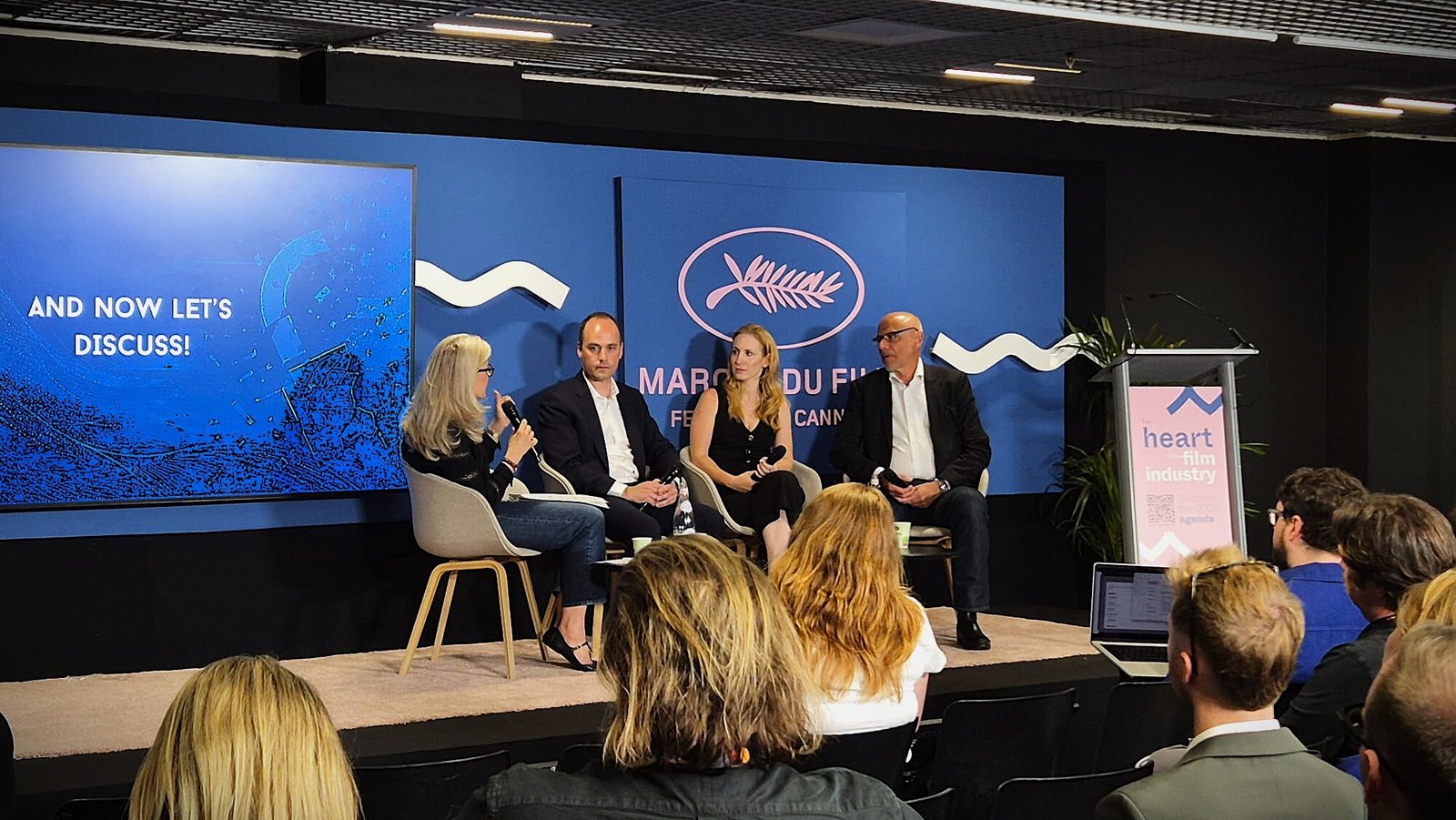
l-r: Charlotte Lund Thomsen, Richard Willemant, Jackie Brenneman and Börje Hansson during the panel
Piracy is no longer just a question of lost revenues, but a structural threat to the way films are financed, distributed and valued. This was the central message of “We Need to Talk About Piracy: Evolving Threats in the Age of AI”, a Cannes Marché du Film panel presented by FIAPF, IFTA and the MPA.
Opening the session, FIAPF president Luis Alberto Scalella described piracy as “a global issue that knows and respects no borders”, affecting producers, distributors, creators and audiences alike. Moderator Charlotte Lund Thomsen, IP legal and policy counsel, framed the discussion around the erosion of value across the ecosystem, pointing to estimates of up to $100 billion being lost globally each year, and stressing that early or pre-release piracy can damage an entire chain of distribution windows.

For Börje Hansson, founder and executive producer at Scandinavian Content Group, Sweden’s early broadband rollout helped make the country a testing ground for piracy’s cultural consequences. “All of a sudden, people didn’t recognise that it was illegal to steal the content,” he said, arguing that the biggest challenge remains changing consumer attitudes. Today, he added, many users pay illegal platforms and assume they are legitimate, while the money often ends up with organised criminal networks.
IFTA president and CEO Jackie Brenneman hammered home the point further, suggesting the problem is not simply attitude, but culture. “There is no mechanism for that on the internet,” she said, noting that online behaviour lacks the social taboos that regulate conduct offline. “I think we have to build guardrails because people cannot be their best selves absent culture. So, I think laws are necessary in that space.”
Attorney Richard Willemant, of Féral, outlined how European legal tools have tried to shift the burden away from chasing individual users and towards intermediaries. He highlighted the EU’s no-fault injunction approach, which allows courts to order intermediaries to block access to infringing services. France, he said, has recently expanded the reach of site-blocking beyond ISPs to alternative DNS providers, VPNs and other players involved in domain-name resolution. Early results, he noted, are encouraging, with some forms of infringement showing falls of around 20%-25%.
Willemant also pointed to the Paris Court as a particularly useful forum for international rights holders seeking information on infringers. Through ex parte orders – proceedings not notified in advance to the intermediary – rights holders can obtain data from services such as payment providers, platforms and crypto intermediaries. In some cases, he said, this allows investigators to identify the operators behind major piracy sites.
The panel also explored piracy’s impact on financing. Lund Thomsen noted that banks and gap financiers take piracy rates into account when valuing rights in specific territories. Hansson agreed that this makes film financing harder, pushing producers towards lower budgets and reduced risk.
Next, Brenneman argued that the problem is even broader in an economy where films increasingly start online. For emerging creators, stolen videos do not only mean lost views; they also mean lost audience data, which may be the very asset needed to attract financiers or studios. “It’s not just the IP being valuable, which it is; it’s that the data associated with that IP is also really important,” she said. Later, she added: “A film is not a thing… Films are bundles of rights. That’s all they are. And if we have a system that does not protect the bundle of rights, how do we have an economy?”
Closing the session, MPA chairman and CEO Charles Rivkin described piracy as “a constantly evolving threat” now amplified by AI-enabled tools that help criminal actors move faster, disguise operations and generate deceptive sites. He warned that piracy sites can expose users to malware and identity theft, and are often linked to broader organised crime.
Rivkin also announced that Central European Media Enterprises is joining the Alliance for Creativity and Entertainment, the MPA-led anti-piracy coalition. He cited recent actions against major piracy operations, including FMovies in Vietnam, StreamEast in Egypt and a large IPTV ring in Spain.
For Rivkin, the industry must remain clear-eyed but not fearful. Cinema, he said, was born of technological innovation and has repeatedly adapted. The challenge now is to ensure that new technologies do not become tools for theft. “We recognise piracy for what it is,” he concluded: “theft, plain and simple.”
