
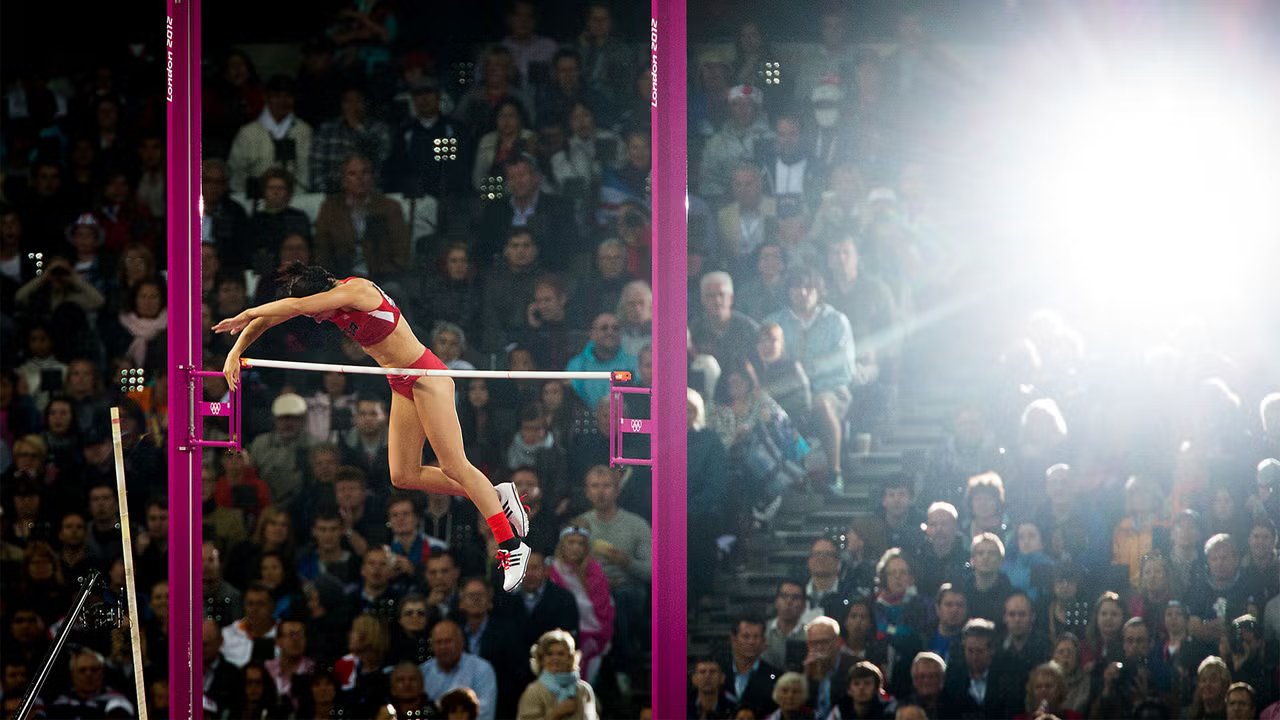
From Michael Phelps breaking records to Alysa Liu’s emotive gold medal ice skating performance, broadcast television has allowed athletes to bring their remarkable talents to a global audience. But for some, particularly women athletes, broadcast may also become a stage for compromising camera angles—and some are looking to change that.
The European Broadcasting Union (EBU) recently released a new set of guidelines outlining best practices for covering athletes during broadcasts. Titled “Raising the Bar: Guidelines for Respectful Media Coverage in Women’s Athletics,” the 23-page document was made in collaboration between the EBU and athletes Holly Bradshaw, Ivana Španović, and Blanka Vlašić.
The new directives aim to combat the sexualization of women athletes as a result of selective camera angles and editing.
“How our sport is displayed during live broadcast can be incredibly powerful yet sometimes harmful to the women competing and the women/girls watching,” Bradshaw said in the guideline report. “I first-hand have received social media abuse and witnessed inappropriate videos online of myself and colleagues when slow-motion content of us competing is captured.”
The guidelines go on to show animated examples of various camera shots, offering recommended and cautionary versions. For instance, in the section outlining the appropriate shots for High Jump, wide angles featuring the athletes running are encouraged. In contrast, negative angles included low camera angles from beneath the athletes.
“These choices carry profound implications. They shape audience perception by diverting attention from the remarkable achievements and technical skills of women athletes, and risk perpetuating harmful stereotypes,” Glen Killane, Executive Director, EBU Sports, said in the guidelines report.
The new guidelines from European broadcasting follow years of concerns around the sexualization of women athletes across sports, with athletes criticizing not only camera angles, but also the uniforms.
While the guidelines were released on June 8, they recently gained traction on social media, with many users taking to the comments to say viewership would decline due to the regulations, or putting the blame on the women athletes’ uniforms.
But for others, the reaction proved exactly why the new guidelines are still needed even after decades of activism in women’s sports.
One user said on X, “the replies are just a bunch of men admitting they only watch women’s sports to stare at women. embarrassing.”
