
Listen to this article
Estimated 3 minutes
The audio version of this article is generated by AI-based technology. Mispronunciations can occur. We are working with our partners to continually review and improve the results.
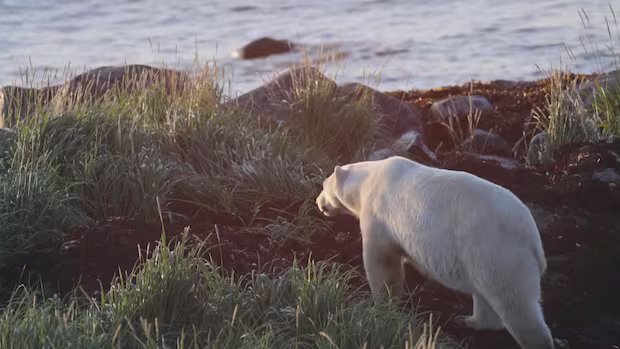
A paddler shot and killed a polar bear in northern Manitoba on Friday in a rare Canadian example a recreational traveller killing a member of the protected species.
The province says the incident took place Friday near the mouth of the Seal River, about 50 kilometres west of Churchill on the coast of Hudson Bay.
Provincial wildlife officials are investigating the shooting. Polar bears are a protected species in Manitoba, where they are listed as threatened. There is no sanctioned polar bear hunt in the province.
Doug Clark, a University of Saskatchewan professor and a leading expert in human-polar bear encounters, said he is unsure if a paddler or hiker has ever shot and a killed a member of this species in a defensive manner before in Manitoba.
The Saskatoon-based academic said he is aware of paddlers being forced to kill polar bears off the coast of Torngat Mountains National Park in Labrador, as well as off the coast of Svalbard, a Norwegian archipelago in the Arctic Ocean.
“Paddlers, particularly kayakers, are at risk of interactions with polar bears, particularly when they’re camped on shore,” said Clark, who recently returned from a teaching stint at Svalbard’s Arctic Research Centre.
“The typical range that a polar bear is shot at is about two metres, and that’s typically because somebody is woken up by a polar bear in the camp seeking food,” Clark said.
“Food in that case includes the human inhabitants of the camp, so it’s a very, very real risk if you’re camping on the coast.”
The Seal is a whitewater river that flows east across northern Manitoba before it empties into the bay along a coast heavily populated by polar bears. Canoeists and kayakers leaving the Seal usually arrange boat transport to Churchill to avoid traversing a stretch of dangerous open water.
It is common for paddlers descending the Seal River, Hayes River and other waterways that empty into Hudson Bay to carry shotguns as a form of polar bear deterrence, said Garrett Fache, a canoe guide who owns Winnipeg-based Wild Loon Adventure Company.
Firearms are only deployed as a last resort, loaded with blanks at first to act as a noise deterrent.
“We only take it out of its waterproof case when on land. In the canoes, it’s sealed up and kept away,” Fache said.
Clark said polar bears are shot and killed every year on the Hudson Bay coast in Nunavut, both defensively and by hunters.
He said human encounters with polar bears may be becoming more common along the Hudson Bay coast because of changing ice conditions.
“There’s an awful lot more variability in what the ice is doing in the bay, and that is completely mixing up where the bears are spending time on shore,” Clark said.
“So changing conditions probably are increasing the risk to people, if you base what you’re going to do solely on historic patterns.”
Clark encouraged the province to divulge more information about Friday’s incident.
“I hope that we do get a more complete accounting of what went on, just so that people educate themselves.”
