
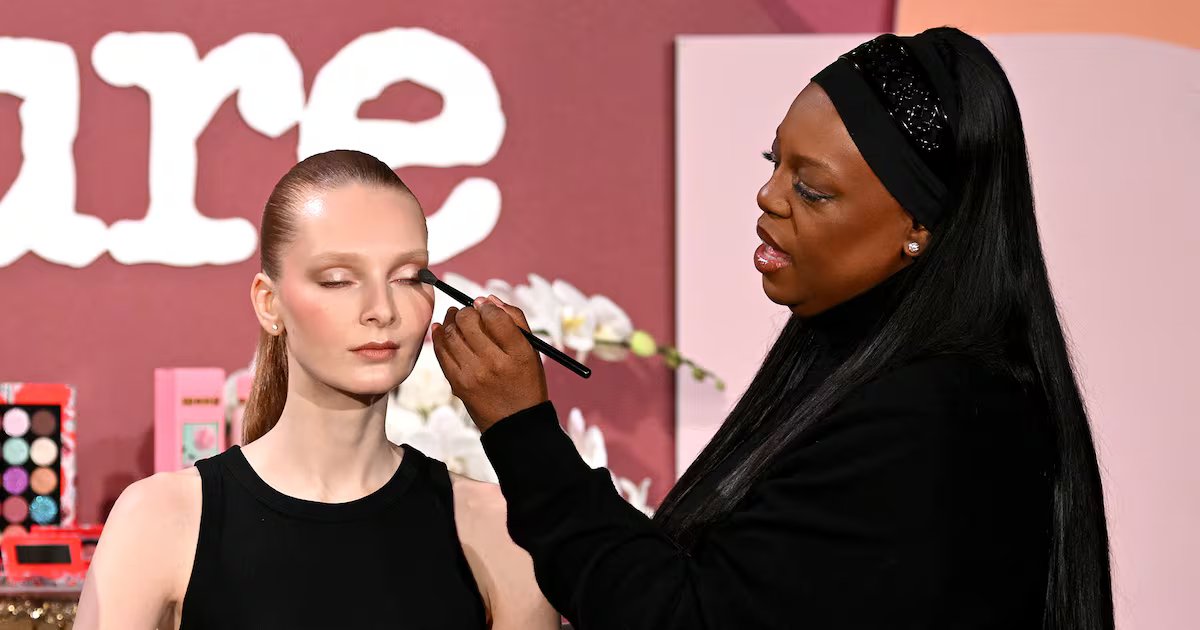
Pat McGrath Labs is being shopped to potential buyers via the bankruptcy process, days after one of the brand’s investors said it had acquired a controlling stake, The Business of Beauty has learned.
Gordian Group, which was appointed by a bankruptcy judge as Pat McGrath Labs’ investment bank, is shopping an “investment and acquisition opportunity” involving the brand, according to a presentation viewed by BoF. The enquiries raise new questions about Pat McGrath Labs’ future, just days after one of its investors, GDA Luma, had said it would supply financing to keep the brand operating through bankruptcy and that it had acquired a majority stake.
In the presentation, potential buyers were informed that any transaction mustrepay debtor-in-possession claims totalling over $60 million, plus an estimated $70 to 80 million in secured claims. The presentation also shed new light on the scope of the brand’s troubles: sales plunged by more than 50 percent last year to $29.6 million, from $61.1 million in 2024. Gross profit for the line fell last year to $17.4 million from $39 million.
A person with knowledge of the bankruptcy proceedings said that in advance of an April 9 court date to finalise the Chapter 11 restructuring, all options are open. Pat McGrath Labs declined to comment.
A Tumultuous Past, An Uncertain Future
Over the past year, Pat McGrath Labs’ internal problems have been laid bare. The brand began 2025 saddled with debt; Sienna Investment Managers, which had invested $204 million in 2021, wrote their stake down by 88 percent before making its exit. It is available in fewer Sephora stores than during its heyday, and products have begun appearing in off-price retailers.
In April, the brand secured an investment from GDA, the office of entrepreneur Gabriel de Alba, but their relationship quickly broke down when, by June, the brand had failed to pay back its investment. According to the brand’s bankruptcy filing, GDA limited the brand’s access to operating cash and the business suffered as a result. In December, GDA set an auction for the brand’s assets; the sale was headed off when Pat McGrath Labs filed for Chapter 11 bankruptcy protection.
In another twist, GDA announced on Feb. 17 it would provide $10 million in fresh funding and $20 million in working capital from its distressed-asset investment arm, GDA Luma — to recapitalise and continue selling its makeup. GDA Luma also said in the announcement it would take the reins with a controlling stake; McGrath herself would relinquish her chief executive title and step into a chief creative officer role while retaining a “significant” minority stake.
The brand came to life in a different era for beauty businesses, and in a different form altogether: As its name suggests, Pat McGrath Labs was first conceived as a small-batch pipeline between the artist’s ideas and the open market. That worked well for launches like Gold 001’s foiled eyeshadow or Lust 002’s glittering lip kit, but proved less reliable with timeliness and scale: After the glass skin McGrath created for Maison Margiela’s couture show in Jan. 2024 went viral, it took over a year to translate the look into the barely wearable Glass 001 peel-off artistry mask.
Pat McGrath Labs’ peak revenue year, 2022, was driven in large part by launches like its skincare — a rose essence fronted by Naomi Campbell — and a parade of limited-edition collaborations from Supreme to Star Wars.
The hybrid job of founder and CEO is uncommon for global beauty businesses, and several other brands founded by top-tier makeup artists are managed day-to-day by experienced operators: Charlotte Tilbury has Demetra Pinsent and Gucci Westman has husband David Neville. (Though it is worth noting that a rare few, like Danessa Myricks, have pulled off both roles.) For now, that person for Pat McGrath Labs is Gary Lembo, a court-appointed chief restructuring officer with significant experience presiding over Chapter 11 processes but little or no apparent beauty expertise.
Pat McGrath remains the world’s most legendary working makeup artist — she is still the go-to beauty professional for the global luxury machine, evidenced by her appointment as La Beauté Louis Vuitton’s creative director and her ongoing presence backstage at the Milan and Paris shows.
A buyer looking to reverse the brand’s recent losses would need to rebuild its retail relationships and hone its product assortment in on what McGrath’s fans want most — high-octane, editorial-quality cosmetics that can leap from fashion shows onto faces.
Sign up to The Business of Beauty newsletter, your complimentary, must-read source for the day’s most important beauty and wellness news and analysis.
