
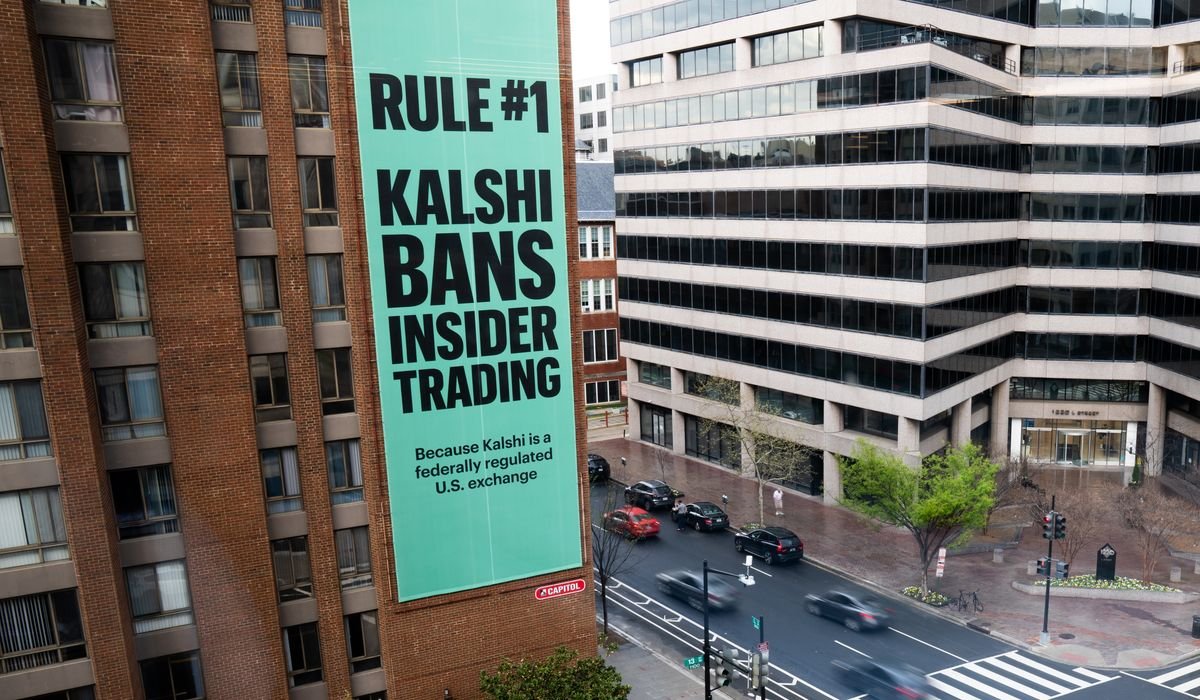
Prediction market platform Kalshi said Tuesday that it added measures, including verification of employment for certain wagers, to stop insider trading.
Kalshi said that in addition to collecting employment information to screen for possible insiders placing bets, the company will create scores “assigned to markets with heightened insider trading or manipulation risk.”
Under the score system, new prediction markets posted on Kalshi will be evaluated to see if they are:
- related to corporate key performance indicators or the release of new products.
- dependent on “a decision by a single individual or opaque group with broad discretion” versus “broad, decentralized processes or physical measurements.”
- dealing with something niche or something of national or geopolitical importance.
- compliant with regulations.
- connected to war, other military actions or general national security matters.
The risk score system will also evaluate people who have information unavailable to the public that could let them know the outcome of a prediction, Kalshi said.
Federal regulators are also working on new rules for prediction markets.
On Wednesday, the Commodity Futures Trading Commission released a proposed rule, now subject to public comment, to determine whether a prediction market contract is illegal or against the interests of the public.
The framework would look at contracts related to “activity that involves terrorism, assassination, war, gaming, or conduct that is unlawful under federal or state law,” the CFTC said.
As part of the rule, sports predictions correlating to in-game prop bets, along with prediction markets on injuries, refereeing, youth sporting events and any altercations within games, would be banned, according to ESPN.
The framework does allow predictions on “final scores, point differentials, win-loss results, tournament advancement, individual or team statistical performance, or season-long performance metrics,” according to a CFTC document.
Gaming industry advocates decried that the framework allows for prediction markets to OK wagering on those outcomes.
“This is a remarkable attempt to redefine what constitutes sports betting. … So-called ’prediction markets’ are backdoor sportsbooks evading state and tribal law. Prediction markets’ evasion of state and tribal laws is estimated to have already cost communities across the country more than $1 billion in sports betting tax revenue, hurting critical local projects,” Bill Miller, CEO of the American Gaming Association, a gambling industry trade group, said in a statement.
