
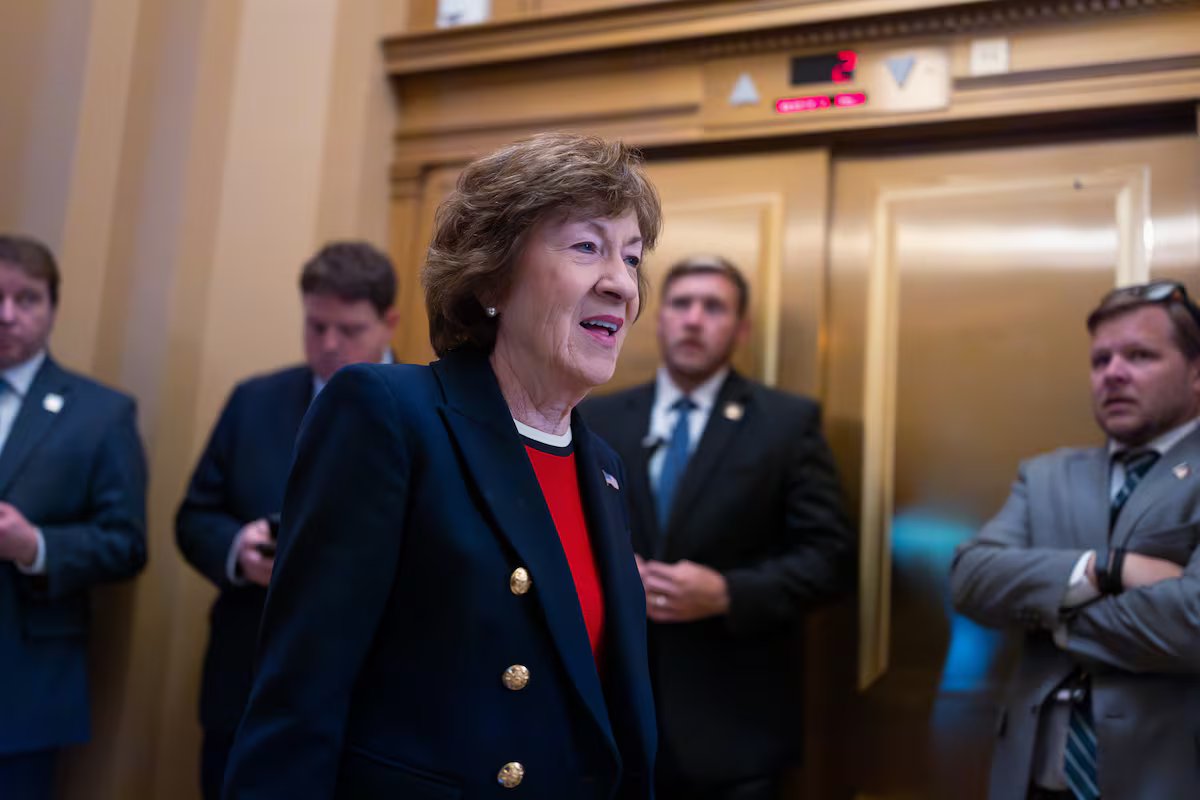
Voters in Maine, Nevada, South Carolina, and North Dakota will head to the polls this Tuesday, June 9, to participate in another round of primary elections. The elections will determine the candidates for the Senate, the House of Representatives, governorships, and dozens of state and local offices that will be up for grabs in November.
Among the races drawing the most attention are the search for a challenger to Republican Senator Susan Collins in Maine, the Republican race to succeed Governor Henry McMaster in South Carolina, and the gubernatorial primary in Nevada. In addition, North Dakota will vote on a proposal to amend its state Constitution.
When and at what time are the primary elections?
The primary elections will be held on Tuesday, June 9, 2026.
Polling hours vary by state. In South Carolina, polls will be open from 7:00 a.m. to 7:00 p.m. local time. In Maine, hours depend on each municipality, although most polling places will close at 8:00 p.m. In Nevada, polling places will close at 7:00 p.m. local time, while in North Dakota, hours vary by county, with closing times scheduled between 7:00 p.m. and 8:00 p.m.
What’s on the ballots?
In South Carolina, voters will elect candidates for governor, the U.S. Senate, the House of Representatives, and various state offices. The race for governor is one of the most closely watched, with seven Republicans and three Democrats vying to succeed outgoing Governor Henry McMaster.
Maine will hold primaries for governor, the U.S. Senate, the House of Representatives, and the state legislature. Much of the attention is focused on the Democratic primary to determine who will face Republican Senator Susan Collins, considered one of the most vulnerable figures in the Republican Party in the Senate. The race for the 2nd Congressional District, which became open following Representative Jared Golden’s decision not to seek reelection, will also be decided.
In Nevada, nominations will be decided for governor, the House of Representatives, lieutenant governor, attorney general, and other state offices. Republican Governor Joe Lombardo will seek to advance toward a re-election campaign, while Democrats will choose their candidate in an effort to win back one of the most competitive governorships in the country.
In North Dakota, voters will elect candidates for the U.S. House of Representatives, various state offices, the state legislature, and two seats on the Public Service Commission. They will also vote on a proposal to amend the state Constitution to require that each constitutional amendment initiative address a single, specific issue.
Who can vote?
South Carolina uses an open primary system, so any registered voter can choose to participate in either the Democratic or Republican primary.
North Dakota also allows voters to participate without first registering with a political party, although they must select a single party ballot for the primary races.
Maine maintains a mixed system. Voters registered with a party may only participate in their political party’s primary, while independents may choose which primary to vote in.
Nevada uses a closed system. Voters must be registered with a party to participate in their respective primary, although state law allows voters to register or change their party affiliation even on Election Day.
How and where to vote?
Voters can find their polling place, verify their voter registration, review their ballot, and learn about their state’s specific requirements through the official websites of election authorities.
An easy way to find this information is through Vote.org, where you can verify your voter registration, find your polling place, and access each state’s official links.
Some jurisdictions have specific requirements. In South Carolina, for example, voters must present a valid photo ID to vote in person. In Nevada, voters can register or update their party affiliation on Election Day at authorized locations.
When will the results be announced?
The first results will begin to be released after the polls close on Tuesday night.
However, the time required to complete the count will vary from state to state. Nevada and Maine may take longer due to the volume of early and mail-in ballots, while South Carolina and North Dakota typically report a significant portion of their results during the early hours of election night.
In some races, runoffs or additional processes may also be necessary to determine the nominees. In South Carolina, for example, the two candidates with the most votes will advance to a runoff if no one receives more than 50% of the votes in the primary.
Sign up for our weekly newsletter to get more English-language news coverage from EL PAÍS USA Edition
