
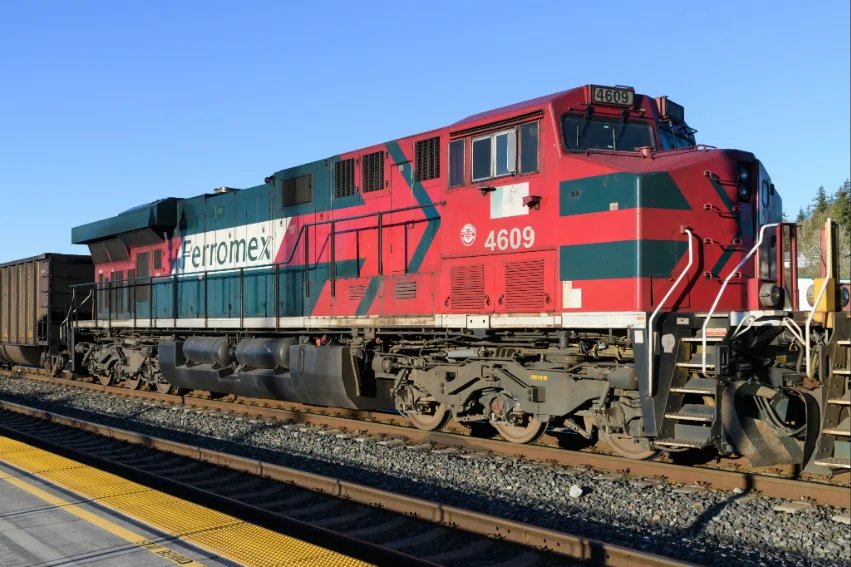
A weekend train derailment in Sonora resulted in the spillage of approximately 59,000 liters of sodium hydrosulfide, prompting the Federal Attorney General’s Office (FGR) to open an investigation.
The sodium hydrosulfide — a corrosive chemical compound used in industrial processes such as copper mining and considered hazardous to health and environment — was spilled after the derailment of several tank cars of a freight train belonging to Ferromex, a subsidiary of Grupo México.
(Goodle Maps)
Grupo México is one of the biggest copper producers in the world and Ferromex is the largest train network in Mexico.
Weekend rains complicated containment efforts, heightening concerns about the environmental impact of the accident in northern Sonora, about 20 kilometers south of the U.S. border.
Governor Alfonso Durazo told the newspaper La Jornada that the impact of the tank car hitting the ground partly contained the leak, noting that not all of the chemical seeped out. He added that the spill was immediately addressed by emergency services.
“We immediately focused on addressing the incident; emergency measures were implemented to remove any material that could pose a risk,” Daniel Gámez, the coordinator of Sonora’s Civil Protection Agency, said.
Gámez said the Federal Attorney for Environmental Protection (Profepa), the Environment Ministry and the FGR were notified immediately and emergency personnel established a security perimeter while continuing to evaluate the conditions at the site of the derailment.

Officials from the border-straddling community of Naco, 18 miles north of the accident site, said that rains on Sunday hampered the clean-up effort, allowing some of the spilled material to be carried away by natural runoff.
Lorenzo Villegas, mayor of the municipality of Naco on the Sonora side, told La Jornada that the smell of the fumes generated by the reaction of sodium hydrosulfide with water forced several families from the nearby Cuauhtémoc ejido to temporarily abandon their homes.
The National Water Commission is sampling water and soil to determine if the compound caused contamination.
Profepa is monitoring the situation due to the possibility that the chemical could reach waterways leading to Cananea, a city of approximately 40,000 about 10 miles further south.
With reports from La Silla Rota, Aristegui Noticias and La Jornada
