
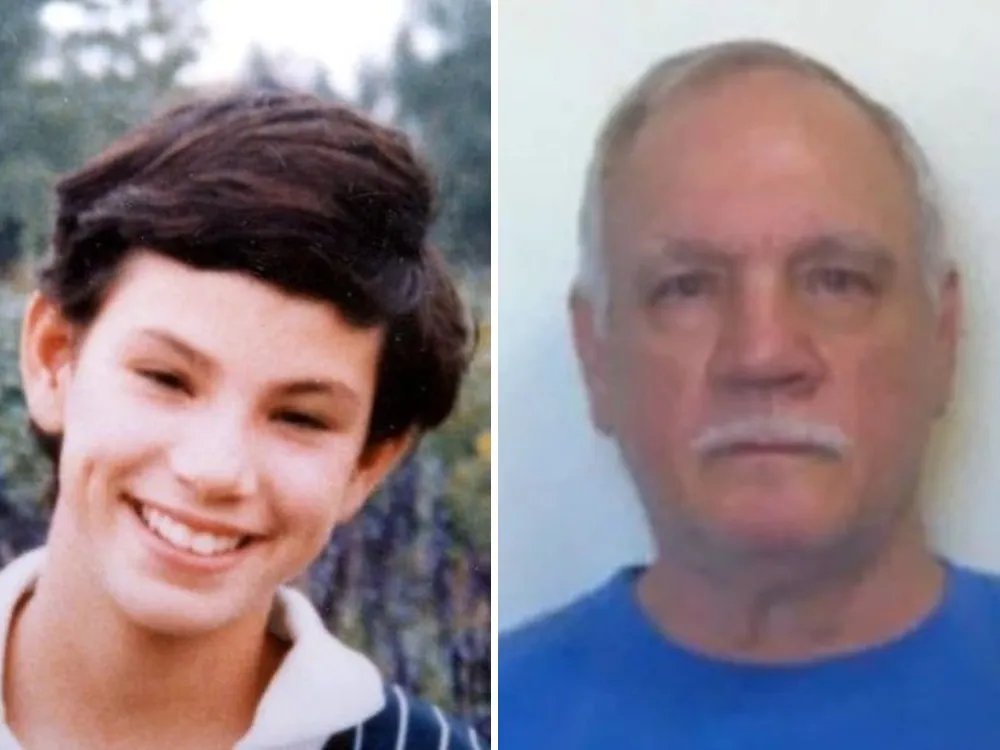
The Nova Scotia man who violently raped, murdered and later dismembered a 12-year-old girl in Ontario almost 40 years ago received another day parole extension this month.
And this time, the Parole Board of Canada (PBC) awarded 73-year-old Douglas Worth — a man still deemed to be an “above average risk” for sexual violence — leave privileges that will allow him to leave his Dartmouth halfway house for up to three nights at a time.
“The Board authorizes leave privileges as it will afford you opportunity to demonstrate your skills and help you to strengthen positive relationships,” the two-person board wrote in its July 7 decision sent to National Post.
While the specific leave privileges are decided by the unidentified community-based residential facility (CBRF) where he’s been living since first being paroled last July , they cannot exceed those set out in PBC’s policy , which grants more three-night leave passes during each four-week portion of the parole extension period. In the final two months, he can be eligible for a pass every week.
(The Parole Board of Canada lists the Salvation Army’s Raitland House as the only male facility of that type in the city across the bridges and harbour from Halifax.)
National Post has contacted the board regarding the rules and regulations at Worth’s CBRF.
The board also did away with a requirement for Worth to follow “a treatment plan in the area of sexual deviancy, violence and mental health” due to his commitment to “extensive correctional programming.”
“Accordingly, the Board finds that this additional condition is no longer necessary for the effective management of your risk in the community,” the decision reads.
Worth, who hasn’t had a full psychological risk assessment by a psychiatrist since March 2025, must still adhere to a treatment plan as laid out by his parole supervisor, as advised by a mental health nurse, as well as a host of other conditions pertaining to his release carrying over from past parole decisions.
In a new victim statement filed this May, the author described how his “release has impacted her life as she fears for her and her family’s safety.”
She also requested the board include a geographical restriction for him not to reside near her, which was denied because there’s been no indication Worth has “attempted to breach the no-contact special condition” since being paroled.
Originally from Pictou County, N.S., Worth was convicted in 1990 of the second-degree murder of Trina Campbell in Brampton, Ont., three years earlier.
The Métis girl was living at a group home in the city when she disappeared after getting off a school bus on Dec. 13, 1987. Her missing persons case eventually became a homicide investigation, but Worth wasn’t on police radar as a suspect until people close to him went to police with their own suspicions that he may have killed someone and disposed of the body while he was living in Brampton at the same time.
By 1988, he’d moved back to Nova Scotia with an old girlfriend, Mary Kelly, and her son, Shawn. The boy, wanting to escape a violent home life under Worth, went to police for help. During that conversation, he let slip that Worth had bragged about killing a man and had once forced the boy to clean a stain that looked suspiciously like blood from the trunk of a rental car that he and the boy’s mother had used the day prior.
Homicide investigators in Ontario were informed and located the rental car, finding evidence of decomposed blood of a rare blood type common among Canadian Indigenous persons.
The detectives headed for Nova Scotia, where they began surveilling Worth and learned via interviews with Worth’s sister and brother-in-law that he admitted to killing someone in Brampton and was increasingly worried about the body being found.
When Worth asked them for financial help returning to Ontario to retrieve the victim’s head, assuming the body could only be identified through dental records, police provided the funds and discreetly followed him back to Brampton.
As documented in a 2005 episode of the television series Crime Stories and a documentary titled Douglas Worth: The Pictou Sadist, officers briefly lost track of him there before finding him walking out of the woods near Orangeville carrying a gym bag.
After stopping and searching the vehicle, police found what was determined to be Campbell’s decomposing skull wrapped in garbage bags.
Mary Kelly later told police that Worth had her rent a car and accompany him earlier that year so that he could move evidence related to an undisclosed crime to that same wooded area.
Worth pleaded guilty at trial, where his defence lawyer argued insanity, suggesting his client was hallucinating and believed Campbell was a female correctional officer from a previous incarceration.
Worth’s criminal history of break-ins and motor vehicle theft dates back to his youth in 1968. In 1978, he was convicted of raping an Indigenous girl in Ontario and sentenced to eight years before being released in June of 1987, roughly seven months before he killed Campbell.
At his murder trial, a prison caseworker testified for the defence, saying that four months before Worth’s release in 1978, “he was fantasizing that he would go to a public school in Kingston with an axe and chop up as many children as he could,” The Canadian Press reported in 1990.
Timothy Griffin told the Ontario Supreme Court he tried to have Worth committed to a provincial mental health facility, but it refused to accept him following a 30-day assessment.
But his own psychiatrist admitted to some skepticism about the insanity defence, calling Worth “a very shrewd, capable, crafty fellow.” A psychiatric witness for the Crown diagnosed him as a “sexual sadist” and said, “no one over the course of 20 years has ever seen him as psychotic.”
“He has psychiatric difficulties — he is not mentally ill,” Dr. Angus McDonald said, according to The Canadian Press. “There was no way to hold him. It would have gone to the review board and they would have released him on the spot.”
Jurors spent less than an hour deliberating before delivering Justice Coulter Osborne a guilty verdict.
Worth was sentenced to life in prison with no parole eligibility for 23 years and would serve 35 years before first being paroled in last year. His parole was extended in January 2026.
According to the decision, Worth has “demonstrated a positive and stable adjustment” on parole and his “behaviour has been consistently appropriate with no concerns identified.” He’s reportedly engaged in his correctional plan, is motivated and accountable, and is seen as having high reintegration potential.
“Despite the extreme seriousness of your index offence, your extensive criminal history that includes prior sexual and violent offending, your self-reported uncharged sexual offences, and actuarial assessments that continue to place you in the moderate range for general and violent recidivism and the above-average range for sexual recidivism, the Board notes significant evidence of progress over the course of your lengthy incarceration and more recent community reintegration,” the decision reads.
Our website is the place for the latest breaking news, exclusive scoops, longreads and provocative commentary. Please bookmark nationalpost.com and sign up for our newsletters here.
