
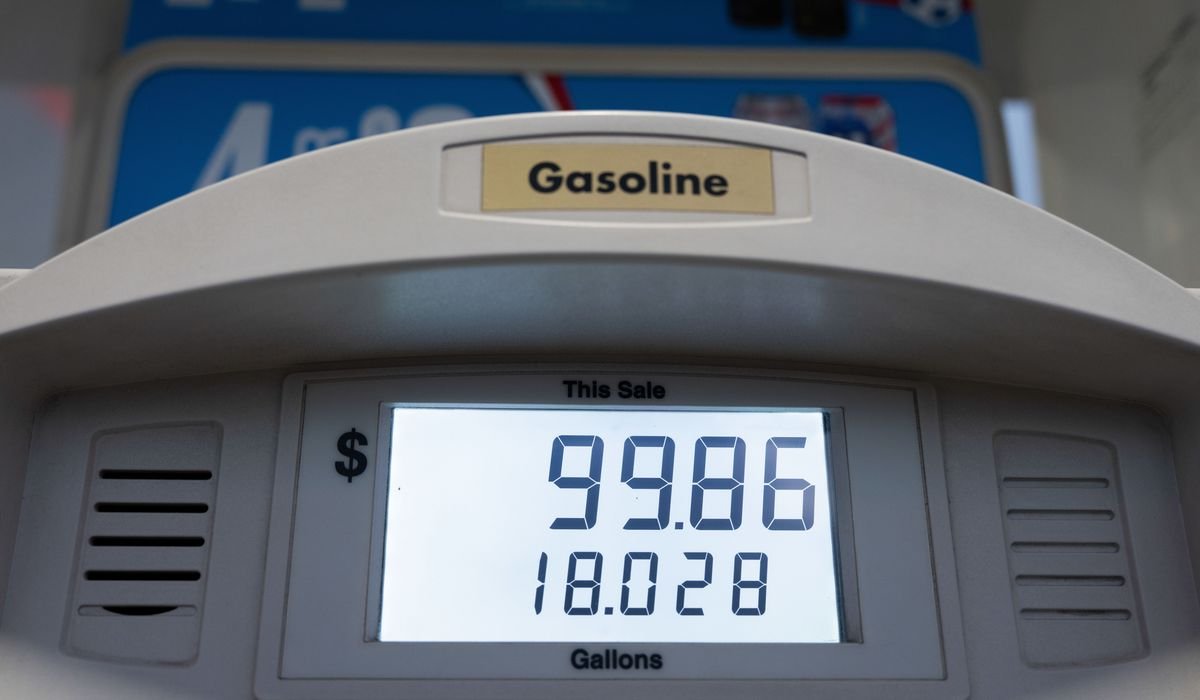
Skyrocketing inflation, rising gasoline prices and crushing housing costs have pressured Republicans in Congress to make an emergency pivot to affordability measures as they face an increasingly dissatisfied electorate that could boot them out of the majority in November.
Lawmakers are weighing a suspension of the federal gas tax and a sweeping housing reform bill after arriving on Capitol Hill Tuesday to alarming economic news: Consumer prices rose to 3.8% in April, the highest level since May 2023.
“Clearly, this is an issue that every American is dealing with. And some of it — the circumstances are beyond their control,” Senate Majority Leader John Thune, South Dakota Republican, told The Washington Times.
Republicans huddled on plans to pivot to an affordability agenda during a closed-door Senate luncheon Tuesday as the blame rained down on the GOP for the rapidly rising cost of living. A new CNN poll showed 77% of voters, including a majority of Republicans, blamed President Trump’s policies for the high cost of living.
“We are very focused on affordability,” Sen. John Hoeven, North Dakota Republican, said after the GOP luncheon.
While President Biden and Democrats were responsible for a massive federal spending spree that spurred inflation three years ago, the blame for the latest price increases fell squarely on the shoulders of President Trump and the GOP.
SEE ALSO: Trump says rising cost of living is not forcing him to settle war with Iran
Soaring costs for energy, food prices and housing are largely tied to the war in Iran, now in its third month. The conflict has all but closed the Strait of Hormuz, a major choke point for oil, fertilizer components and other goods. The interruption in transit has caused the price of gasoline and fertilizer to spike, and the impact has ricocheted through the U.S. economy.
Democrats were happy to point the finger at the GOP and Mr. Trump, whom they blame for launching a costly “war of choice” without a clear strategy or exit plan.
“Prices are rising, families are hurting and Americans know exactly who is making it worse,” Senate Minority Leader Charles E. Schumer, New York Democrat, said Tuesday.
Facing an increasingly angry electorate, the GOP is now scrambling for ways to address high costs.
Sen. Josh Hawley, Missouri Republican, this week introduced legislation to temporarily suspend the $0.18 federal gas tax. Senators are also pressuring the GOP-led House to take up Senate-passed legislation aimed at increasing the nation’s housing inventory.
Congress must approve a federal gasoline tax holiday, but it has never agreed to one since the tax was created in 1932 to fund highway projects.
SEE ALSO: Prices rose at 3.8% for the year ending in April as energy spikes with Iran war
The idea nevertheless gained traction this week among Republicans and at least a few Democrats as gasoline prices rose to an average of $4.50 per gallon.
“We recognize there is short-term pain here,” Mr. Hoeven said. “I think people have an open mind.”
Mr. Thune and other Republicans interviewed by The Times emphasized the need to get the Strait of Hormuz reopened, which would allow cargo ships to pass and would quickly bring pressure off crude oil prices. A barrel of oil has jumped from $70 in February, when the war started, to $107 on Tuesday.
In the meantime, the GOP is zeroing in on legislation that would address high housing costs, which, Mr. Thune said, “strikes at the very heart of affordability.”
Republicans met with Mr. Trump at the White House on Monday to win his backing of a Senate-passed measure that would boost construction of affordable homes by reforming and modernizing housing regulations and environmental reviews and reducing red tape that slows home building.
The measure would also place new restrictions on large investors that would make it harder for them to scoop up single-family homes, a practice that has driven up prices and reduced inventory.
After meeting with Senate Republicans, Mr. Trump boosted the Senate housing bill Tuesday on his social media accounts. He called on the House to pass the legislation, which he said, “would ensure that homes are for people, not Corporations.”
The nation’s growing affordability crisis has left some Republicans unwilling to rubber-stamp a $1 billion funding request from the White House for additional security infrastructure. A portion of the funding request is associated with security for the planned White House ballroom, an ornate structure that Democrats oppose, even though it is privately funded.
On Tuesday, a few Republican Senators were willing to commit to including the $1 billion request in an upcoming budget reconciliation bill, even after a private briefing from Secret Service Director Sean Curran.
“It’s pretty expensive, obviously,” Sen. Tommy Tuberville, Alabama Republican, said after hearing the briefing.
Democrats were relishing the chance to turn the $1 billion White House security funding request into a campaign talking point by tying it directly to the new ballroom.
“At the very moment Americans are pleading for relief, Republicans are telling them, pay for Trump’s palace first,” Mr. Schumer said. “They got nothing for the American people and a ballroom for Donald Trump.”
