
– Aung Phyoe’s feature debut turns the ambiguous intimacy between two seamstresses into a delicate study of desire, labour and social repression in contemporary Myanmar
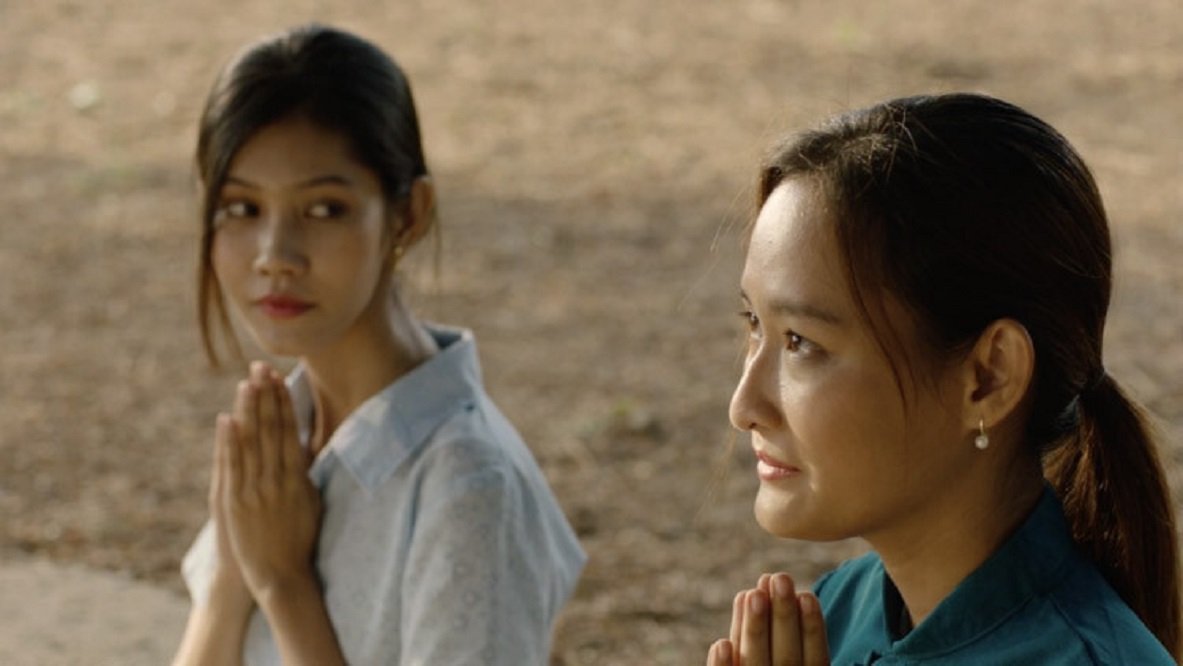
Nandar Myat Aung and Nandar Myint Lwin in Fruit Gathering
Myanmar director Aung Phyoe’s feature-length debut Fruit Gathering, a Myanmar-Czech-French co-production, world premiered in Karlovy Vary International Film Festival’s Crystal Globe Competition. Combining poetic sensitivity with the contours of social-realist drama, the film follows San Kyi (Nandar Myat Aung), a young seamstress working in a textile workshop in industrial Yangon, while living with – and helping to support – her mother and grandmother.

Kyi’s daily routine is disrupted when she forms a close bond with another seamstress, Theint Theint Oo (Nandar Myint Lwin). What begins as friendship gradually takes on a more intimate and emotional turn, leaving Kyi uncertain about the nature of Oo’s feelings and about her own desires. Their closeness offers a fragile respite from the pressures of factory work and domestic responsibility, but the relationship soon becomes more complicated than Kyi had imagined.
Fruit Gathering has the outline of a social-realist drama, attentive to the harsh conditions faced by working-class women, and to the political instability that shadows everyday life in Myanmar. Yet Phyoe keeps the film’s focus intimate, concentrating on the growing bond between the two women as they navigate social convention, economic pressure and unspoken desire. For Kyi, Oo becomes not only a companion, but also the figure onto whom she projects an alternative life, including a near-nostalgic fantasy of returning to the countryside together.
That fantasy is unsettled when Oo unexpectedly asks Kyi for a loan, and further complicated by the equally surprising appearance of Oo’s husband. The unpaid debt, the husband’s intermittent presence and Oo’s ambiguous gestures leave Kyi in emotional turmoil. Her mother, meanwhile, pressures her to marry a local man, intensifying the sense that Kyi’s desires are being squeezed between family expectation and a society unwilling to accommodate them.
Although same-sex desire shapes the film’s emotional tension, Fruit Gathering is not structured simply as a queer drama. Phyoe is equally interested in the broader repression experienced by women in Myanmar, particularly those whose choices are constrained by class and social convention. The closeness between Kyi and Oo is complicated by a social environment in which queer intimacy remains precarious, but the film’s ambiguity also stems from the two women’s differing temperaments and circumstances. Kyi is a dreamer, vulnerable to hope and romantic projection; Oo appears more pragmatic, shaped by the survival strategies available to working-class women.
Phyoe further complicates the viewer’s reading of Oo by withholding information from both Kyi and the audience. It remains unclear whether Oo genuinely reciprocates Kyi’s feelings, acts out of practical necessity, or takes advantage of Kyi’s emotional openness. This uncertainty generates much of the film’s tension. Kyi, by contrast, remains painfully legible: naïve, impulsive and hopeful, she becomes increasingly vulnerable to the gap between what she imagines and what the world permits.
Thaiddhi’s cinematography grounds Fruit Gathering in social-realist observation, while allowing occasional dreamlike passages to open onto Kyi’s inner life. The factory scenes place her within the repetitive discipline of industrial labour, while more lyrical images suggest an intimacy that remains indirect. The film’s muted naturalism is shaped by Kyi’s desire, confusion and fantasy of escape.
Fruit Gathering is most persuasive as a poetically inflected psychological drama about longing under pressure. Its social context is crucial, but Phyoe does not reduce the film to a drama about labour exploitation, political repression or queer identity. Instead, he observes how those forces shape the smallest of emotional choices. The result is a delicate, sometimes elusive debut about female intimacy and the quiet violence of expectations that leave little room for desire.
Fruit Gathering was produced by Third Floor Film Production (Myanmar) and co-produced by D1film (Czech Republic) and ART_Production (France).
