
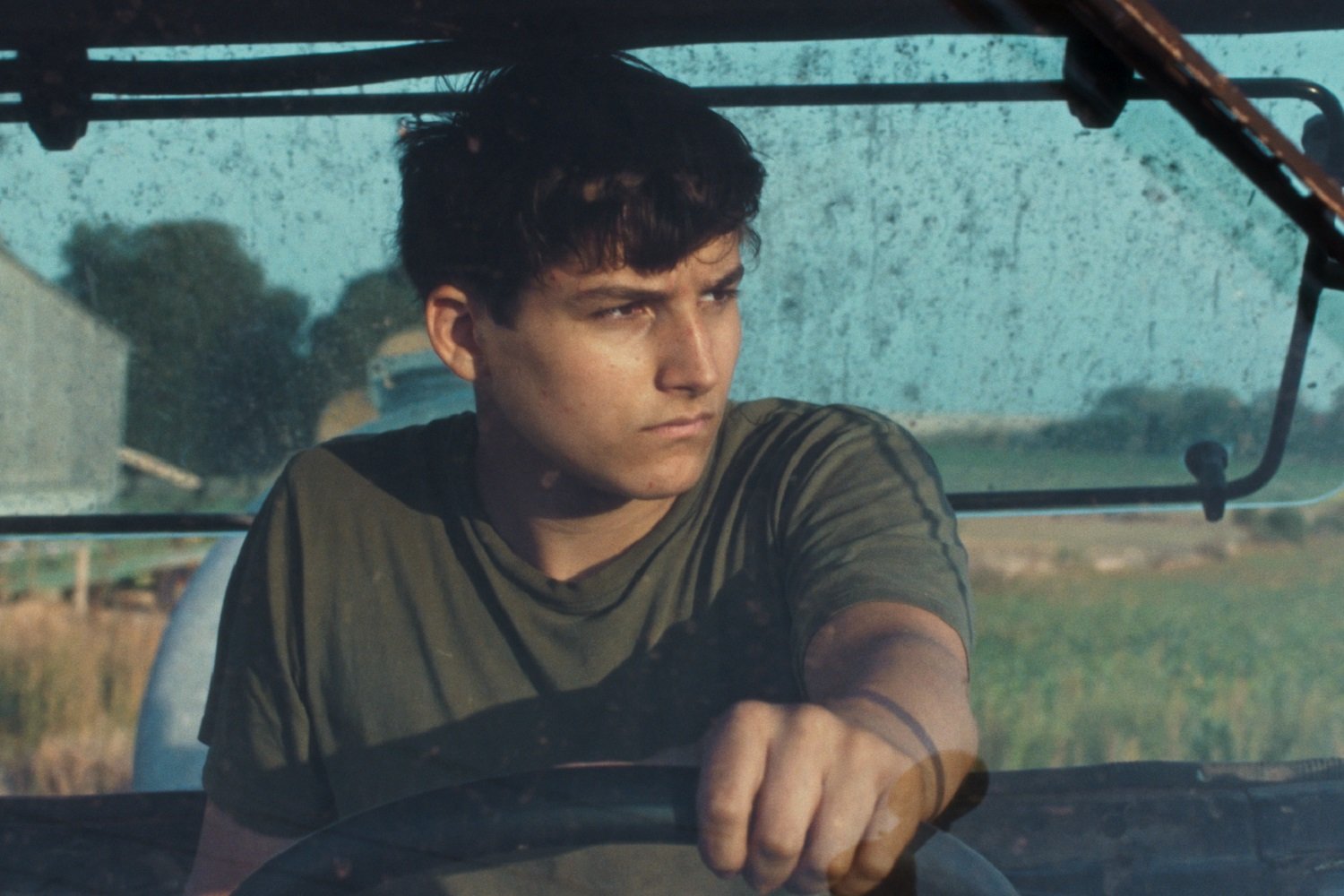
– CANNES 2026: Capturing ten years of life, documentary filmmaker Maxence Voiseux accomplishes a remarkable cinematic experience, grounded in humanity and woven with subtle finesse
“Like a falcons’ flight, far from their natal mass grave / tired of carrying their haughty misery / from Palos, from Moguer, adventurers and captains left / drunk on a dream both heroic and brutal.” Recited by the young protagonist of Gabin, the excellent first feature documentary by Maxence Voiseux, presented at the Directors’ Fortnight of the 79th Cannes Film Festival, this flash of literature — taken from the sonnet Les Conquérants (The Conquerors) by José-Maria de Heredia — appears at first like a comet passing through the rough world of a film centred on ten years in the youth of the son of a farmer and a butcher from northern France. But perhaps things are not so simple, for beneath the surface of an impressively intimate realism, captured over a decade, the French filmmaker reveals a highly subtle mastery of suggestion and mise-en-scène.

In the Jourdel family, we’ll follow the third son, Gabin: a kind-hearted boy whom we first meet at the age of eight as he’s already doubtful about the idea of one day taking over his father’s butcher’s shop (“I’d like to have a job with living animals”). But, as he confides to his school friend Lilou, things would not be easy with his mother’s farm either (“it’s already bankrupt, we don’t have the equipment, just a tractor and a trailer. Just thinking about losing the cows breaks my heart”).
Time passes and Gabin (who lives in Bavincourt, in the Artois region) grows up and changes, replacing the figurines of his childhood with the video game Farming, helping his mother Patricia — with whom he shares a tender bond — on the farm, while also enduring a certain awkward and negative pressure from his father Dominique regarding academic success. He is now fourteen and the time has come for him to make his first choices about the future: which secondary school? Boarding school? What profession? A turning point unfolds at the very beginning of his adolescent years (“I don’t care about later”), fuelled by a growing tension with a father disheartened at the prospect of having no successor for the butcher’s shop. What path will Gabin choose? How will his parents experience his emancipation? Will he fly towards other horizons?
By skilfully piecing together the ten years covered by his film during the editing process, the director gradually and seamlessly unfolds a comprehensive vision of his subject, while knowing how to leave many elements off-screen. Completely immersing himself in the everyday life of his main character with an extraordinary invisible closeness, he paints a deeply endearing portrait of youth and delivers a remarkably accurate snapshot of local life, culture and economics. But above all, beneath the surface, he conducts a kind of profound transgenerational analysis, even bringing certain family issues back into consciousness. The director presents a feat of cinematic magic carried out with the elegance of discretion, scattered with countless small but meaningful details, and developed through a mise-en-scène of remarkable finesse. Little Gabin has grown up — but so too has his filmmaker-mentor.
Gabin was produced by French company Alter Ego Production with German companies Ama Film, SWR and Arte, as well as the Swiss companies Rita Productions and the RTS. Lightdox handles international sales.
(Translated from French)
