
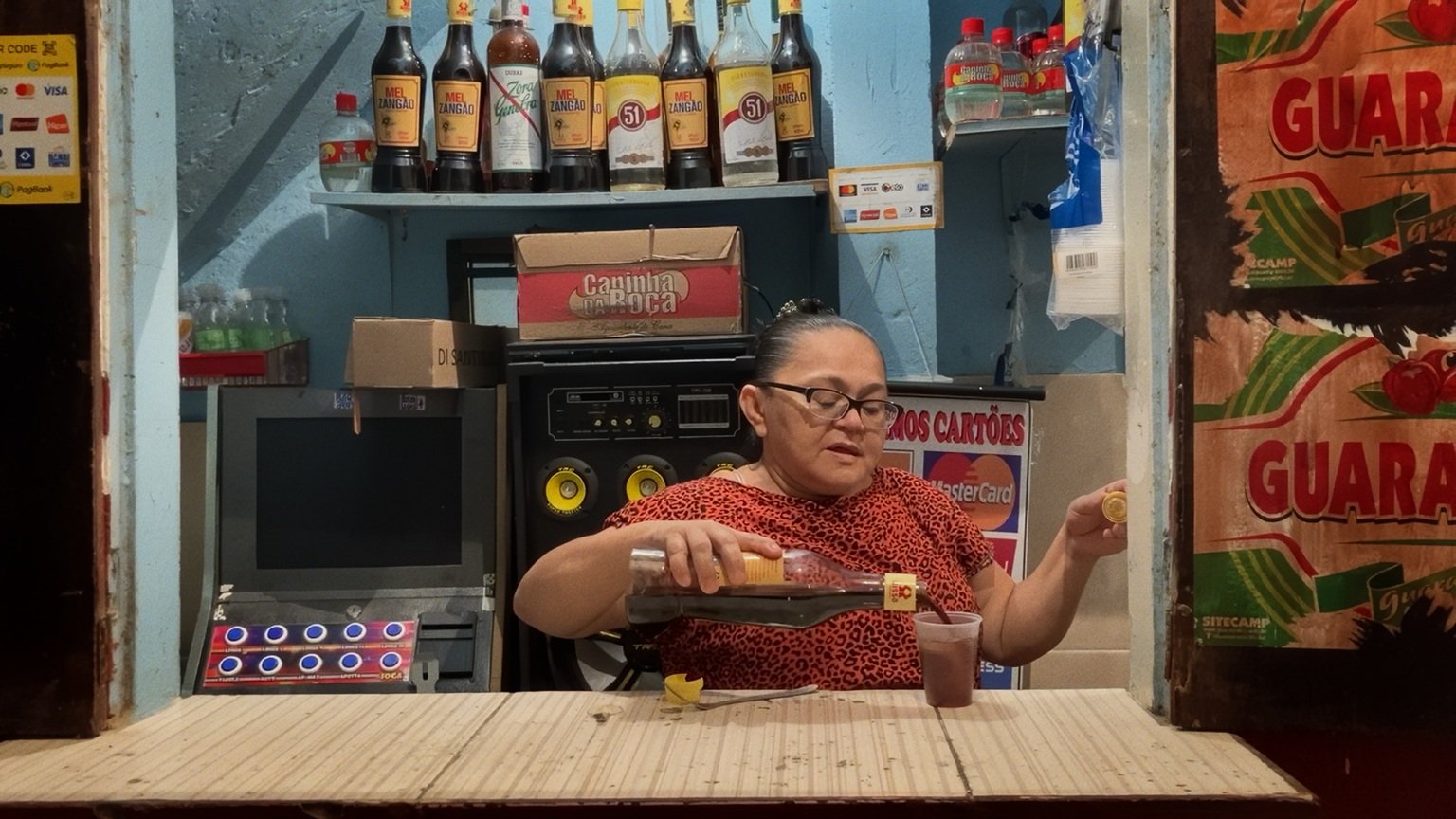
– The first feature film by French-Swiss director Emma Boccanfuso follows the day-to-day life of a family trying to survive between shootings and vendettas in a Brazilian favela
Presented as a world premiere in the Visions du Réel Festival’s International Feature Film Competition, Saudades eternas by French-Swiss director and artist Emma Boccanfuso cleverly interweaves moments of family joy with profoundly affecting tragedies, revealing what it means to survive in a climate of constant conflict. Set in Chapéu Mangueira, a favela based in the south of Rio de Janeiro, the film is a veritable huis clos, following the day-to-day life of a colourful, extended family who are trying to survive the violence encircling them. The indistinct head of this community is Sueli, a witty and charismatic 50-year-old woman who busies herself keeping everyone united and afloat despite the horror flooding their neighbourhood streets.

Although the connection between the director and her protagonists is never made clear, they undeniably see her as a member of the family. The way in which she scrutinises each of them with empathy and discretion – especially the children who often speak in the film – helps to convey the strength of the bond she’s developed with this endearing community, and its basis on mutual respect. The reality Boccanfuso depicts, the sometimes claustrophobic daily life which Sueli and her loved ones must contend with (and which the protagonist unhesitatingly and humorously refers to as “house arrests”), where they hardly ever go out onto the street, such is the fear of finding themselves caught in the crossfire, unfolds naturally and coherently in the film, as if the director’s gaze were an extension of their own. An observer of this particular society which is a far-cry from the picture-postcard Brazil dreamed about by tourists and which the film’s protagonists barely glimpse from their balconies, Emma Boccanfuso is only too familiar with the tragedies hiding behind the jokes and Sueli’s classic commedia dell’arte performances. Behind her theatrical cries which resonate throughout the house and her need to tell anyone who’ll listen that her heart is on the verge of exploding, lies a deep-seated need not to disappear amid general indifference, like one of the countless anonymous victims of this senseless war (between drug dealers fighting for control of the neighbourhood and the police).
What ultimately transpires from the film is a lifeforce which moves us to our core, the family’s need to assert their presence in the midst of all this chaos. When a society no longer takes care of its citizens, the only remaining option for survival is to stay united, helping each other in turn. The director often films the reality out on the streets from above: through a hole which acts as a passageway between the ground floor and first floor of the house, or from windows and balconies, as if to emphasise the clear division between the inside (life, family) and the outside (violence, uncertainty), and between hope and despair.
Entirely shot in the homes of Sueli and her loved ones, the film lends a voice to its protagonists only, leaving the violence and all its associated uproar – in the form of drug dealers’ gunfire or the stories told by people returning home each evening – outside. As the violence on the streets escalates, the house expands anarchically and dangerously, as if wanting to emphasise the family’s growing need to seek refuge inside of themselves. Sadly, however, bricks can’t protect them from either bullets or suffering.
Saudades eternas was produced by Close Up Films (Switzerland) and Macalube Films (France).
(Translated from Italian)
