
– Valerio Bonelli makes his directorial debut with a documentary interweaving family memories and private footage to reflect on the patriarchy, loss and emotions
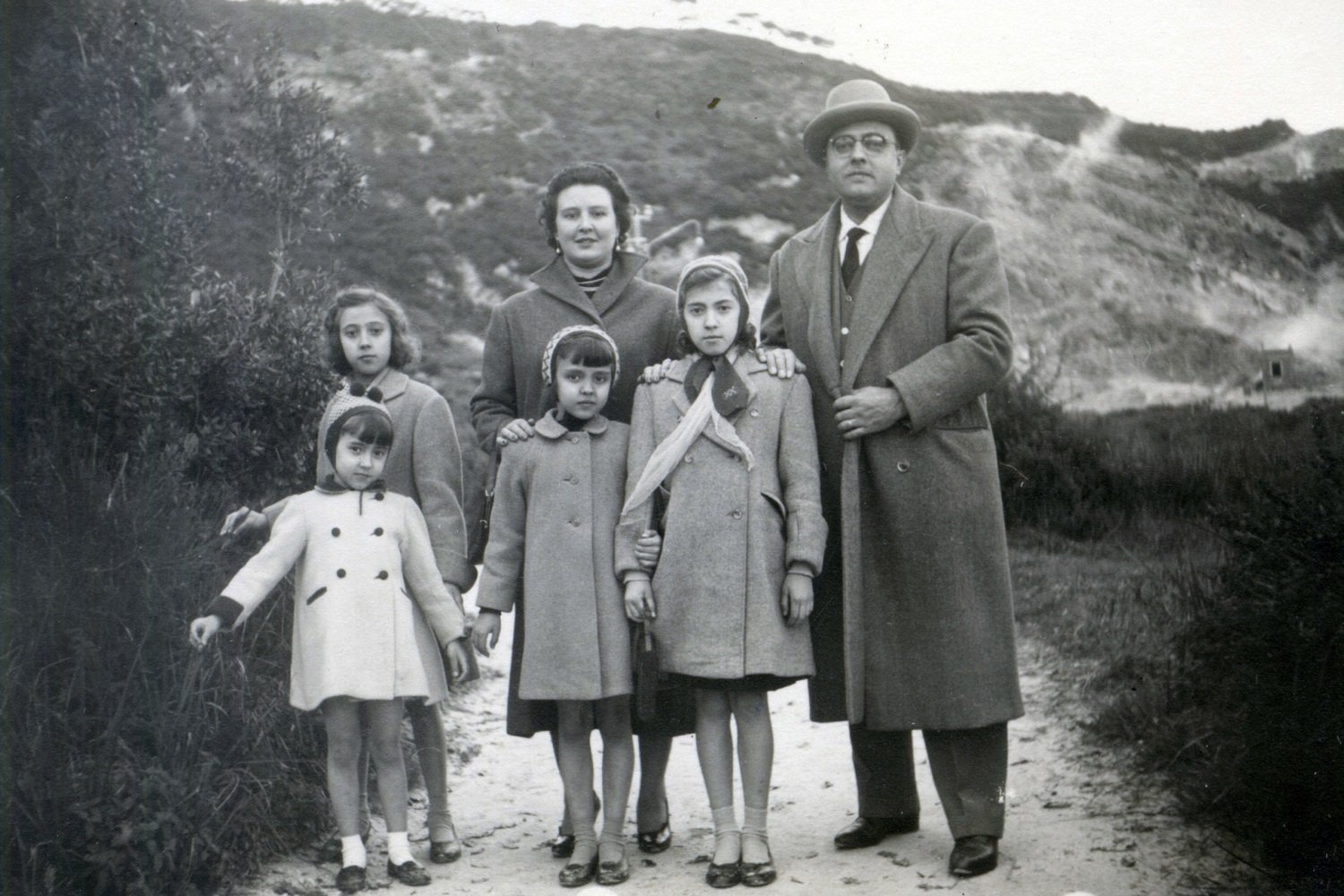
Screening in a world premiere in the Bologna-based festival Biografilm, Tough Love marks the directorial debut of Valerio Bonelli, a well-known Italian editor who’s been living in London for many years. Through precious family home-videos shot on Super 8 and taken from private collections, the director reconstructs a cross-section snapshot of post-war Naples. At the heart of the story are four sisters who silently challenge the authority of their strict father, Gennaro, who’s also the director’s grandfather.
Bonelli’s movie tackles a theme which we’ve been exploring with increasing frequency in recent years, especially through the medium of film: the influence of the patriarchy and of older generations on younger ones. It does so in a particularly effective way, thanks to the use of the documentary medium, which expertly blends archive material with new talking-heads footage of these four women. Boasting an enviable background in editing, mostly developed in the UK through films such as Darkest Hour and Jay Kelly and other stand-out works, Bonelli demonstrates an incredibly steady hand when it comes to the film’s narration.
Combined with the chronological progression of the narrative, the film’s thematic structure allows the story to breathe and to strike the right balance between moments of tension and more extensive sequences. It results in a compelling pace which keeps the audience focused on the story and the four leading women. This approach is also perfectly effective because it gives the audience the required time to warm up to the protagonists and to care about their stories. The rich archive material on display doesn’t just serve to illustrate what’s being narrated, it also allows us to see those memories and experiences concretely, rather than contenting ourselves with verbal descriptions.
But the film is far more than a reflection on the patriarchy. It’s also a family-focused story exploring the loss of a relationship with parents and, in some cases, with sisters. It’s a reflection which many people will identify with, despite being intrinsically linked to the specific dynamics of this particular family. And it’s this balance between universality and specificity which allows the audience to immerse themselves in and be transported by the events in question.
The relationships between the sisters are particularly interesting because they reflect fairly common family dynamics. Anna, for example, seems to have been the favourite child and, consequently, the other three find themselves examining the special treatment she received during childhood and adolescence. None of them openly admit to feeling resentful, but the film does tease out undercurrents and tensions found in many family settings.
It almost brings to mind Tolstoy’s famous quote that all happy families are the same, whereas unhappy families are each unhappy in their own particular ways. But as we observe the family followed by Bonelli, we realise things are far more complicated. We wouldn’t say they’re an unhappy family: there’s heartfelt love and affection between the sisters and their parents. In fact, Bonelli’s very decision to dedicate the film to his own family does appear to be a genuine act of love. But there are also conflicting feelings, resentments and jealousies at play.
In reality, happy families aren’t always similar either, because that happiness and that love often co-exist alongside wounds, pain and misunderstandings which have been internalised, overcome or quite simply accepted. And in certain cases, these wounds might even pave the way to building a stronger bond.
Tough Love was produced by the director’s own company, Peacock Pictures.
(Translated from Italian)
