
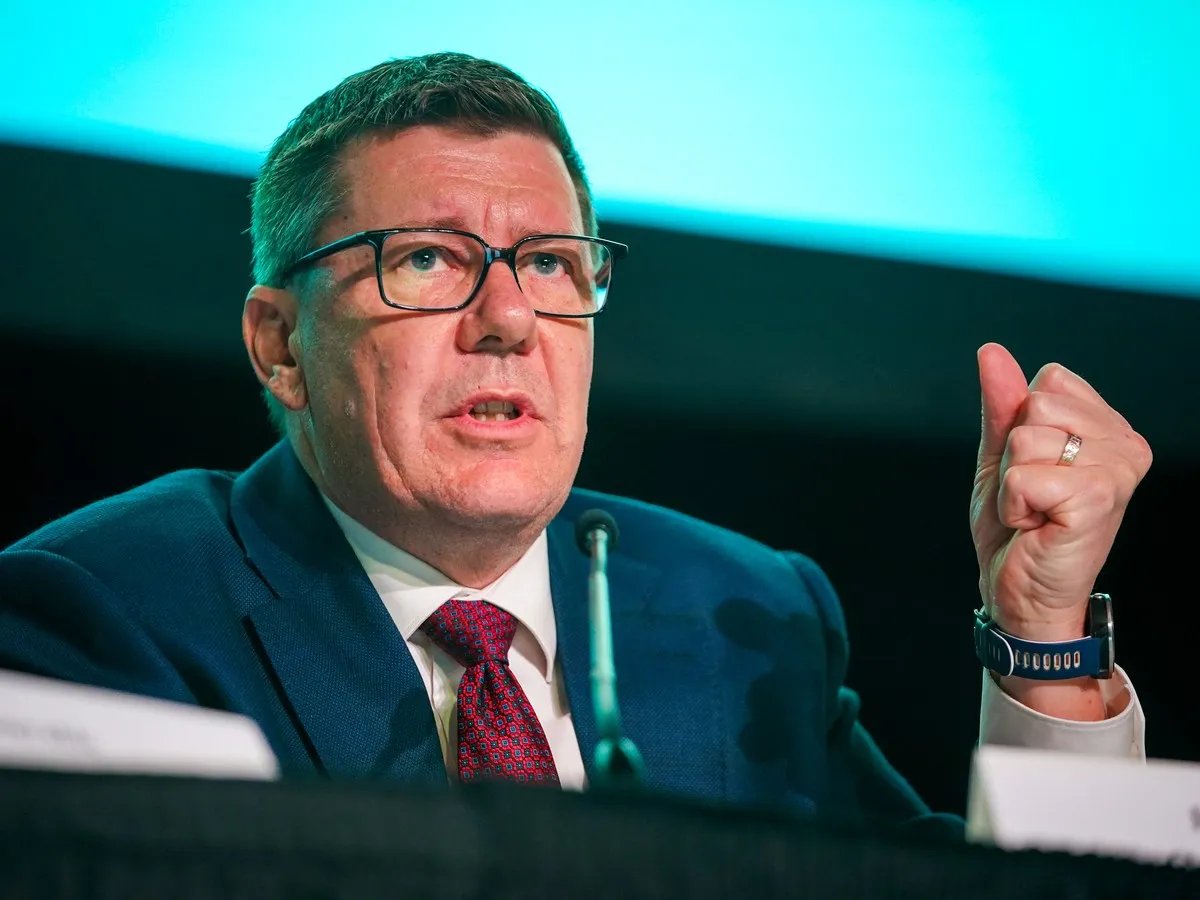
OTTAWA — Saskatchewan Premier Scott Moe says his province will begin talks with the federal government around how to find a “workable place” when it comes to the question of charging an industrial carbon tax.
“We’re open to the discussion about finding a place where that would work for the industries that are employing people here,” he told National Post on Tuesday.
“So, I wouldn’t say we’re entirely open to just doing it, but we’re open to trying to find a workable place with the federal government.”
Moe’s comments come after Prime Minister Mark Carney and Alberta Premier Danielle Smith struck a deal that will see her United Conservative Party government increase its industrial carbon tax to an effective rate of $130 per tonne by 2040, up from the current $95 per tonne she froze it at last year.
That same year, Moe’s Saskatchewan Party government announced it would be pausing its industrial carbon tax, making it the first jurisdiction in the country to be “carbon tax free.”
He said on Tuesday that will remain the case “until we can potentially find a path to move forward.”
There have been some “high-level discussions” with the federal government, Moe said, but added he could not say how long talks may take.
Industrial carbon taxes are a levy charged on heavy emitters by either the provincial or federal governments with the stated goal of reducing emissions by incentivizing industries to adopt lower-emission technologies.
The federal government, under former prime minister Justin Trudeau, had introduced what is known as a “federal backstop,” setting a minimum tax rate that is meant to progressively increase to $170 per tonne by 2030.
Back in 2021, the Supreme Court of Canada confirmed the federal government’s jurisdiction to enforce such policies, ruling its carbon tax regime to be constitutional in the face of a challenge from provinces like Saskatchewan and Alberta, which was largely launched over the charging on a consumer carbon tax on fuel, which Carney cancelled last year.
Asked on Friday whether the deal ushered in for Alberta — an industrial carbon tax that is lower and takes longer to hit — will apply to other provinces, Carney said the short answer was “yes.”
A response from Environment Minister Julie Dabrusin’s office was not returned by press deadline on Tuesday.
Moe says his government is now looking at “refining” the Ottawa-Alberta deal, “on behalf of Saskatchewan Industries to find a workable path forward.”
“I’ve said this to Minister (Tim) Hodgson and Prime Minister Carney, is once they come to agreement with Alberta, we’ll work on refinements,” he said, adding he spoke to Hodgson before the deal with Alberta was unveiled.
Moe says the reason he stepped away from the industrial carbon tax was that it had been set at levels, which he said were “not attainable by the industry” and that there was no previous negotiations.
“If we can find a workable environment where the industry can continue to not only operate but can attract investment and expand, we would look at that, but it would have to be good for the industries, who would have to then be able to come to agreement between our provincial system and the federal system as well,” he said.
“But we’re ways away from that yet, so the status quo will remain for right now.”
Rick Smith, president of the C anadian Climate Institute, a climate change think-tank, said their worry had been the deal struck between Ottawa and Alberta would result in similar ones across the country.
“Our initial take is that it’s certainly not good news in terms of Canada’s ability to reach net zero emissions nationally by 2050,” he said on Tuesday.
“These changes will essentially lock Canada into a mediocre trajectory of emission reduction for the foreseeable future,” he added.
Michael Bernstein, CEO and president of the climate policy group Clean Prosperity, says the deal with Alberta provides welcome “clarity.”
“I would also say that it would have been my preference to see that pricing schedule escalate a little faster and focus more on 2035 than 2040.”
Moe said his government would also be discussing with the federal government its planned clean electricity regulations, which Carney announced last week, as well as the planned phase out of coal plants, which Saskatchewan uses to generate electricity, along with natural gas.
He chalked up those discussions as being part of the relationship reset committed to with Carney.
“That was a serious commitment that we had made, and I think people in the province are, not all, but largely happy to see us making efforts to work with the federal government, and I would just say they’re making efforts to collaborate as well, which is something we haven’t seen for about a decade.”
National Post
Our website is the place for the latest breaking news, exclusive scoops, longreads and provocative commentary. Please bookmark nationalpost.com and sign up for our daily newsletter, Posted, here.
