
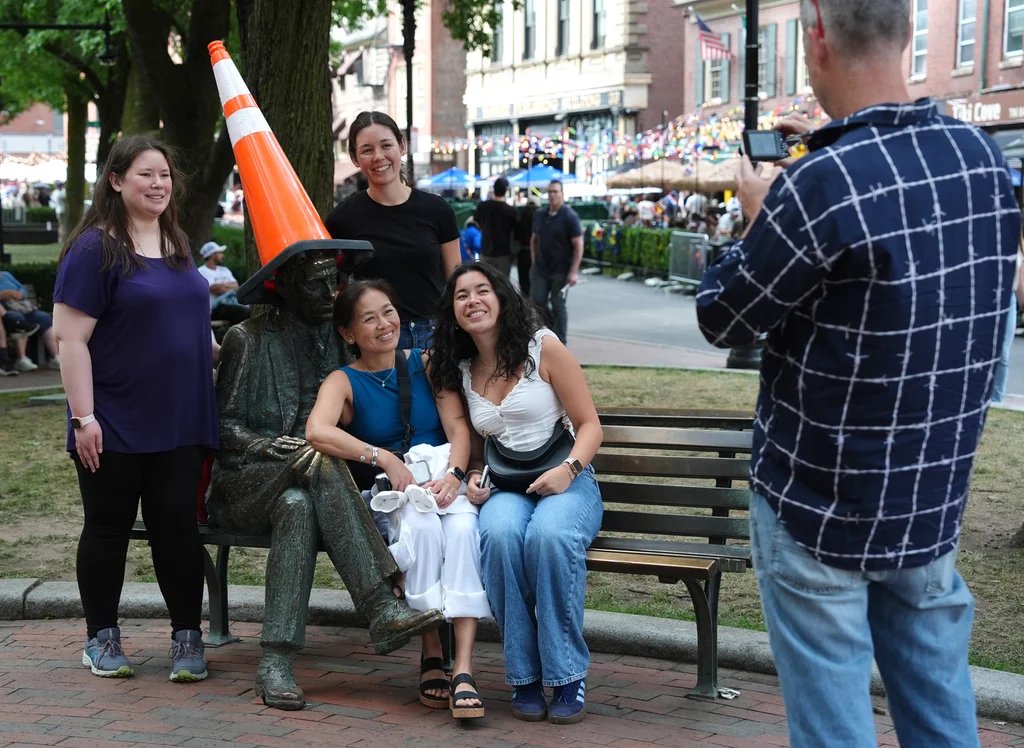
Since the World Cup began on June 11, thousands of international fans have been pouring into U.S. host cities to watch the games, and it’s caused social media to explode with heartwarming stories of cultural exchanges.
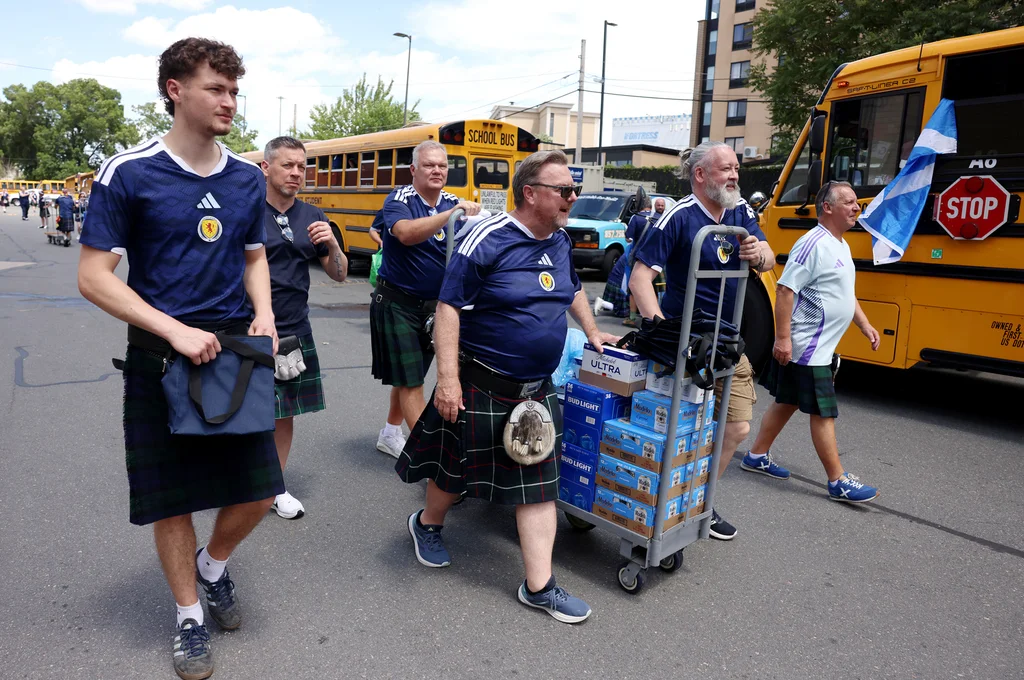
Nowhere has that been more apparent than in Boston, where a huge influx of Scottish fans—also known as the “Tartan Army”—struck up a brief but intense kinship with local communities. A genius new campaign is turning that phenomenon into a travel ad.
The United Airlines ad produced by the creative agency 72andSunny, is a new billboard that recently popped up near Boston Stadium. Rendered in United’s hallmark blue-and-white palette, the billboard features a brief message: “Go visit your new Scottish friends; With flights to Edinburgh and Glasgow.”
The billboard may be simple, but it represents an example of genuinely good reactive marketing that’s recently eluded many other brands. It uses a tried-and-true formula to grab attention: capturing an organic insight, turning it into a unique brand statement, and getting it out into the world while it’s still relevant.
Follow the signs (and empty pints)
For United and 72andSunny, the billboard started with a single insight: Boston and Scotland are an unexpected match made in sports heaven.
The Tartan Army’s arrival, inspired by team Scotland’s games against Morocco and Haiti (both of which were held at Boston Stadium), got off to a shaky start. Right away, the city had to contend with the influx of tourists’ strain on its local infrastructure, including transit delays and squabbles over stadium security funding. But as Peter Schworm wrote for The Boston Globe, “In the excitement of it all, Boston quickly forgot itself, shedding its skeptical reserve and embracing the joy of the event in full measure, cast under the Scottish spell.”
That “Scottish spell” included bagpipe marches through downtown streets, local bars running out of beer on tap, and, oddly, a silly trend wherein Scottish visitors placed traffic cones on statues, fountains, and monuments across the city.
“Their love of country, of sport as connection, of flat-out fun, all done without a trace of pretension, was stirring,” Schworm wrote. “At a time of divisive, angry politics fueled by a deep distrust of immigrants, the city’s joy as people from dozens of countries joined in celebration stood in clear defiance.”
Now the Tartan Army has left Boston behind to follow its team to Miami, leaving some Bostonians in a mourning period.
Prepare for anything, but choose your moment
That lovelorn emotion is the target of United’s new, localized billboard, which calls on bereft Bostonians to funnel their woes into international airfare.
According to Maggie Schmerin, chief advertising officer at the airline, the digital billboard was one of several United had purchased near World Cup venues ahead of the games, and then specifically tailored to the emerging cultural moment.
“The opportunity in culture is not just to be fast,” Schmerin says. “It is to be relevant, useful, and emotionally worth people’s time. Our goal at United is to know which moments we have earned the right to enter. And as an airline with flights to two destinations in Scotland, we checked that box as having something relevant to say.”
The billboard works because it brings United into a conversation with a unique angle that feels natural for the brand, while the topic is still top of mind for fans.
And please: avoid brand copycatting
For brands, the World Cup is a huge marketing moment that spans TV advertising, digital campaigns, and merch—so it makes perfect sense that companies are looking for organic moments to hop into the conversation.
However, not all reactive marketing is created equal, and while the World Cup is highlighting some strong examples, like the United billboard, it’s also spotlighting a few reactive marketing pitfalls.
Most notably, early this month Levi’s was forced to cover its logo at Levi’s Stadium in Santa Clara as part of a temporary, World Cup-based “debranding” effort. The brand opted to silhouette its emblem with a tight white sheet, leaving its shape visible—effectively demonstrating how recognizable the logo is.
After the move caught the media’s attention and turned into a major win for Levi’s, other brands jumped on the bandwagon by producing their own white-sheet-covered logos for social media.
The issue, as the social media analysis Substack Silence, Brand! pointed out, is that the move “only works if your logo shape is immediately recognizable without additional context”—which was not the case for brands like, for example, Chiquita Banana.
This kind of slap-and-dash reactive marketing has become table stakes for many brands attempting to navigate the crowded social media ecosystem.
Examples trace back well before this year’s games: We saw the strategy crop up after Taylor Swift’s engagement; in the wake of this year’s KitKat heist; and in the lead-up to the release of Drake’s new album. The issue with these kinds of posts is that while trying to grab attention, the brands who participate tend instead to blend into a sea of sameness.
The difference between good and bad reactive marketing often boils down to originality and brand fit. When a brand tries to ride on the coattails of another brand’s viral moment or, worse, shoehorn its way into a conversation it’s not a part of, it starts to feel less clever and more desperate. Brands that do it right tend to avoid jumping into the fray for every potential trend and instead play their reactive marketing hand when they have something unexpected to add to the discourse.
