
– A year of fewer productions nevertheless yielded major festival berths and robust local admissions for Slovak titles, and saw continued reliance on the Czech-Slovak financing corridor
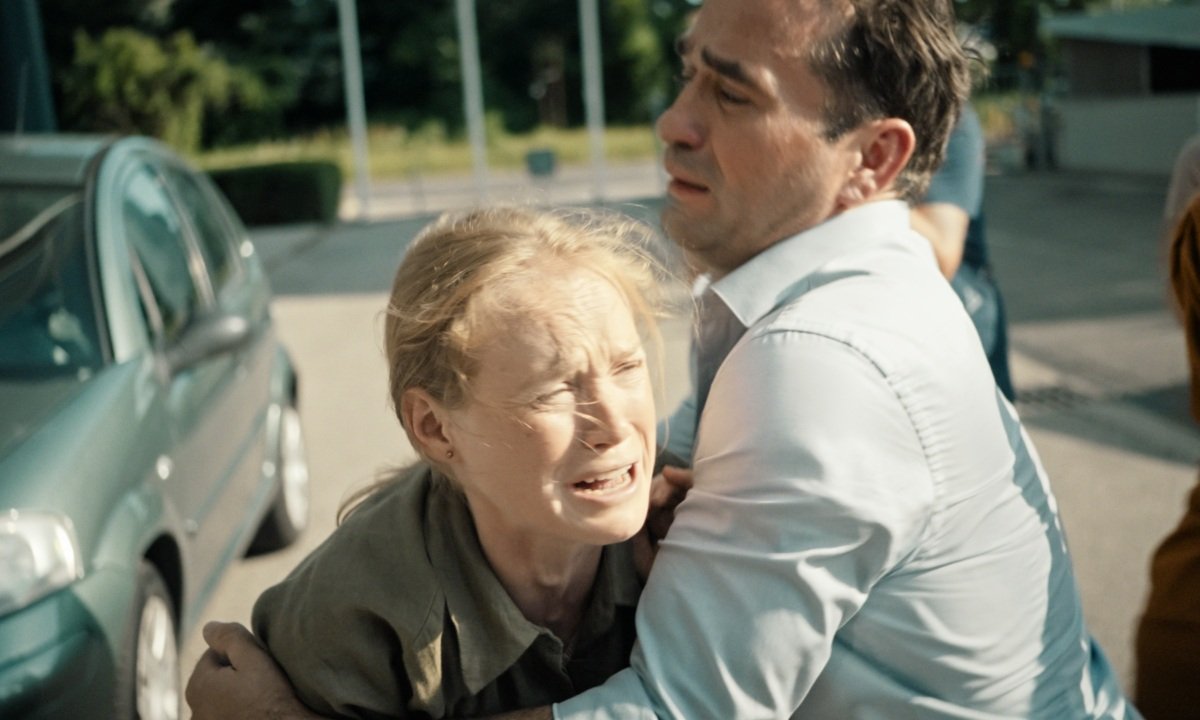
Father by Tereza Nvotová, which premiered in Venice’s Orizzonti section and became Slovakia’s Oscar submission
Slovakia’s audiovisual industry entered a more restrained phase in 2025, following several years of unusually high production output. According to the annual report on the state of Slovak audiovisual production (read it in full, in Slovakian, here), 36 feature-length Slovak films were produced for cinemas during the year, down from 46 in both 2023 (see the news) and 2024 (see the report), representing a decrease of roughly 21%. The further fall comes after the record 50 features produced in 2022, but it does not entail a collapse in visibility. Slovak films continued to travel widely, while domestic titles retained a notable position at the national box office (see the news).
The 2025 slate comprised 17 fiction features, 16 feature-length documentaries and three animated features. Debut filmmakers remained a significant force, directing 12 of the 36 movies, or one-third of the total output. Female filmmakers also maintained a visible presence: 13 films were directed by women, while two more were co-directed by a woman and a man. Women were involved as producers or co-producers on 24 films, amounting to two-thirds of the year’s production. The most expensive title was Alexandra Makarová’s Austrian-Slovak drama Perla, with a budget of €3.72 million, while the lowest-budgeted feature was Petr Turoň’s Jadwiga the Witch, made for €20,000.
The fiction production remained strongly shaped by co-production models. Of the 17 fiction features, six were either 100% Slovak or majority Slovak productions, including Jakub Kroner’s crime-drama Černák, Peter Bebjak’s musical biopic Duchoň, Gregor Valentovič’s sport biopic Nepela, Tereza Nvotová’s Father and Martin Gonda’s Flood, the first Slovak feature-length fiction film in Rusyn. Rudolf Biermann’s Another Round, a Czech-Slovak remake of Thomas Vinterberg’s Another Round, was produced as a parity co-production. Ten fiction features were made as Slovak minority co-productions, including Zuzana Kirchnerová’s Cannes-selected Caravan, Dužan Duong’s Summer School, 2001, Olmo Omerzu’s Ungrateful Beings, Ondřej Provazník’s Broken Voices and Perla.
Documentary production remained one of the pillars of Slovak cinema. Nine of the 16 feature documentaries were 100% Slovak or majority Slovak productions, including Dušan Trančík’s Operation Monaco, Zuzana Piussi’s Voice of the Forest, Martin Kollar’s Chronicle and Paula Ďurinová’s Action Item. Miro Remo’s Better Go Mad in the Wild, made as a Czech-Slovak parity co-production, became one of the year’s most successful Slovak-linked documentaries after winning the Crystal Globe at Karlovy Vary (see the news). Animation also had a notable year, with three feature-length titles: Gejza Dezorz’s puppet movie Dukla, Katarína Kerekesová’s 3D animated flick The Websters: Tales from a Spider Thread and the four-country parity stop-motion co-production Tales from the Magic Garden, which screened in the Berlinale’s Generation Kplus strand and at Annecy.
The structure of the 2025 slate underlined Slovakia’s dependence on public funding and international collaboration, most frequently with the Czech Republic. The Slovak Audiovisual Fund supported 28 of the 36 features, while the Czech Audiovisual Fund backed 23. Slovak Television and Radio co-produced 11 films, compared with 16 involving Czech Television. These figures confirm the continued centrality of the Czech-Slovak production corridor, which expands access to financing, broadcasters and distribution networks, but also points to the limits of Slovakia’s domestic financing base.
The theatrical market delivered mixed signals. Slovak cinemas hosted 42 premieres of Slovak films in 2025, while total admissions declined to 5.12 million, compared with 5.44 million in 2024 (see the news). Gross box-office takings fell only marginally, to €38.26 million from €38.66 million, as the average ticket price rose to €7.47. Domestic films nevertheless performed strongly, drawing 1.06 million admissions. Černák attracted 418,673 viewers, becoming the second most successful Slovak film since independence, behind only Bathory. Duchoň ranked fourth overall with 263,582 admissions, while Father reached ninth place with 128,651 admissions.
Internationally, Slovak cinema had one of its most visible years in recent memory. Father premiered in Venice’s Orizzonti section and became Slovakia’s Oscar submission. Caravan was selected for Cannes’ Un Certain Regard, Perla premiered in IFFR’s Tiger Competition, Ungrateful Beings bowed in San Sebastián’s Official Selection, and Tales from the Magic Garden appeared in the Berlinale’s Generation Kplus. Meanwhile, Rebeka Bizubová’s student short documentary Confession won a Silver Medal at the Student Academy Awards.
The year thus produced a rather paradoxical picture. Slovakia made fewer films, and public support came under pressure, but the movies that did emerge circulated widely and performed well at home.
