
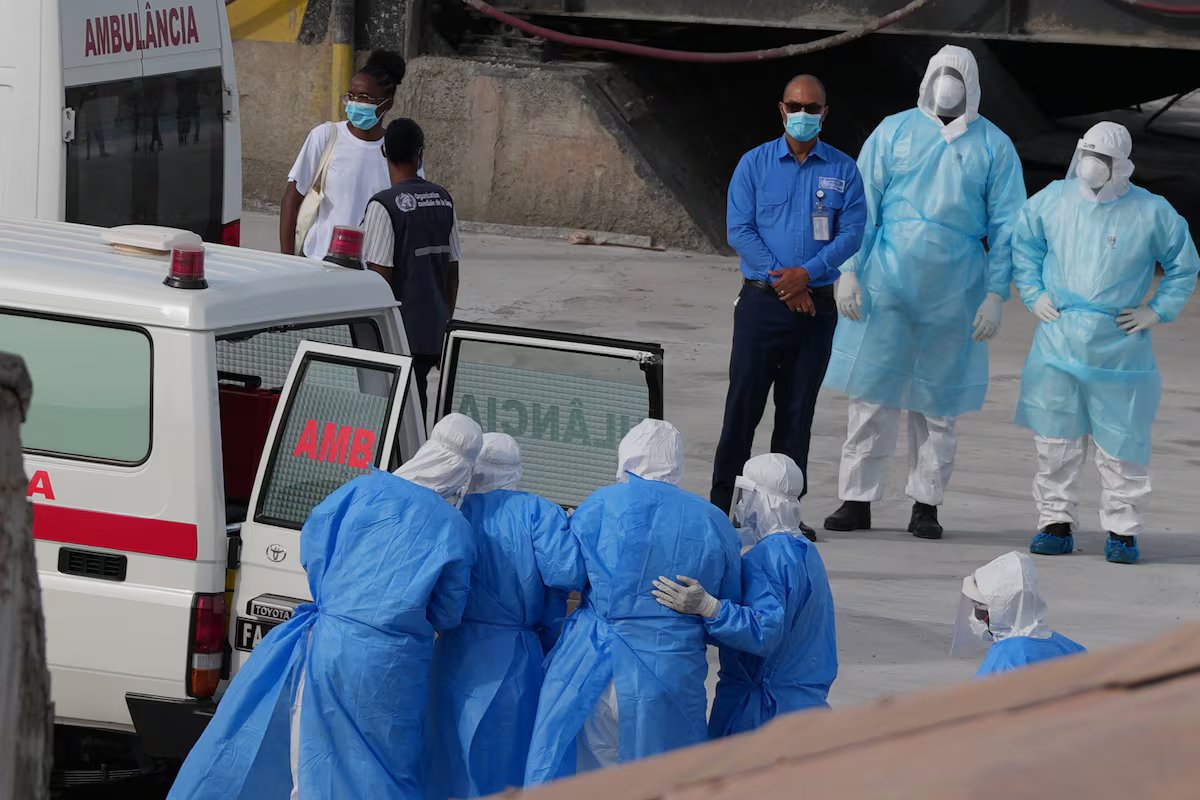
Twenty‑three passengers from the MV Hondius have been on land for more than two weeks. They disembarked on April 21 on the island of Saint Helena, 10 days after the first death on board, and began their journeys home. That is what a Spanish passenger still on the ship told EL PAÍS. “Twenty‑three people got off in Saint Helena. There are 23 people wandering around there, and until three days ago, no one had contacted them,” said the passenger, who asked to remain anonymous.
While most passengers remain on the ship under strict hygiene and isolation measures, 23 returned home and resumed normal life. “The Australian went back to Australia, the one from Taiwan to Taiwan, the Americans to all corners of North America. The Englishman to England, the Dutch to their homes… I don’t remember the rest, but no Spaniards,” the passenger explained by phone.
At least one of those passengers, according to their account, appears to have been infected with hantavirus: the man admitted this morning to a hospital in Switzerland. “He wasn’t feeling well, went to the hospital, and this morning tested positive,” the passenger said.
The World Health Organization did not begin contacting the passengers who disembarked in Saint Helena until three days ago. “We were in touch with them and kept asking ourselves, ‘When are they going to tell them something?’ Some people weren’t contacted until yesterday.”
On Wednesday, the WHO confirmed that the hantavirus outbreak detected on the MV Hondius is caused by the Andes virus (ANDV). There are eight cases in total, three of them confirmed. Three people have died, one remains in intensive care in Johannesburg in South Africa, and another is hospitalized in Switzerland.
Hantaviruses are a highly diverse family of viruses: at least 38 species are recognized, 24 of which cause disease in humans. The Andes virus is the only strain known to spread from person to person. In this variant, transmission is believed to occur through close, prolonged contact involving bodily fluids.
Sign up for our weekly newsletter to get more English-language news coverage from EL PAÍS USA Edition
