
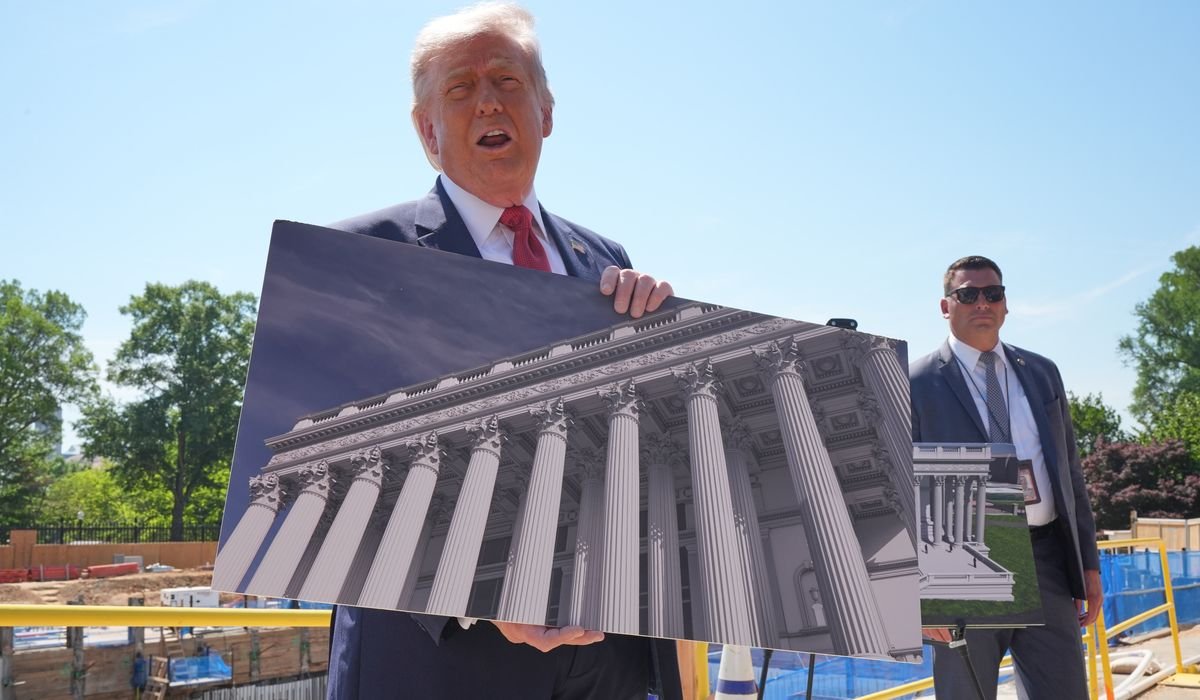
The Supreme Court on Monday gave President Trump permission to keep building his ballroom at the White House, erasing a lower court blockade that had limited his construction.
The justices, in a 5-4 decision, said the National Trust for Historic Preservation, which brought the lawsuit, likely lacks legal standing to sue. The majority also said the statements by military and intelligence leaders that the ballroom is critical to security worked in favor of letting Mr. Trump continue.
“Today, we do not pass upon the legality of the government’s East Wing project. We conclude only that, based on the submissions before us, the government is likely to prevail in showing that the Trust lacks Article III standing to challenge the project in federal court and that the remaining stay factors favor relief,” the court said in an unsigned opinion.
Dissenting were Chief Justice John G. Roberts Jr. and the three Democratic appointees.
Construction is going at a breakneck pace. A 250-person crew is working 20 hours a day in two shifts, seven days a week, according to court filings in the case.
Mr. Trump says the ballroom wing is combined with upgrades, including a “drone-proof” ceiling, blast-proof glass, bomb shelters, missile-resistant columns and “top secret military facilities.”
The majority said the case raised important legal questions that aren’t settled, and so halting construction now would hinder the president.
That legal question is whether the president can do a major renovation to the White House without getting permission from Congress.
Chief Justice Roberts, writing the dissent, said he thinks the legal question is likely settled and the ballroom construction is illegal.
“That construction is likely unlawful,” the chief justice wrote. “The ballroom is a building or structure being erected on federal park grounds — President’s Park — in the District of Columbia. Yet Congress has not passed any law resembling ’express authority’ for the Executive’s construction of it.”
He dismissed the national security concerns, saying that while below-grade construction — which has been allowed by lower courts — affected security, the early arguments to the court did not make that same claim about above-ground construction.
