
The concentration of carbon dioxide (CO₂) in the atmosphere has reached 600 parts per million (ppm). At first, it is a boon for plants: the greater availability of carbon dioxide (their food source) supercharges trees, which grow and grow without restraint. But that concentration of greenhouse gases continues to warm the planet. The atmosphere loses more and more moisture and must draw water from leaves, stems and trunks. Plant mortality increases dramatically, and forests begin to thin out. As this happens, more solar radiation and heat penetrate the understory, reinforcing the process. Temperate species are displaced by xerophytic (drought-resistant) and thermophilic (heat-loving) plants. Walnuts, elms and birches give way to palms and scrubland.
This process occurred across the planet’s mid and high latitudes 56 million years ago. But according to a new study published in Science, it bears an unsettling resemblance to what is happening to forests today.
Geologists, paleobotanists and other scholars of Earth’s past refer to that episode as the Paleocene-Eocene Thermal Maximum (PETM). Driven by rising levels of atmospheric CO₂, probably of volcanic origin, it triggered global warming that pushed temperatures up by more than 5°C. Its impact was so profound that it marks the end of one geological epoch, the Paleocene, and the beginning of another, the Eocene. It is also one of the examples climate-change deniers often cite to argue that the climate has always changed.
Just as during the PETM, they would point out, atmospheric CO₂ levels continue to rise and have now reached 423 ppm. As 56 million years ago, droughts are becoming more frequent, with the atmosphere drier than it has been for centuries; countless plants and animals are dying, reshaping landscapes; and, as happened then, the oceans are becoming more acidic. What they do not mention is that the PETM unfolded over several millennia, whereas today’s warming is occurring over mere decades. But apart from the speed and the cause —anthropogenic now, volcanic then — the two climate changes bear striking similarities.
“We found that, during the PETM, Wyoming’s forests [in the United States] experienced an average 35% decline in leaf area index [LAI],” says Regan Dunn, a researcher at the Natural History Museum of Los Angeles County and the study’s lead author, in an email. “That does not mean the forest disappeared, but that it lost about a third of the leaf cover that drives many of its ecological processes,” she clarifies. “More sunlight reached the forest floor, temperatures rose, soils dried, less water returned to the atmosphere through transpiration, and the forest became less effective at regulating climate and storing carbon.”
The decline of a forest that, during the Paleocene, had been dominated by Juglandaceae (the walnut and pecan family), Betulaceae (birches), and Cupressaceae such as junipers was not an isolated phenomenon in Wyoming, or even in what is now North America. It occurred across the planet’s mid and high latitudes, which were dominated then — as they are now — by temperate forests. Gradually, these gave way to environments more akin to Mediterranean landscapes or the dry tropical regions of the world, such as the Amazonian cerrado. “In a way, the PETM landscape in Wyoming, U.S., would have resembled a mix of the structure of Spanish scrublands and the structure and species composition of Neotropical dry tropical forests,” Dunn explains.
The traditional fossil record shows the shift in plant life that took place between the end of the Paleocene and the beginning of the Eocene. But it does not capture particularly well what happened during the transition itself. Dunn and his colleagues have come up with an innovative way to do just that. “We reconstructed ancient tree canopies by measuring the shape of microscopic epidermal cells on leaves,” Dunn explains. These cells change shape depending on the amount of sunlight they receive during growth. Leaves that develop in shade have longer, more elongated cells than those that grow in full sun. And that pattern could be seen in fossilized leaves, in their phytoliths.
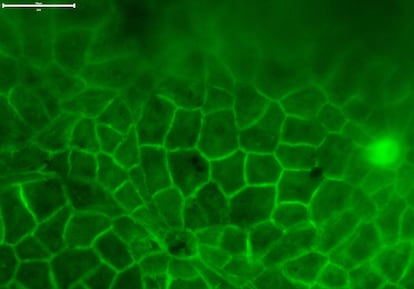
After validating their idea by analyzing leaf litter from about 20 modern forests and jungles, they were able to estimate LAI, the amount of leaf cover in those Wyoming forests, and how it thinned during the PETM. “This contrasts with the multi‑layered wet forests before and after the PETM,” the researcher says, adding: “Spain also has some notable sites that preserve PETM‑period information, such as Zumaia, which documents changes in marine depths at that time, and terrestrial records in the Tremp‑Graus basin,” a set of sedimentary strata exposed in the Pyrenees.
Dunn says it “is feasible that our new method could be applied to investigate those deposits in Spain.” “The next extension of our work is to get a global view of how vegetation structure changed worldwide during this major climatic event,” she adds. The end result of that climatic upheaval was a dramatic transformation of the landscape in Wyoming and many other regions at similar latitudes. Temperate forest species gave way to heat-loving woody plants such as Burseraceae (the family that includes palo santo), a variety of shrub species, sequoias, and all kinds of palms. The shift triggered a cascade of other changes, including the emergence of new animal species better adapted to the new environment.
“Understanding how forest structure changed during the PETM is crucial because it reveals how plant growth, biomass and productivity are affected by the amount of carbon dioxide in the atmosphere,” says Ellen Currano, a paleobotanist at the University of Wyoming and a coauthor of the study. “Excess CO₂ is harmful to forests, since the warming and drought that accompany it weaken trees, causing many to die.”
Currano sees clear similarities between the past and the present. “Our work shows that during the PETM tree canopies became more open, with fewer large trees, and that this change affected climate, the nutrient cycle, weathering and, of course, the animals living in the forests,” she says. “We are beginning to observe similar changes in today’s forests, especially in the Amazon, and the plant fossil record from Wyoming gives us a sense of where Earth could be headed.”
Sign up for our weekly newsletter to get more English-language news coverage from EL PAÍS USA Edition
