
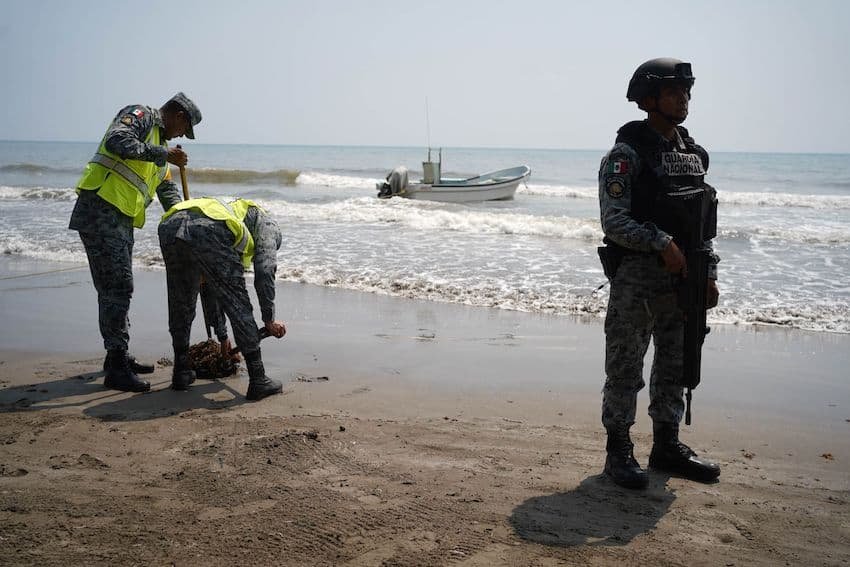
More than two months after a Feb. 6 oil spill in the Gulf of Mexico, environmental groups report contamination remains on dozens of beaches despite federal declarations in mid-March that cleanup efforts were 85% complete.
The Gulf of Mexico Reef Corridor Network said at least 81 beaches out of the 113 sites initially affected still show visible tar, with large and medium-sized patches of hydrocarbons observed alongside thousands of small particles and flakes.
The contamination spans approximately 1,168 kilometers of coastline from Paraíso, Tabasco, to Matamoros, Tamaulipas, the group said.
Fresh hydrocarbon arrivals were documented April 20-21 at Punta San Juan in Veracruz and Barra de Tupilco in Tabasco, according to the Veracruz-based news outlet Imagen del Golfo.
Environmental groups suspect crude oil that accumulated on the seabed is now being moved by currents and weather events known as nortes (northers).
These tiny fractions of hydrocarbons are especially difficult to remove and pose a persistent risk to the environment and public health, according to the news source Infobae.
Experts warn that the impact on the seabed has not been adequately analyzed or addressed.

After weeks of conflicting explanations — and charges of a government coverup — state oil company Petróleos Mexicanos (Pemex) admitted April 16 the spill originated from a pipeline leak near the Abkatun field in the Bay of Campeche.
Pemex CEO Víctor Rodríguez said senior management was not initially informed of the leak and three officials were dismissed. The leak began Feb. 6 and persisted until the pipeline was secured Feb. 14, Pemex eventually said.
Repairs were reportedly completed Feb. 18, and federal authorities in mid-March declared cleanup approximately 85% complete with no residue remaining in containment areas.
Environmental organizations have questioned why inspections by agencies, including the Federal Attorney for Environmental Protection (Profepa), are limited to superficial evaluations without comprehensive studies determining the presence of contaminants in sediments, water and marine fauna.
The spill has killed at least 22 sea turtles, four dolphins and one manatee, in addition to damaging fish populations, coastal birds (including two pelican deaths), mangroves and reefs, according to media reports.
Fishermen in Campeche representing more than 5,000 workers protested Monday, demanding fuel subsidies and emergency support as catches declined and operating costs rose.
Each fishing trip costs approximately 3,000 pesos (US $171) in fuel, they said, with no catch guaranteed; the oil spill has altered marine conditions, causing fish species to move away from traditional fishing grounds, the Mérida-based Por Esto reported.
Environmental organizations criticized cleanup efforts for focusing on tourist areas and easily accessible zones while neglecting rural and rocky areas — reflecting structural inequalities in disaster response.
Groups have demanded independent health and environmental monitoring, transparent compensation mechanisms and restrictions on oil activities in the Reef Corridor of the Southwestern Gulf of Mexico.
With reports from Imagen del Golfo, Infobae, Uno TV and Por Esto!
