
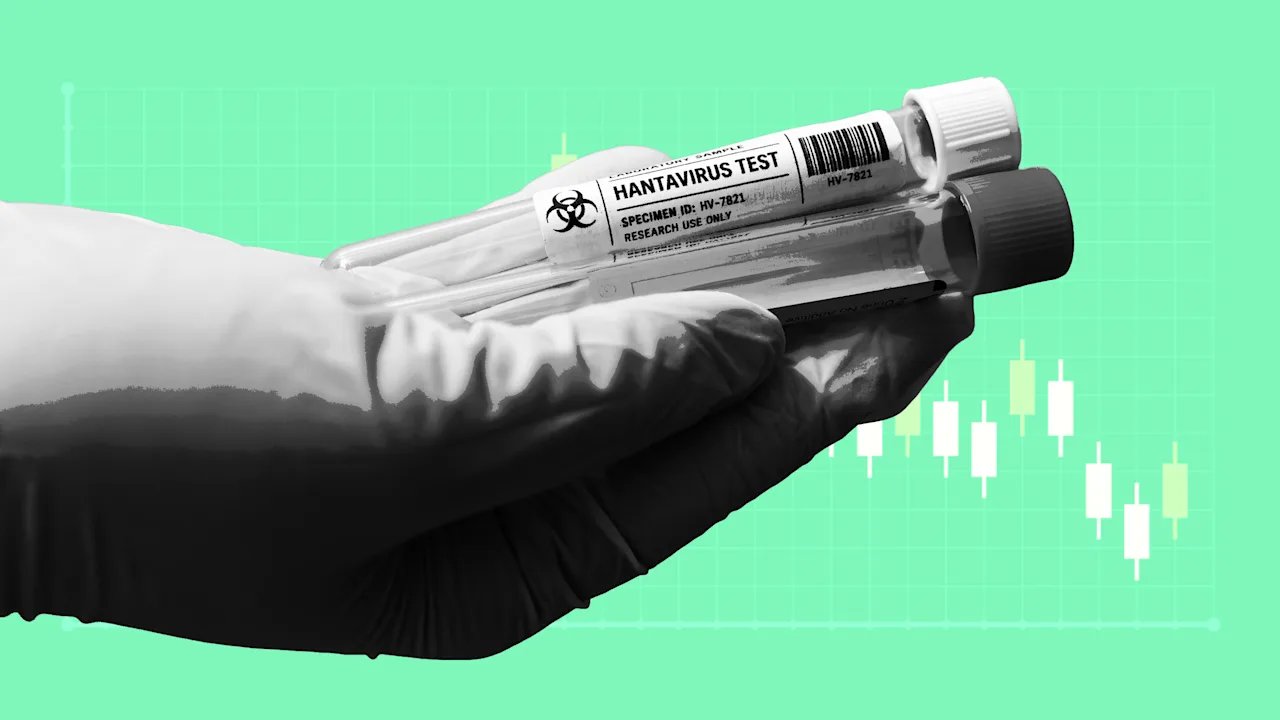
Prediction markets have now turned their focus to hantavirus, a rare but severe category of viruses transmitted from rodents to humans, after several cases were identified earlier this month aboard an Atlantic cruise operated by Oceanwide Expeditions.
It’s a serious situation that has drawn global concern: Several passengers have tested positive for the illness, at least three cruise participants have died, and a number of others on the trip are reportedly experiencing symptoms.
Amid growing anxiety about the illness and, no doubt, memories of the nerve-racking first weeks of the Covid-19 pandemic, some people have taken to prediction markets to bet on what might happen next. On Polymarket, users have now invested about $3 million betting on whether there will be a Hantavirus outbreak this year. About $170,000 has been similarly wagered on Kalshi, as of late Friday afternoon. Both bets are set up to be resolved by the end of 2026, so there’s plenty of time for both pools to grow.
What’s interesting, though, is that both hinge on official World Health Organization (WHO) disease designations. To earn on a “Yes” bet on Polymarket, the WHO would need to declare a hantavirus-related outbreak a “pandemic,” the term the organization uses when a new illness, or a new strain of an illness, spreads worldwide. On Kalshi, meanwhile, the WHO would need to declare a “Public Health Emergency of International Concern,” another designation the organization uses to denote a significant health crisis with the potential to affect multiple countries.
This is the latest, and stark, reminder that betting markets turn longstanding institutions into arbiters of financial losses and gains. This is an obvious result of platforms that seek to financialize everything, but also seems to usher people back toward relying on central and trusted institutions, even amid an era when many of those institutions are facing attacks and record distrust.
This dynamic is true not just of the WHO—which the U.S. withdrew from earlier this year—but also of election officials, diplomatic negotiation teams, and even legislators who, by the nature of betting markets, have now become inadvertent referees of people’s financial fates – even if that has nothing to do with their actual purpose or operations. It’s also created a constellation of new perverse incentives that have pushed some employers, including the Senate, New York State’s government, and even JPMorgan to either caution or outright ban their staff from these platforms.
Notably, complaints obtained by Fast Company through a public records request show that sometimes, losers even bring their complaints about services like Kalshi to the Federal Trade Commission (FTC). At least a few of these complainers have seemingly asked the agency to intervene over the app’s adjudications of betting outcomes.
A spokesperson for Kalshi tells Fast Company that the markets are designed to help people and businesses quantify the risk of emerging public health threats. “They provide accuracy and clarity to people concerned about hantavirus that enables them to make better, more-informed decisions about how to proceed with their lives in the face of the significant risks it poses,” the spokesperson says. (Polymarket did not respond to a request for comment, and the FTC declined to comment.)
One person, for instance, reached out back in November 2024 to complain about a bet over whether Robert F. Kennedy Jr. would join the Trump administration, alleging that the interpretation of the bet changed after it had already been placed. As a result, the person claimed, they lost $2,000. After reaching out to the company, the person then contacted the FTC. Another person, also in 2024, complained to the Federal Communications Commission (FCC) about clarification issues surrounding bets on whether Elon Musk would join the government, and whether DOGE counted as a government organization.
