
It’s a tale as old as time, or at least as old as the twee mother-daughter series Gilmore Girls. A young single woman discovers she is pregnant. The odds are stacked against her but she decides to keep the child anyway. Sometimes abortion is considered fleetingly, but more often than not it’s barely uttered. What follows are many gushy scenes where the woman’s sacrifice pays off. A flexible career and an overeager support system all fall into place around her main purpose: motherhood. This quietly conservative narrative is as proliferated as the fertile characters at their core. Multiplying from 2007 indie darling Juno to this year’s Apple TV series Margo’s Got Money Troubles, with recent editions including plotlines in And Just Like That and Amandaland. As if the pro-life plotlines populating comedy-dramas wasn’t enough, anti-abortion rhetoric has now infiltrated horror. The chorus of cooing congratulations has been replaced with nightmares for the pregnant women of Hokum, Undertone and Exit 8.
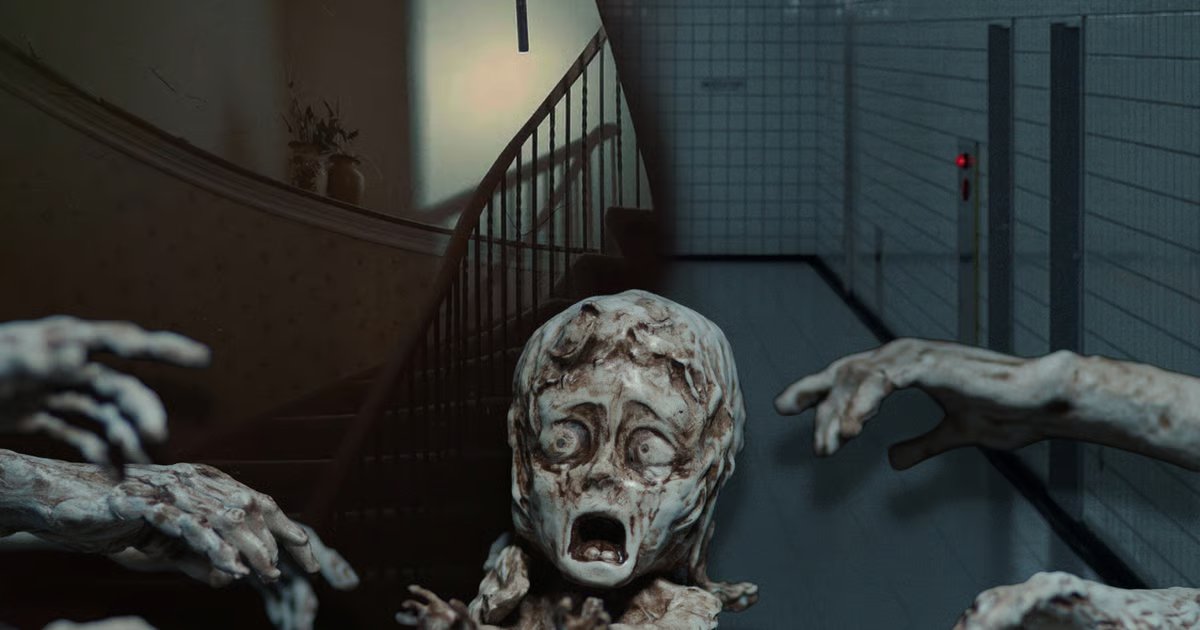
Moments before entering a freaky maze of subway corridors in Exit 8, a lost man (Kazunari Ninomiya) receives a call from his girlfriend (Nana Komatsu) who is pregnant and needs his advice. She may only exist as a disembodied voice, but her condition haunts him throughout this puzzling horror, and it’s by helping a small boy to escape the tunnels alongside him that he commits himself to fatherhood. When finally both man and child find their way out, the lost man bounds out of the station towards his bright future. The decision clearly lies with him. The seeming innocence of the lost man’s realisation about his responsibility demonstrates its conservative underpinnings, as it comes to him as the natural conclusion – a purpose bestowed upon him as he exits his bachelor’s nightmare, which is all the more underhanded when considering that Exit 8 was inspired by a video game devoid of any narrative at all.
Get more Little White Lies
Unlike the lost man’s girlfriend, the expectant mothers in Hokum and Undertone – Fiona (Florence Ordesh) and Evy (Nina Kiri) – will be murdered long before carrying their child to term. The disappearance of the plucky bartender Fiona, who charms the crotchedy writer Ohm Bauman (Adam Scott) with her dry wit, is the narrative force behind Hokum. Her affair with manager Mal (Peter Coonan), and her pregnancy are discovered consecutively, with the discovery of her corpse following shortly after. It’s at this moment in the abandoned hotel suite where Fiona has been left to rot, that her ex-lover and revealed murderer flees, trapping Ohm in the room with the deceased woman. Given that it has been widely recorded across the globe that pregnancy increases the likelihood of intimate partner violence and femicide, this moment should carry the proportionate gravity. However, being the hokey homage movie that it is, Hokum doesn’t dabble in sincerity, which is never more apparent than when Mal scurries from the scene of his crime like a cartoon villain.
Hokum has little interest in exploring Fiona’s decision or the realities of femicide. She is merely another dead woman, a footnote in the chapters of every other male in the story. Her pregnancy was simply a tragic addition, as not one life is lost but two. Undertone attempts to mine the psyche of Evy, host of a paranormal podcast, currently caring for her dying mother (Michele Duquet). Given that she is dealing with an absentee boyfriend and her sick mother, while playing armchair detective about a supernatural phenomenon and struggling with her sobriety, her choice to keep the child is a further signifier that she is not in her right mind. Evy also persists with the podcast, leading to her untimely death.
Alongside the fertile dead women of Hokum and Undertone there exists their opposites: undead hags. Both women are terrorised before their death by hags that dwell in the hotel and Evy’s home. Sicking an aged woman who is no longer capable of procreation on the young fertile one is indicative of the director’s mindset. Twice the trappings of patriarchal society play out as a young pregnant woman cut down in her prime is a tragic loss, and one who has aged out of her childbearing purpose is terrifying to behold.
Why is it that those that will never have to, quite literally, deal with the full weight of this decision, are so flippantly adding to a harmful narrative? It brings to mind a Bojack Horseman sketch where a panel of men discuss abortion with one claiming they would put their life on hold to raise a child: “and I can say that with confidence because I will never have to make that decision, so I’m unbiased”. These directors may not be consciously reinforcing a pro-life approach to reproductive rights, however, they are using pregnancy as a shortcut to a female character’s internal world. If horror studios have learnt one lesson from the viral success of films such as Hereditary and The Babadook, it’s that women’s psychological narratives sell. But the many young male directors taking up the mantle to depict them seem determined to recreate the tropes of fecund damsels and barren hags without any introspection.
Pregnancy horror once dealt with the unnerving physicality of the experience, most famously with Rosemary’s Baby (1968) and more recently in Immaculate (2024), honing in on the outsiders with sinister motives for ensuring the baby is carried to term. Only 9 months after Sydney Sweeney’s pregnant nun bashed in the brain of her newborn babe at the end of Immaculate, Trump – an infamous anti-abortionist, among many other hateful things – won his second presidency. At the time of release, Sweeney and director Michael Mohan kept their distance from political interpretations of Immaculate and the fight for reproductive rights, perhaps sensing the changing of the tide. If anything, films like Hokum, Undertone and Exit 8 adding to the litany of media’s pro-life psyops masquerading as narratives, shows just how fickle studios can be.
These pregnancy stories may seem innocuous, but it is exactly their supposed innocence that makes them insidious: nudging those who are capable of pregnancy towards choosing to keep it, while hinting that abortion is a path laden with guilt. While some cheer on the new cohort of horror directors, I worry that their collective predisposition towards the media’s misogynistic tropes indicates that they may not be equipped to handle the women’s narratives they are so intent on cashing in on, making horror films that force audiences to relive their reproductive rights nightmares, rather than interrogating them.
