
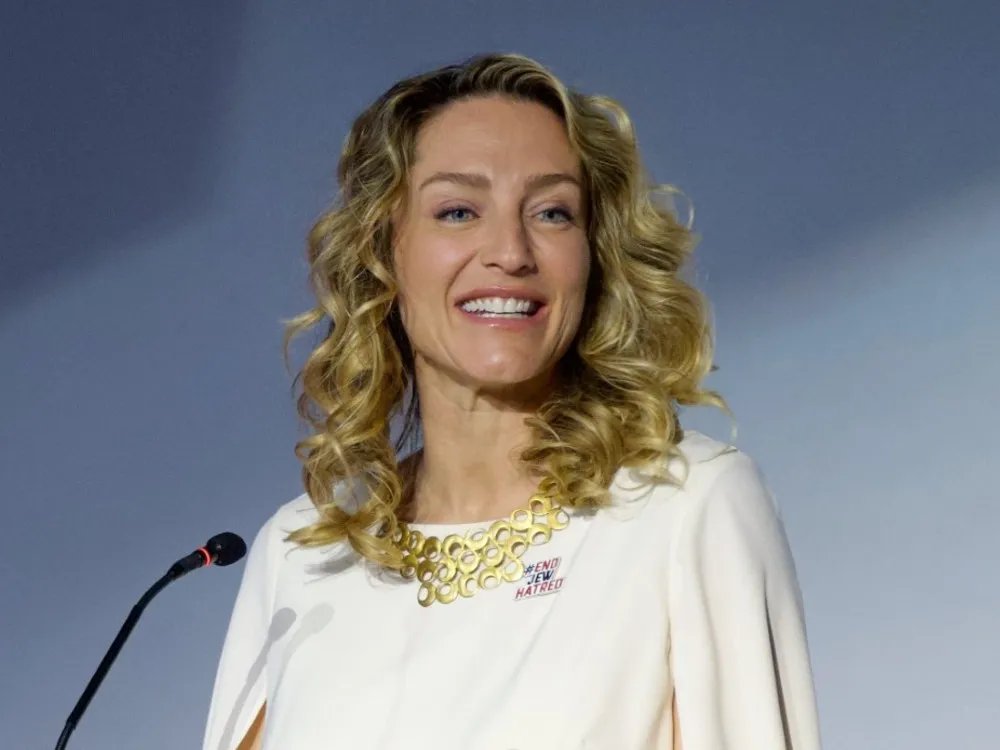
When a Toronto café posted “No Zionists allowed,” and when Jewish students at Canadian universities faced discrimination, Brooke Goldstein did not write a press release. She filed lawsuits, setting out to make Jew‑hatred legally costly.
Goldstein is executive director and founder of The Lawfare Project, an organization dedicated to protecting the rights of the Jewish people via legal action. It has pursued over 150 legal actions in 14 countries, and with an 800-strong legal network, provided over US$13 million worth of pro bono legal services since 2010.
Among its Canadian victories is a December 2023 ruling against Foodbenders, a now-closed Toronto restaurant, ordered to pay damages to television personality Shai Deluca for defaming him with antisemitic Instagram posts.
Ongoing cases include efforts to protect Jewish students, including a proposed CAD$77-million McMaster University class action and a $1-million suit against Toronto’s OCAD university, with partners including Diamond & Diamond Lawyers and RE-LAW LLP.
Goldstein, a Toronto native now in Miami, is also founder of End Jew-Hatred, a civil rights organization spanning 40 universities. Her forthcoming book, End Jew Hatred: A Manual for Mobilization , due in August, aims to show how to effect change via grassroots mobilization and legal activism.
Dave Gordon spoke with Goldstein, a McGill graduate who earned her law degree from Yeshiva University in New York, for National Post.
What are you seeing across campuses that might not appear in the headlines?
A troubling radicalization of the student body, with a big issue of foreign funding. We have a case against Carnegie Mellon University now, which is, I think, the third largest recipient of funds from Qatar.
Qatar has been funding anti-Americanism, radicalizing the student body. They’ve been funding DEI programs. When a school has those programs, hatred and discrimination against Jewish students rise.
You see the same narratives on Canadian campuses of appeasement and justification of terrorism. It’s including pro-Islamist narratives of October 7 rape denial, accusations of colonization, and the BDS movement.
We need to find the source of this radicalization. We’re seeing a systemic level of indoctrination, hatred, and propaganda coming from the administration itself.
How are lines of protected speech crossed?
You’re free to hold up a sign saying, ‘I hate Jews, I love Hamas.’ That’s protected speech, even though it’s terrible and a sign of a failure of our educational system.
But when you block a student’s ability to enter into a classroom, when you create a hostile environment to the point where Jewish or other minority students are actually scared to go to class, when Jewish students are singled out in class and picked on, that becomes action.
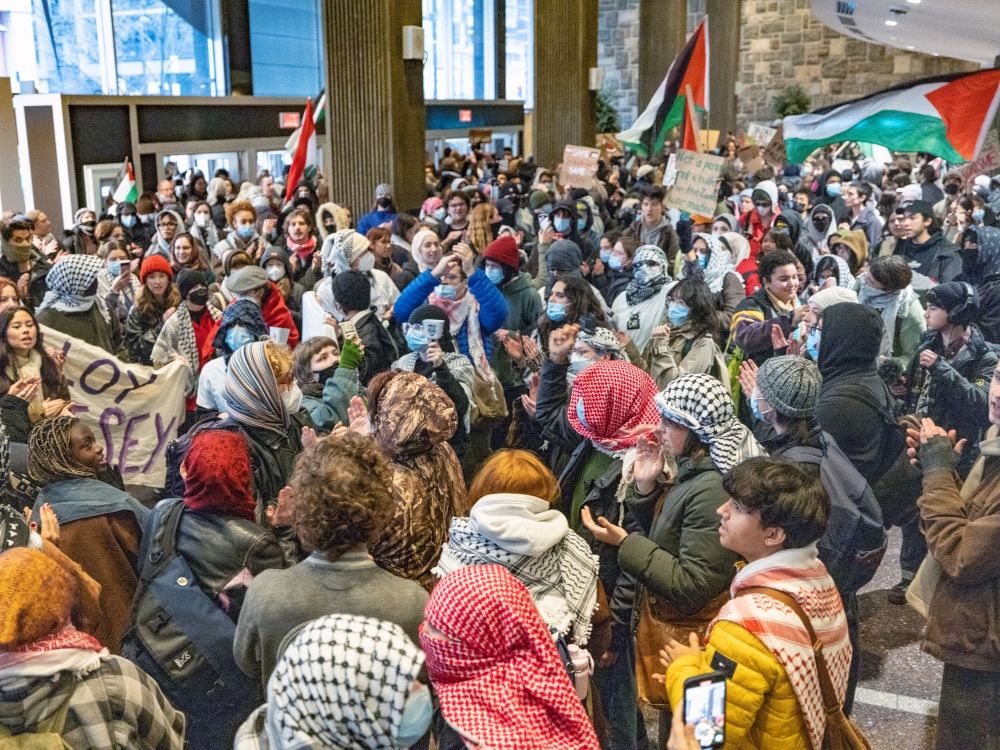
Students were locked up in the library, falsely imprisoned in Cooper Union with pro-Hamas protesters banging on the windows, holding sticks and placards, and chanting genocidal slogans. That’s not free speech, that’s harassment. There’s a level of negligence, maybe intentional, of the school to control the students.
Students are purposely concealing their identity and violating the student conduct code. Administrators refuse to implement and apply the university’s code.
When a student is being treated differently, or denied services, or subjected to a hostile environment because of a protected category — that student’s religion, skin colour, race, ethnicity or national identity — that’s discrimination.
What are you hoping for in your cases against universities?
They can settle or be litigated. In the end, what you want is a judgment by a court saying this behaviour is wrong, and set a precedent, and say it is unlawful to treat a student like this.
We want to hear that our plaintiff faced anti-Jewish discrimination and deprived her of her ability to engage as an equal participant in her learning environment. Once you set that precedent, other schools have to follow, or they too will be held liable and accountable.
Or you settle the case, which sometimes is preferred. You can try to fix the issues at the school.
At Cooper Union, we had a policy that’s going to be implemented by the school, per the settlement agreement, that students cannot wear masks to conceal their identity, they have to carry their student ID, and any posters have to be approved.
Most importantly, we got the school to recognize that Zionism is an integral part of Jewish identity, and there should be no anti-Zionist discrimination on campus — that’s akin to anti-Jewish discrimination.
There’s schools that want to do the right thing, and they don’t know how, and they welcome the settlement agreement. Sometimes there’s schools that don’t want to cooperate.
What do you want to see from Canada’s legislators?
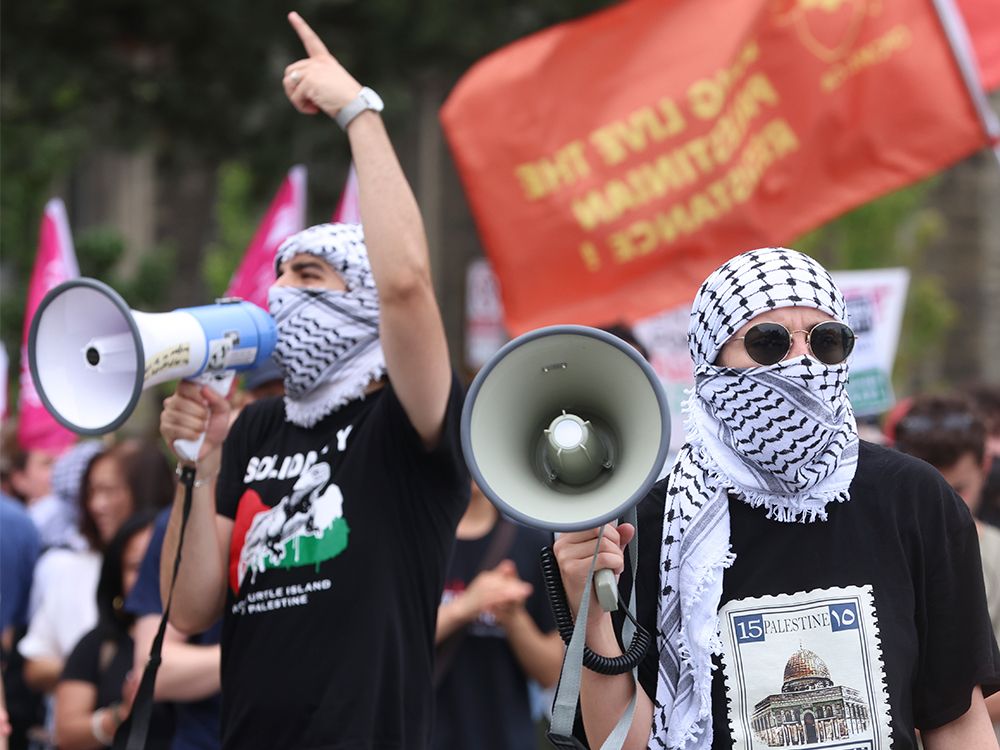
The government needs to apply the rule of law. You have pro-terror, Islamist groups — some pushing up and down the streets, harassing local residents. Where’s law enforcement?
What are they doing to ensure that these groups are not illegally fundraising?
People who are arrested at these pro-terror rallies, who are engaged in lawlessness, it’s like a catch-and-release policy. There’s no deterrence there.
You’re expanding EndJewHatred to Canada. What does your organization do that isn’t already done by existing organizations?
I don’t think anybody is engaged in any type of meaningful ground work or mobilization.
I funded a study on minority rights movements in North America; what we noticed was there was a combination of impact litigation and grassroots.
That is why we’ve seen such change. You have to mobilize the community.
What’s happened is these major big box Jewish organizations have said, ‘If you want to fight antisemitism, write me a cheque, and I’ll do it for you.’ That’s not working. We don’t see the needle moving.
But the metrics of impact litigation are real.
Foodbenders was a wonderful example. We filed the successful lawsuit, but also, the community showed up and protested, and eventually that restaurant shut down.
We want to mobilize the Jewish community and our allies to physically engage in direct actions, protests, letter campaigns, showing up at council meetings — to force the change we want to see.
In Ottawa, Canada, two very different protests took place and revealed the stark divide in the fight against extremism.
At one gathering, demonstrators waved Israeli flags alongside the Lion & Sun flag, the historic Iranian symbol now embraced by many who oppose the Islamic… pic.twitter.com/XVnzTG88Ex— End Jew Hatred (@EndJewHatred) March 5, 2026
How does the Jewish community gather more allies?
I don’t think our allies are far and few between. North Americans want to live in freedom. They want the rule of law to be applied equally. They do not want radicalization on their campuses. They don’t want to see terrorist groups fundraise within our country.
You’ll see a lot of panels, conferences, Zoom calls, and Insta lives, but in the end, there needs to be a specific call to action. This is what we do with our chapters.
The question is, what have we asked our allies to do? Have we asked them to show up at the protest with us? Have we asked them to stand with us when we go to city council? I don’t think we have. I don’t think any major organization is really organizing sustained, effective protests in Canada, the same way that we’re doing in the United States.
What the allies need to understand is that this is not a Jewish issue. We don’t need better PR for Israel. We need pro-Judeo-Christian values PR. We need negative campaigning against radical Islam. We cannot be afraid to talk about the threats that face the Jewish community, face the rest of the West equally. The message needs to be one of shared values.
This interview was edited for brevity.
Our website is the place for the latest breaking news, exclusive scoops, longreads and provocative commentary. Please bookmark nationalpost.com and sign up for our daily newsletter, Posted, here.
